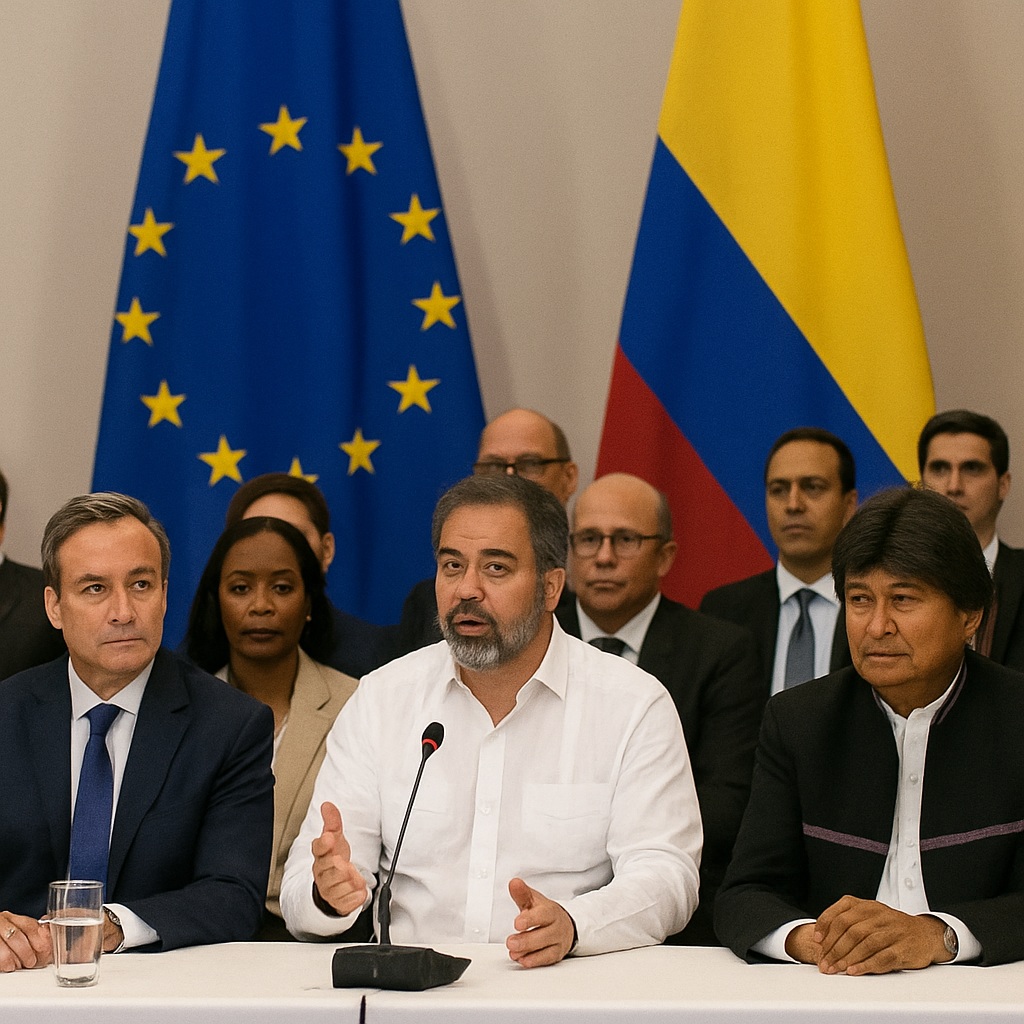
Leaders in Santa Marta Emphasize Multilateralism Amid Global Tensions and Shifting Geopolitical Alignments

Santa Marta, Colombia — In a charged global climate defined by geopolitical fragmentation, economic uncertainty, and the accelerating impacts of climate change, the Fourth Summit between the Community of Latin American and Caribbean States (CELAC) and the European Union opened today in Santa Marta with an emphatic call to revitalize multilateralism. The high‑level gathering brings together heads of state, foreign ministers, policy experts, and civil society organizations from both regions, marking one of the most consequential interregional dialogues in recent years.
Hosted on Colombia’s Caribbean coast, the summit underscores the country’s effort to position itself as a diplomatic bridge in the hemisphere. In her opening address, Colombia’s president framed the summit as a “critical juncture” for the international system, noting that cooperation between the two blocs is vital for addressing transnational challenges. The EU’s foreign policy chief echoed this sentiment, highlighting the need for renewed commitment to shared governance structures and rule‑based cooperation.
A Renewed Defense of Multilateralism
At the center of the summit’s discussions is a shared conviction that multilateral institutions — long strained by competing national interests and political polarization — must be reinforced rather than abandoned. Delegations emphasized that international organizations remain indispensable for coordinating global efforts on climate mitigation, trade governance, migration management, and responses to emerging security threats.
Several leaders pointed to the growing complexity of global supply chains, digital governance, and energy transitions as evidence that no single nation or region can navigate the current landscape alone. The EU’s representatives stressed that, despite internal political pressures, Europe intends to remain a strong advocate of collaborative problem‑solving. CELAC leaders, meanwhile, argued for reforms that ensure a more equitable distribution of influence within international bodies, including the United Nations, the IMF, and the World Bank.
Climate Action and the Green Transition
Climate policy is expected to dominate much of the agenda. With Latin America home to some of the world’s most critical biodiversity reserves and Europe advancing a wide-ranging green transition, both blocs see opportunities to align priorities. Negotiations are expected to cover renewable energy financing, technology transfer, and safeguards for indigenous and environmental rights.
Yet tensions persist. Some Latin American delegations have expressed concern that European environmental regulations — particularly those tied to agricultural imports — place disproportionate burdens on developing economies. European officials counter that sustainability standards are essential to global environmental commitments. The summit aims to find mechanisms that balance green objectives with economic development.
Trade, Investment, and Supply Chain Resilience
Economic cooperation remains a pillar of CELAC‑EU relations. As the global economy recalibrates after successive shocks, both regions are exploring frameworks to strengthen trade ties, diversify supply chains, and encourage sustainable investment.
The long‑stalled EU‑Mercosur trade agreement is once again drawing attention, though expectations for a breakthrough remain cautious. Beyond Mercosur, leaders are exploring sector‑specific agreements on digital services, critical minerals, and the circular economy. Analysts note that Europe’s pursuit of energy security and material independence creates opportunities for Latin American economies rich in lithium, copper, and rare earth elements — though local leaders insist that any new partnerships must deliver added value within the region, not just raw material extraction.
Migration, Security, and Digital Governance
Human mobility is another focal point. Migration patterns across the Americas continue to shift as economic pressures, political instability, and climate impacts drive cross‑border movement. European governments, facing their own migration debates, are expected to discuss cooperative frameworks that emphasize human rights, legal pathways, and coordinated humanitarian responses.
Security issues, including cyber threats and organized crime, also feature prominently. Delegations are examining cooperative strategies for combating transnational criminal networks and improving cybersecurity resilience. Discussions are expected to result in new memoranda of understanding on digital governance, including artificial intelligence ethics, data flows, and digital infrastructure.
Civil Society and Youth Participation
One of the distinguishing aspects of this summit is the expanded inclusion of civil society organizations, academic institutions, and youth delegations. Parallel forums taking place throughout Santa Marta aim to elevate voices outside government, with sessions dedicated to climate justice, gender equity, indigenous rights, and cultural cooperation.
Organizers describe these engagements as essential to ensuring that interregional agreements reflect broader societal concerns. Youth representatives from Latin America and Europe emphasized the importance of long‑term visions that transcend political cycles, urging leaders to address structural inequalities and commit to sustainable development.
A Summit with Strategic Implications
Although the summit does not promise sweeping treaties or immediate policy shifts, diplomats note that its symbolic and strategic significance is considerable. At a time when global alliances are being reconfigured and major powers vie for influence, the CELAC‑EU partnership represents an alternative model centered on cooperation, balanced development, and respect for regional diversity.
With work sessions continuing throughout the week, negotiators are expected to draft a joint declaration affirming commitments to multilateralism, sustainable development, human rights, and equitable economic cooperation. While the final text is still under negotiation, early indications suggest a strong emphasis on revitalizing interregional dialogue and charting a shared course in an increasingly fragmented world.
As the summit progresses, observers will be watching for signals of how both regions intend to navigate emerging geopolitical pressures and whether this renewed emphasis on multilateralism can translate into concrete, actionable initiatives. For Santa Marta, the gathering marks not just a diplomatic milestone but a broader reflection of Latin America’s evolving role on the global stage.