A new Tata Electronics–ASML partnership gives India’s semiconductor ambitions a major boost as global tech supply chains continue to shift away from overdependence on China.

India has taken a major step toward becoming a global semiconductor manufacturing hub after Tata Electronics and Dutch chipmaking-equipment giant ASML signed an agreement to support the country’s first front-end semiconductor fabrication plant in Dholera, Gujarat.
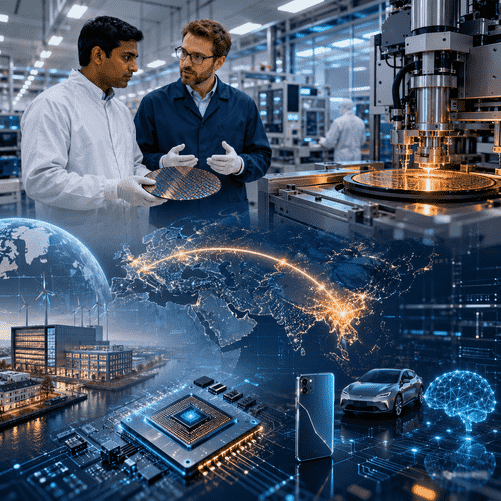
The agreement, signed in the presence of Indian Prime Minister Narendra Modi and Dutch Prime Minister Rob Jetten, will support Tata’s planned 300-millimeter chip fabrication facility, a project valued at around $11 billion. The factory is expected to produce semiconductors for sectors including mobile devices, automobiles and artificial intelligence systems.
The deal is strategically important because ASML is one of the world’s most critical semiconductor equipment companies. Its lithography machines are essential to modern chip production, making the Dutch firm a central player in the global technology supply chain. For India, securing ASML’s support is a sign that its semiconductor strategy is moving from political ambition to industrial execution.
New Delhi has spent years trying to attract chipmakers with subsidies and industrial incentives. India has committed billions of dollars to semiconductor manufacturing, with multiple projects now under development, including major Tata facilities in Gujarat and Assam.
The partnership also reflects a broader geopolitical shift. As tensions between the United States and China continue to reshape technology trade, companies and governments are looking for alternative manufacturing bases. Dutch semiconductor firms have shown growing interest in India as they seek new markets and more diversified supply chains.
For India, the stakes go beyond manufacturing. A successful chip ecosystem would strengthen its position in smartphones, electric vehicles, defence electronics, cloud infrastructure and AI hardware. It would also reduce dependence on imported semiconductors, a vulnerability exposed during the global chip shortages that disrupted industries from cars to consumer electronics.
The deal comes as India and the Netherlands deepen their strategic and economic relationship. Modi used the meeting to encourage Dutch investment in high-tech sectors including semiconductors, renewable energy and digital technologies, while both governments supported faster progress toward an India–EU free trade agreement.
Challenges remain. Semiconductor fabrication is expensive, technically complex and highly dependent on skilled workers, stable power, water supply and a mature supplier network. India is still building many of these capabilities. But the ASML-Tata agreement gives the project credibility and connects India more directly to one of the most advanced industrial networks in global technology.
The message is clear: India no longer wants to be only a market for smartphones and electronics. It wants to become a place where the chips that power those devices are designed, manufactured and integrated into the next generation of global technology.