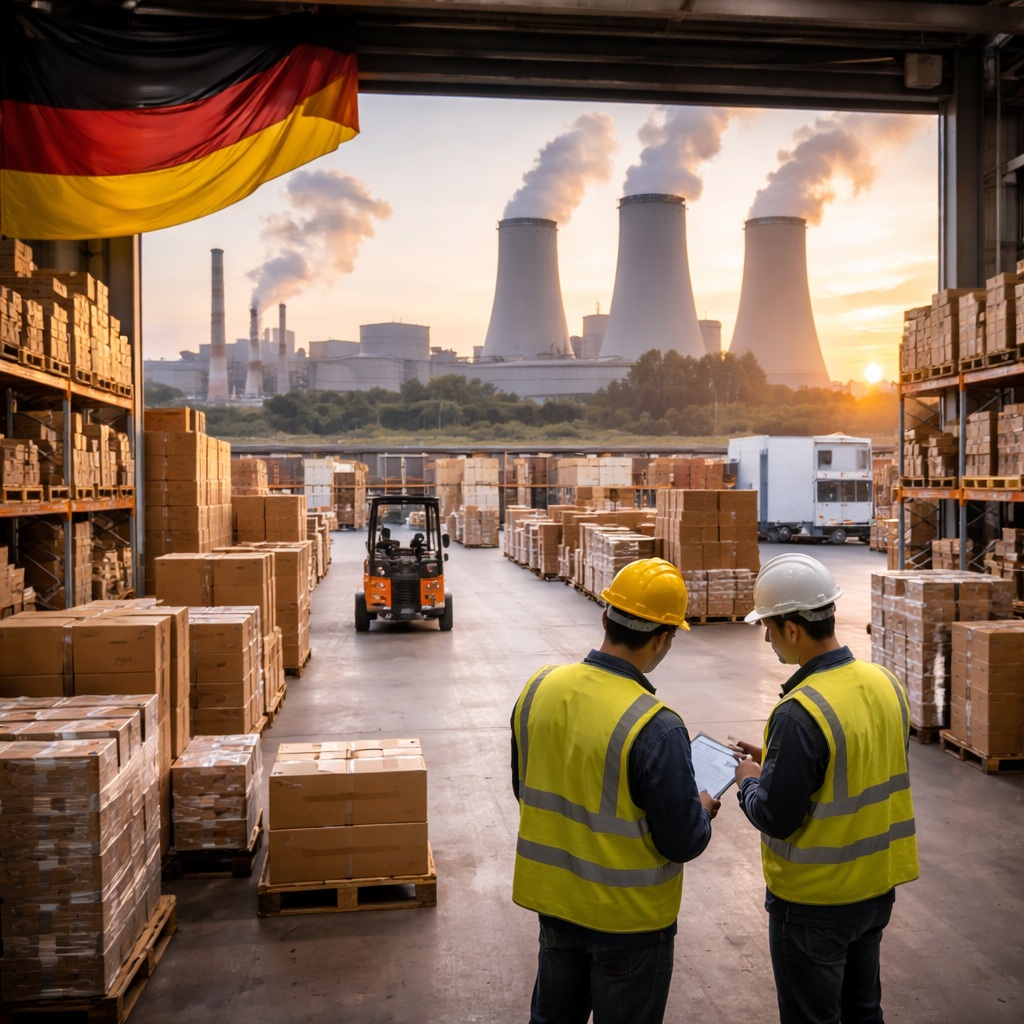
Trade groups say debt-funded support may buy time, but structural fixes are needed as sales stagnate and energy costs stay high
As Europe’s largest economy searches for a way out of a prolonged slowdown, Germany’s wholesale trade groups are delivering a pointed message to policymakers: fiscal stimulus on its own will not repair the country’s underlying weaknesses.
After another year of flat sales and persistently high energy costs, wholesalers say that debt-funded spending packages risk masking deeper problems rather than fixing them. The warning comes as Berlin debates how far it should go in loosening the purse strings to revive growth while staying within constitutional limits on borrowing.
Wholesale trade sits at the crossroads of Germany’s industrial ecosystem. From chemicals and machinery to consumer goods, wholesalers link producers with retailers and export markets. When their activity stagnates, it often signals broader stress across the economy.
Trade associations representing the sector report that business volumes failed to gain meaningful momentum through 2025. While inflation pressures eased compared with earlier peaks, input costs — particularly for energy and logistics — remained elevated. Many firms found themselves squeezed between cautious customers and suppliers unwilling to cut prices.
Against this backdrop, calls for a large fiscal push have grown louder. Supporters argue that public investment, tax relief and targeted subsidies could jump-start demand and restore confidence. Wholesalers do not reject the idea outright, but they caution against seeing stimulus as a cure-all.
“Short-term fiscal support can stabilize expectations,” said a senior representative of a national wholesalers’ association. “But without structural reforms, it will not translate into sustainable growth.”
Energy costs remain a central concern. Germany’s transition away from cheap fossil fuel imports has left businesses exposed to volatile power prices. Although government measures have softened the blow for households, companies say industrial electricity prices remain uncompetitive compared with those in other major economies.
For wholesalers, energy costs ripple through the entire supply chain. Higher warehousing expenses, transport costs and refrigeration bills erode margins and reduce investment capacity. Smaller firms, in particular, struggle to pass these costs on to customers.
Labor shortages are another pressure point. Demographic change continues to thin the workforce, while immigration and training policies have yet to fully offset retirements. Wholesalers say that even when demand exists, staffing gaps limit their ability to expand operations or adopt new technologies.
Digitalization, long touted as a productivity booster, has progressed unevenly. Larger players have invested in automation, data analytics and inventory management systems. Many mid-sized firms, however, face financial and regulatory hurdles that slow adoption. Trade groups argue that streamlined regulations and targeted incentives would do more for competitiveness than broad-based spending.
Germany’s wholesalers also point to infrastructure bottlenecks. Congested rail networks, aging roads and slow permitting processes add time and cost to distribution. Public investment could help here, they say, but only if accompanied by faster planning and approval procedures.
At the European level, the debate echoes similar concerns. Germany’s economy is deeply integrated into the European Union’s single market, and weakness at home reverberates across borders. Trade groups warn that relying on national stimulus without coordinated reforms risks fragmenting the bloc’s competitiveness.
Fiscal stimulus, they argue, should be designed to support reform rather than replace it. That includes linking public spending to clear targets: accelerating grid expansion, modernizing logistics hubs, and reforming tax and labor rules that discourage investment.
There is also unease about the long-term implications of higher public debt. While borrowing costs have eased from recent highs, wholesalers worry that rising debt could limit future policy flexibility or force abrupt austerity later on.
The federal government faces a delicate balancing act. Political pressure to act is intense, particularly as voters grow impatient with sluggish growth and uneven recovery. Yet the message from the wholesale sector is that credibility matters as much as cash.
Business confidence, wholesalers say, depends on predictable rules and a clear reform roadmap. Frequent policy shifts, temporary subsidies and complex application processes undermine planning and dampen private investment.
As winter deepens and economic data continue to disappoint, the temptation to reach for quick fixes is strong. But Germany’s wholesalers are urging policymakers to look beyond the next budget cycle.
“Stimulus can buy time,” the industry representative said. “Reforms determine whether that time is used wisely.”
Whether Berlin heeds that warning will shape not only the outlook for wholesalers, but the trajectory of Germany’s economy in the years ahead.



 The Tower Post