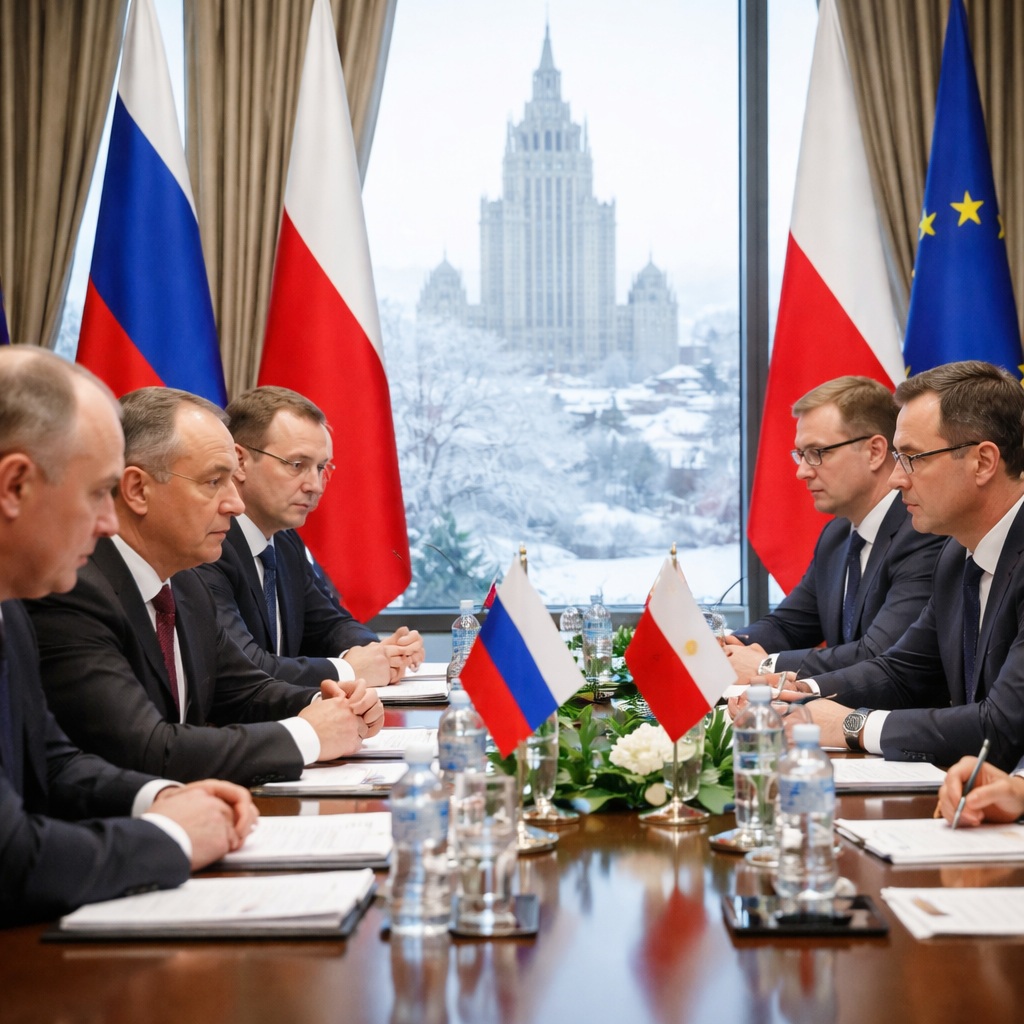
Moscow demands the release of a Russian researcher held in Poland, escalating a diplomatic dispute that risks further straining EU–Russia relations.

Moscow has summoned the Polish ambassador in a fresh diplomatic flare‑up after the detention of a Russian archaeologist in Poland, a move that has drawn sharp statements from both governments and renewed concerns about rising tensions across Europe.
According to the Russian Foreign Ministry, the Polish envoy was called in for what officials described as a “formal explanation” regarding the continued detention of a Russian citizen working in the academic field of archaeology. Russian officials insisted the case was being mishandled and demanded the individual’s immediate release, framing the issue as a violation of legal norms and consular obligations.
Polish authorities, however, pushed back strongly against Moscow’s demands. Officials in Warsaw maintained that the detention was carried out in accordance with domestic law and based on security‑related considerations. They rejected accusations of political motivation, emphasizing that judicial processes in Poland operate independently of diplomatic pressure.
The case has rapidly moved beyond a consular dispute, becoming another point of friction in already strained relations between Russia and European Union member states. Diplomats familiar with the matter said the tone of exchanges between Moscow and Warsaw has been notably stern, reflecting a broader atmosphere of mistrust.
At the heart of the controversy is the blurred line between academic cooperation and national security in a region increasingly sensitive to foreign influence. Russian representatives portrayed the archaeologist as a scholar engaged in legitimate research, while Polish officials declined to comment on specific allegations, citing the ongoing nature of the investigation.
European diplomats observing the situation warned that the dispute could complicate dialogue between Brussels and Moscow at a time when relations are already marked by sanctions, counter‑measures, and mutual accusations. Some EU officials privately expressed concern that the episode may be used by both sides to reinforce hardline positions.
The summoning of the ambassador itself is a well‑worn diplomatic signal, often employed to express displeasure without breaking formal ties. In this instance, analysts noted, it underscores how even individual legal cases can acquire strategic significance amid geopolitical rivalry.
In Moscow, state media amplified the Foreign Ministry’s position, portraying the detention as part of a broader pattern of hostility toward Russian nationals in Europe. Commentators linked the incident to what they described as an erosion of trust and cooperation in scientific and cultural exchanges.
In Warsaw, officials stressed that Poland remains committed to international law and cooperation with partners, but not at the expense of national security. They also cautioned against attempts to politicize judicial matters, signaling that external pressure would not influence the outcome of the case.
As the dispute unfolds, it adds another layer of complexity to EU–Russia relations, already weighed down by unresolved conflicts and competing security narratives. Whether the archaeologist’s case can be resolved quietly through legal channels or will continue to fuel diplomatic confrontation remains an open question.
For now, the episode serves as a reminder that in today’s Europe, even the work of scholars can become entangled in the region’s larger political struggles.

 The Tower Post