
Overnight missile and drone attacks plunge cities into darkness as Kyiv and its allies condemn what officials call one of the harshest early-year assaults of the war.
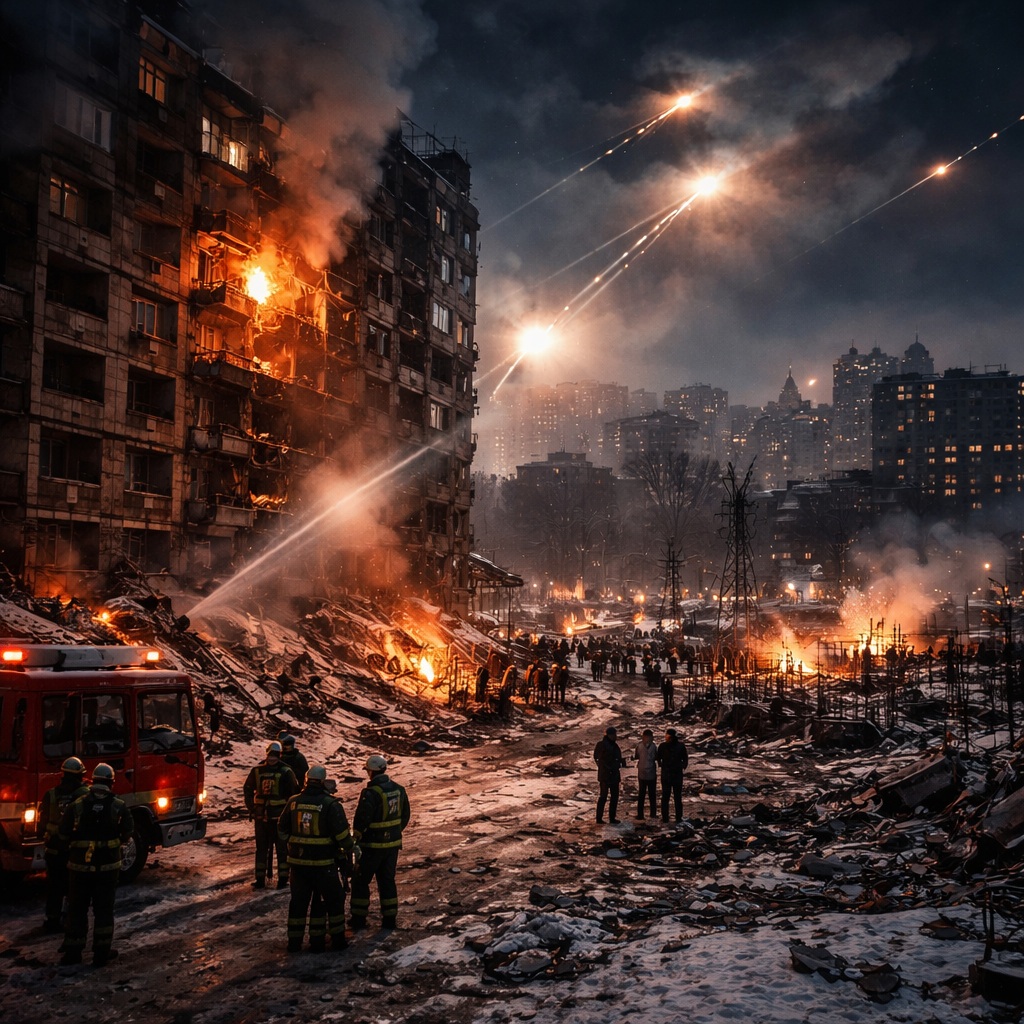
Russian forces unleashed a wave of missile and drone strikes across Ukraine overnight, killing at least four people and knocking out heat and electricity for hundreds of thousands, Ukrainian officials said. The barrage, which hit multiple regions from the capital to the country’s east and south, was described by authorities as one of the most intense assaults seen at the start of the year, deepening civilian hardship during the heart of winter.
Emergency services reported fatalities in residential areas struck by falling debris and direct hits on energy infrastructure. Dozens more were injured, according to regional administrations, as rescue crews worked through the night amid freezing temperatures and intermittent power.
In Kyiv, air defense systems roared into action for hours as missiles and Iranian-designed drones approached the capital in waves. While many were intercepted, officials said fragments damaged apartment blocks and substations, cutting electricity and district heating in several neighborhoods. Residents were urged to shelter in place and conserve energy as crews scrambled to restore basic services.
“This was a deliberate strike on our energy system and on civilians,” a senior Ukrainian official said, accusing Moscow of attempting to break morale through cold and darkness. “They are repeating the same tactic: terror from the sky when temperatures are lowest.”
The attacks extended far beyond the capital. In the eastern regions, local authorities reported damage to power plants and transmission lines, leaving towns without heat or water. In the south, ports and industrial facilities were targeted, compounding disruptions to logistics already strained by months of fighting.
Ukraine’s energy operator said emergency shutdowns were imposed in several areas to prevent wider system collapse. Engineers warned that repeated strikes were complicating repairs, as spare parts and crews remain under constant threat. Temporary warming centers were opened in affected cities, with schools and public buildings offering shelter.
Russia did not immediately comment on the latest strikes, but has previously said it targets infrastructure linked to Ukraine’s military and defense industry. Kyiv and its Western allies reject that claim, arguing that the pattern of attacks shows a systematic effort to cripple civilian life.
The overnight assault comes at a sensitive moment in the conflict. Diplomatic channels have shown little progress, with ceasefire discussions effectively stalled and both sides accusing each other of bad faith. Western governments have warned that Russia appears intent on escalating pressure rather than seeking compromise.
European leaders condemned the strikes in strong terms, calling them a violation of international humanitarian law. “Targeting heat and power in winter is not a military necessity; it is collective punishment,” one senior EU official said, pledging continued support for Ukraine’s air defenses and energy repairs.
In Washington, officials echoed the condemnation and reiterated commitments to supply additional air defense systems. Analysts say the intensity of the latest barrage underscores Moscow’s reliance on long-range strikes as ground operations remain costly and slow.
For ordinary Ukrainians, the renewed attacks have brought a grim sense of déjà vu. Similar campaigns in previous winters left millions without power for days at a time. This time, authorities say the grid is more resilient, but warn that sustained pressure could still overwhelm defenses.
“We have learned to live with alarms and outages,” said a Kyiv resident warming her apartment with candles and blankets. “But every time it happens, it reminds you how fragile normal life is.”
As dawn broke over a battered but defiant country, repair crews fanned out under military protection, racing against the cold to reconnect lines and restart boilers. Officials cautioned that rolling blackouts could continue as a precaution.
The strikes have reinforced a stark reality heading into the new year: with talks frozen and neither side showing signs of backing down, Ukraine’s cities and civilians remain on the front line of a war increasingly fought through the nation’s infrastructure.


 The Tower Post