
As the war grinds on, Russia is reshaping the occupied Donbas into a sprawling military hub, a move widely seen as a signal of long-term confrontation with Europe.
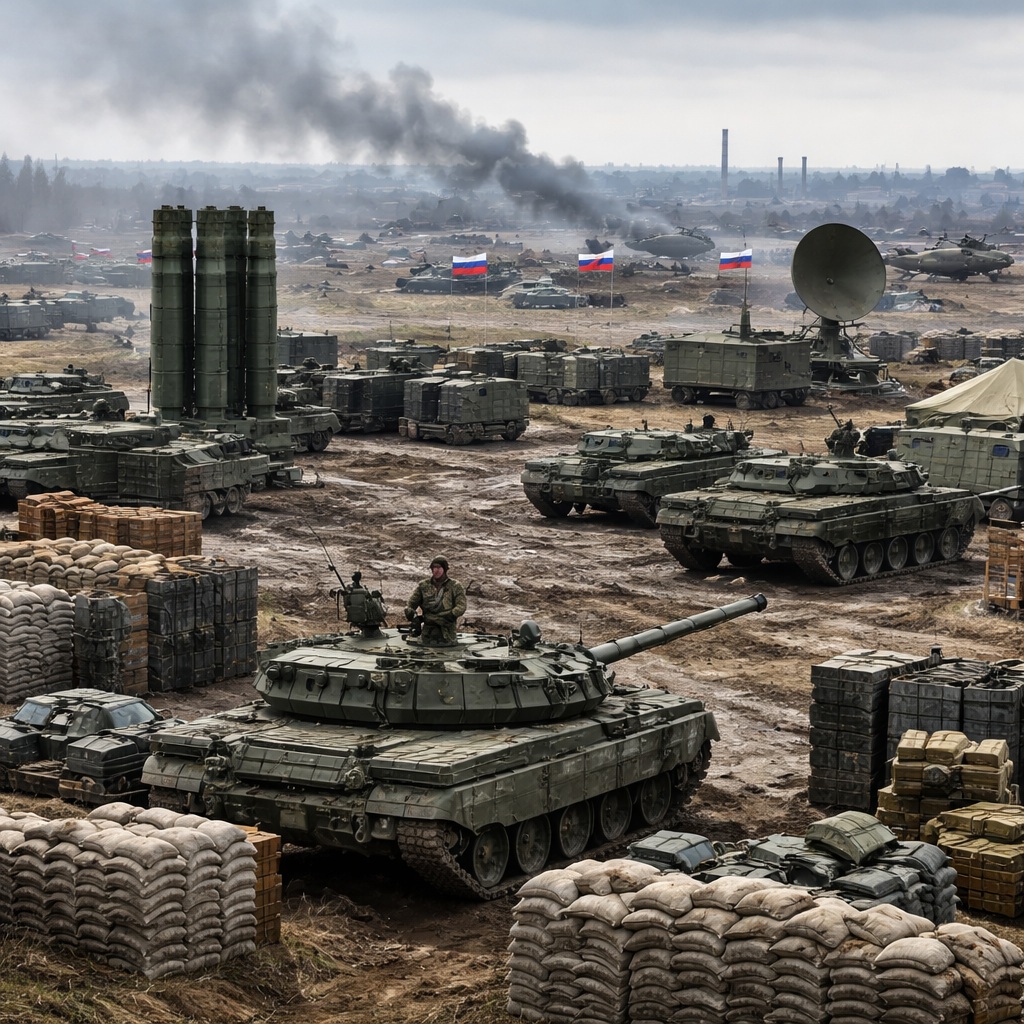
In the industrial heartland of eastern Ukraine, the war has settled into something more permanent. Beyond the daily exchanges of fire and the shifting front lines, a deeper transformation is underway. According to Ukrainian officials, Western intelligence assessments, and regional analysts, Russia is systematically converting the occupied Donbas into a fortified military base, embedding the region into its long-term security architecture and projecting power well beyond Ukraine’s borders.
The territory, encompassing parts of the Donetsk and Luhansk regions under Russian control, has become a dense lattice of command centers, logistics depots, training grounds, and fortified positions. What once were coal towns, rail yards, and industrial zones are now repurposed into barracks, ammunition storage sites, and repair hubs for armored vehicles and artillery systems. The change reflects Moscow’s calculation that the conflict is no longer a temporary campaign but a protracted standoff with Ukraine and its Western backers.
From occupation to integration
Russian authorities have moved quickly to integrate the occupied areas into their military and administrative systems. New roads and rail links are being laid or repaired to connect Donbas directly with Russia’s southern military districts. Supply routes have been hardened, with layered air defenses installed to protect key nodes from Ukrainian strikes. Satellite imagery analyzed by independent researchers shows expanded trench networks, reinforced concrete shelters, and the steady growth of permanent facilities where temporary camps once stood.
Local governance has been reshaped to serve this militarization. Civilian administrations operate under the supervision of security services, while large tracts of land are requisitioned for military use. Residents describe frequent troop movements, restricted zones, and a constant military presence that has altered daily life. Schools and cultural institutions have been repurposed or relocated, while propaganda emphasizes the region’s role as a “defensive shield” for Russia.
A hub aimed westward
Western officials argue that the transformation of Donbas goes beyond the immediate needs of the war in Ukraine. By building a deep, well-defended military hub close to NATO’s eastern flank, Moscow is seeking to intimidate Europe and demonstrate its ability to sustain pressure over time. The concentration of forces in Donbas allows Russia to rotate units, train new formations, and stockpile equipment within striking distance of the front, while also signaling resolve to European capitals.
Military analysts note that the scale of construction suggests permanence. Hardened aircraft shelters, long-term command bunkers, and expanded electronic warfare installations point to a posture designed to endure. “This is not just about holding territory,” said one European defense official. “It’s about creating a forward base that anchors Russia’s influence in the region for years to come.”
Testing Ukraine’s resilience
For Ukraine, the militarization of Donbas presents a strategic challenge. The fortified region complicates efforts to regain territory, raising the cost of any future offensives. Ukrainian forces face a landscape shaped by layered defenses, extensive minefields, and surveillance systems that reduce the element of surprise. Kyiv has responded by focusing on precision strikes, long-range capabilities, and efforts to disrupt supply lines feeding the occupied territories.
Ukrainian officials warn that the entrenchment of Russian forces is accompanied by human rights abuses and the forced displacement of civilians. As the military footprint grows, so does the pressure on the local population, many of whom have limited options to leave. The region’s economy is increasingly subordinated to the needs of the occupying forces, with industry redirected toward military production or logistics support.
Europe watches closely
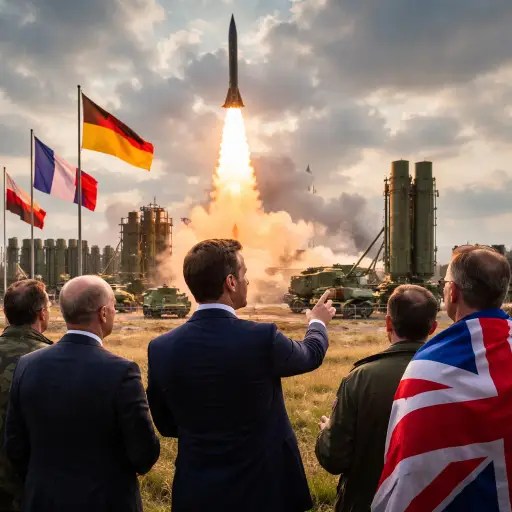
Across Europe, the developments in Donbas are being closely monitored. Governments see the region as a barometer of Russia’s intentions and a test of Western unity. The prospect of a heavily militarized zone in eastern Ukraine reinforces concerns that Moscow is preparing for a long confrontation, using occupied territory as leverage in a broader geopolitical struggle.
NATO has responded by strengthening its presence along its eastern borders, increasing readiness, and expanding military cooperation among member states. While officials stop short of predicting escalation beyond Ukraine, the fortified Donbas is viewed as a reminder that the conflict’s consequences extend far beyond the battlefield.
A frozen front, a heated future
As winter settles over eastern Ukraine, the front lines may appear static, but the transformation behind them is anything but. The conversion of Donbas into a military base underscores the shifting nature of the war, from rapid offensives to entrenched positions and long-term planning. For Moscow, the region represents both a shield and a sword: a buffer against Ukraine and a platform to project power toward Europe.
For Ukrainians living under occupation, it is a daily reality of checkpoints, uniforms, and uncertainty. For Europe, it is a warning that the security landscape has fundamentally changed. And for the wider world, Donbas has become a symbol of a conflict that is settling in for the long haul, reshaping borders, lives, and the balance of power on the continent.


 The Tower Post