
Aerospace and defense underpin activity as budget uncertainty clouds the outlook
France’s economy ended the year with cautious momentum, according to the Bank of France, which signaled modest growth even as signs of a broader slowdown emerged. The central bank’s latest business survey suggests that output expanded by at least 0.2% in the final quarter, marking a deceleration from earlier periods but avoiding the stagnation that had worried policymakers and companies alike.
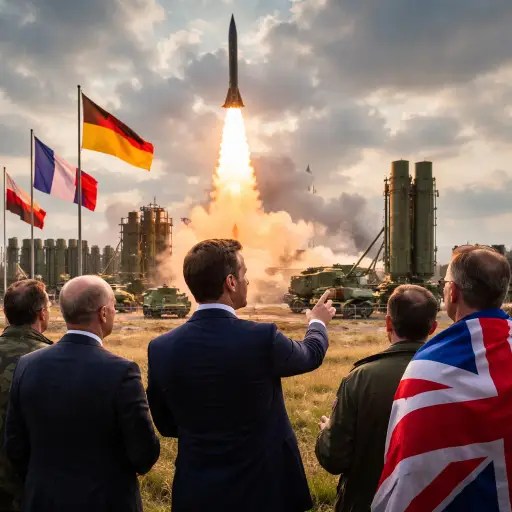
The picture that emerges is one of resilience mixed with restraint. A handful of high-performing sectors, notably aerospace and defense, continued to provide lift, offsetting softer demand elsewhere. Services showed incremental improvement after a hesitant autumn, while construction activity remained broadly flat, reflecting the weight of high financing costs and subdued real-estate transactions.
For the central bank, the estimate underscores an economy navigating a narrow path between external headwinds and domestic supports. Export-oriented manufacturers tied to aeronautics and military equipment benefited from robust order books and long production cycles that insulated them from short-term volatility. By contrast, parts of consumer-facing industry faced slower turnover, as households stayed cautious amid persistent price pressures and uncertain fiscal signals.
Services, which account for the bulk of economic activity, delivered a modest uptick. Transport, hospitality, and business services reported firmer demand, helped in part by steadier international travel and a normalization of corporate spending plans. Still, survey respondents described conditions as uneven, with improvements often limited to specific niches rather than broad-based acceleration.
Construction remained the laggard. Builders cited a lack of new projects and continued hesitation from developers and households. While costs have stabilized, they remain elevated, and access to credit is tighter than in previous cycles. The result has been a sector treading water, neither collapsing nor contributing meaningfully to growth.
Looking ahead, the Bank of France struck a guarded tone. Industrial momentum is expected to ease as existing orders are worked through and new bookings slow. Executives in manufacturing flagged weaker visibility, particularly in energy-intensive activities and segments exposed to global trade fluctuations.
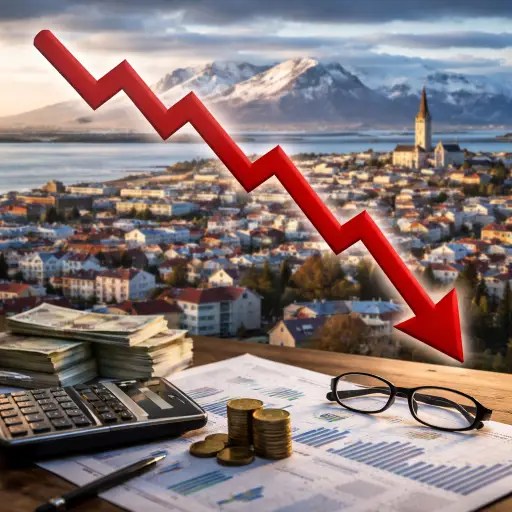
A key risk identified by the central bank is budget uncertainty. Debates over fiscal consolidation and spending priorities have weighed on confidence, prompting some firms to delay investment and hiring decisions. Economists warn that prolonged uncertainty could amplify the slowdown by curbing private-sector initiatives just as public support is being recalibrated.
At the same time, policymakers see buffers that could prevent a sharper downturn. Employment has held up better than anticipated, providing households with income stability. Wage dynamics, while still under scrutiny, have begun to align more closely with productivity gains, easing pressure on margins. Financial conditions, though restrictive, are no longer tightening at the pace seen earlier.
Market participants interpreted the central bank’s assessment as a signal of continuity rather than alarm. The modest growth estimate suggests France is keeping pace with peers facing similar constraints, even if the era of rapid post-pandemic rebound has clearly passed.
In Paris, officials emphasized the importance of clarity in fiscal planning to anchor expectations. Businesses, for their part, are bracing for a period of slower expansion marked by selective opportunities rather than broad-based growth.
As the new year unfolds, the French economy appears set to advance cautiously. Supported by pockets of industrial strength and a service sector finding its footing, growth remains positive but fragile. Whether it can gather speed will depend less on short-term demand swings than on the policy certainty that shapes investment decisions in the months ahead.


 The Tower Post