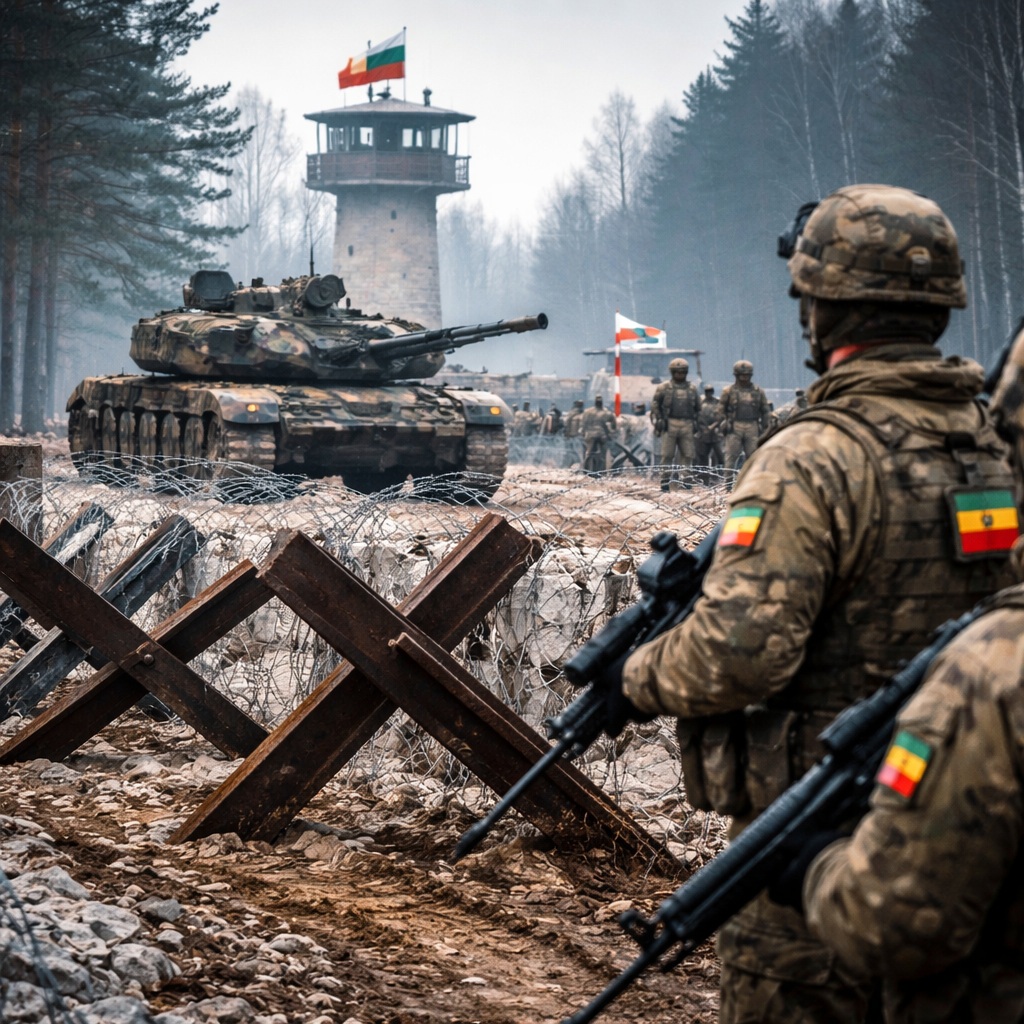
Bordering Kaliningrad and Belarus, the Baltic state sharpens defence readiness while urging civilians to remain vigilant amid wider NATO concerns.

Europe’s eastern frontier is once again under intense scrutiny as Lithuania steps up security and defence measures in response to mounting concern over Russia’s war in Ukraine and its potential to spill closer to NATO territory. With its geography placing it directly between Russia’s heavily militarised Kaliningrad exclave and Moscow-backed Belarus, Lithuania has become a focal point of allied vigilance and regional anxiety.
Lithuanian authorities have moved to reinforce military preparedness while also speaking directly to civilians, urging calm but sustained awareness. The message is carefully balanced: there is no sign of imminent attack, officials stress, yet the regional security environment has deteriorated enough to warrant heightened readiness across society.
The war in Ukraine has fundamentally altered threat perceptions throughout Eastern Europe. What once seemed unthinkable is now part of daily strategic calculations. For Lithuania, a country with painful historical memory of Soviet occupation and a strong commitment to the transatlantic alliance, the conflict has underscored the fragility of peace on NATO’s eastern flank.
Military exercises, infrastructure upgrades, and closer coordination with allied forces have intensified. Lithuanian defence planners are focusing on rapid response capabilities, secure logistics corridors, and the protection of critical infrastructure. Particular attention is being paid to the narrow land corridor linking the Baltic states to the rest of NATO — a stretch long viewed by analysts as strategically sensitive.
At the same time, the government has expanded civil defence messaging. Citizens are encouraged to familiarize themselves with emergency procedures, ensure access to reliable information, and be alert to disinformation campaigns. Officials emphasise that resilience is not only a military concept but a societal one, involving public trust, communication, and preparedness.
The presence of Russia’s Kaliningrad region looms large in these discussions. Heavily armed and geographically isolated, the exclave represents both a strategic challenge and a psychological pressure point. Combined with Belarus’s deepening military alignment with Moscow, Lithuania finds itself facing a complex security equation on multiple borders.
NATO allies have responded with reassurances and visible support. Rotational deployments, joint drills, and air policing missions continue to signal collective commitment to the defence of the Baltic region. Lithuanian leaders, while welcoming these measures, underline that national readiness remains the first line of deterrence.
For many Lithuanians, the current moment is defined by vigilance rather than panic. Life in Vilnius and other cities continues normally, yet the awareness of regional risk is unmistakable. Flags, memorials, and public debates reflect a society that understands the stakes and the importance of unity.
As Europe watches the evolving conflict in Ukraine, Lithuania’s actions serve as a reminder that the consequences extend far beyond the battlefield. On NATO’s eastern edge, preparedness has become a daily practice — a quiet but determined effort to ensure that instability does not cross another border.



 The Tower Post