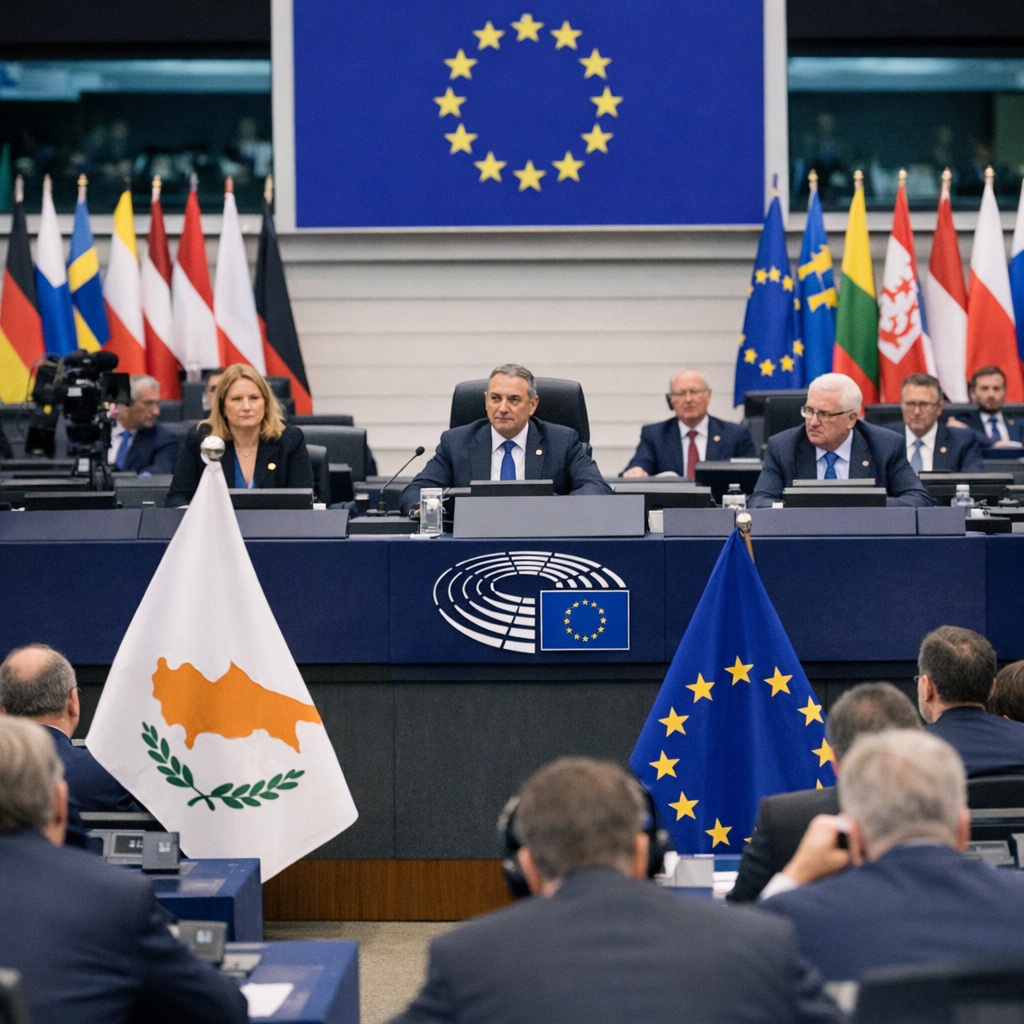
A Mediterranean presidency promises pragmatism, cohesion, and a renewed focus on security, competitiveness, and enlargement as lawmakers and governments align priorities.
As Cyprus assumes the rotating presidency of the Council of the European Union, attention across Brussels turns to how the European Parliament and national governments will converge on an ambitious, politically sensitive agenda. The handover comes at a moment when the Union is seeking stability after years of overlapping crises, while simultaneously preparing for structural reforms that could define its trajectory for the next decade.
Cyprus, the easternmost member state of the EU, arrives at the helm with a reputation for consensus-building and a keen awareness of the Union’s geopolitical periphery. Its leadership is expected to place the European Parliament at the center of legislative momentum, ensuring that policy files move decisively through a complex institutional landscape.
A presidency shaped by pragmatism
Officials close to the Cypriot presidency describe an approach rooted in realism rather than grand declarations. The focus is on steering negotiations efficiently, preserving unity among member states, and reinforcing the Parliament’s role as co-legislator at a time when public trust in European institutions remains uneven.
The European Parliament, newly settled into its working rhythm after a period of political transition, is seen as a crucial partner. Lawmakers are preparing to advance dossiers that had stalled amid electoral cycles and shifting majorities. Cyprus’s task will be to broker compromises that respect Parliament’s ambitions while accommodating divergent national interests in the Council.
This balancing act is particularly visible in the economic sphere. Competitiveness, industrial resilience, and strategic autonomy dominate the agenda, reflecting concerns about Europe’s position in an increasingly fragmented global economy. Parliamentarians are pressing for measures that support innovation and protect workers, while governments remain cautious about fiscal exposure and regulatory burdens.
Security and stability at the forefront
Security considerations are also shaping the presidency’s priorities. From energy resilience to migration management, Cyprus brings first-hand experience of challenges that are often discussed in abstract terms in northern capitals. The European Parliament has signaled its intention to push for stronger common frameworks, especially where fragmented national responses have proven insufficient.
Migration remains one of the most politically charged issues. Cypriot officials are expected to prioritize progress on implementation mechanisms, seeking practical outcomes rather than reopening ideological battles. In the Parliament, there is cautious optimism that incremental steps can restore credibility to the EU’s approach, even if a comprehensive solution remains elusive.
At the same time, external relations are moving higher up the legislative agenda. Enlargement, long a sensitive topic, is returning to the forefront as geopolitical realities reshape the Union’s neighborhood. Cyprus is positioning itself as a facilitator of structured debate, allowing the Parliament to articulate conditions and safeguards while keeping accession perspectives credible.
Climate ambition meets economic reality
The green transition remains a defining pillar of EU policy, but the tone is evolving. Under Cyprus’s stewardship, discussions are expected to shift toward implementation, competitiveness, and social fairness. Parliamentarians are increasingly vocal about aligning climate ambition with industrial strategy, ensuring that environmental goals do not undermine Europe’s economic base.
This recalibration reflects broader public sentiment. While support for climate action remains strong, there is growing insistence on predictability for businesses and protection for vulnerable households. The Cypriot presidency aims to channel these concerns into constructive legislative outcomes, avoiding polarization and reinforcing the Parliament’s role as a forum for compromise.
Institutional cooperation under scrutiny
Behind the policy files lies a deeper institutional challenge: restoring a sense of coherence between the EU’s main decision-making bodies. The European Parliament, the Commission, and the Council are under pressure to demonstrate that the Union can deliver tangible results.
Cyprus’s leadership is widely seen as an opportunity to reset working relationships. By emphasizing transparency and early engagement with parliamentary committees, the presidency hopes to reduce last-minute confrontations and accelerate legislative timetables. For many lawmakers, this cooperative tone will be a key test of the presidency’s success.
Diplomats note that Cyprus’s smaller size may work to its advantage. Without the weight of major power politics, it can act as an honest broker, focusing on process and outcomes rather than national visibility. This dynamic could strengthen the Parliament’s influence, particularly on files where political sensitivity has previously led to inertia.
A moment of expectation
As the presidency unfolds, expectations remain cautious but tangible. Few anticipate sweeping breakthroughs, yet there is a shared sense that steady progress across multiple fronts would signal renewed institutional confidence. For the European Parliament, this period represents a chance to assert its legislative weight and reconnect policy debates with citizens’ concerns.
Cyprus, for its part, is aware that the spotlight is unforgiving. Success will be measured not by rhetoric but by the quiet advancement of files that shape daily life across the Union. In a climate of global uncertainty, that may be precisely the leadership style Europe needs.
If the presidency can harness parliamentary energy, maintain unity among member states, and deliver pragmatic outcomes, it will have done more than manage a rotating mandate. It will have helped set the tone for a Union seeking direction, credibility, and renewed purpose.



 The Tower Post