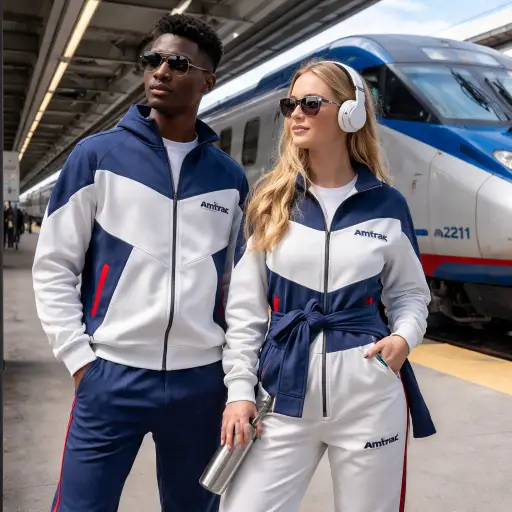
A limited-edition tracksuit line tied to Amtrak’s NextGen Acela trains merges comfort, design, and transit pride—signaling a new direction for American mobility branding.

Amtrak has spent decades trying to persuade Americans that rail travel can be as modern, comfortable, and stylish as any alternative. This winter, the national passenger rail operator is taking that argument out of the station and into the closet.
With the launch of its limited-edition “Trak Suits,” Amtrak is debuting an unexpected fashion statement inspired by its NextGen Acela high-speed trains. The collection, centered on premium tracksuits, blends contemporary streetwear aesthetics with the understated functionality of rail travel. The result is a carefully branded experiment that reflects how transportation culture, lifestyle design, and identity marketing are increasingly intersecting.
At first glance, the idea of a government-backed rail operator releasing apparel might seem like a novelty. But the Trak Suits project is more than merchandise. It is positioned as a cultural extension of the NextGen Acela fleet, which represents Amtrak’s most ambitious attempt yet to redefine intercity rail as efficient, aspirational, and human-centered.
The tracksuits themselves emphasize comfort and movement—qualities long associated with both athletic wear and long-distance travel. Cut for relaxed mobility rather than overt performance, the garments use soft, durable fabrics designed to feel equally appropriate in a station lounge, a train seat, or an urban sidewalk. Subtle design cues nod to rail culture: streamlined paneling that echoes train contours, restrained color palettes inspired by Acela interiors, and discreet branding that avoids loud logos.
Amtrak executives describe the line as an exercise in storytelling rather than a pivot into fashion retail. The Trak Suits are meant to embody the experience of modern rail travel—calm, efficient, and thoughtfully designed—while appealing to a generation that sees clothing as an extension of personal values. Sustainability, comfort, and versatility are baked into both the product and the narrative.
This approach reflects a broader shift in how transportation companies communicate with the public. Airlines, automakers, and mobility startups increasingly sell lifestyles rather than vehicles or tickets. Amtrak’s move suggests that rail, often perceived as utilitarian or outdated in the U.S., is seeking cultural relevance beyond schedules and seat classes.
The timing is deliberate. The NextGen Acela trains are the most visible symbol of Amtrak’s modernization push, promising faster trips, quieter cabins, and improved accessibility along the Northeast Corridor. By tying the Trak Suits directly to this flagship service, Amtrak is aligning its physical infrastructure with a softer, more emotional form of branding.
Fashion analysts note that transit-inspired clothing has long existed at the margins, from workwear influenced by industrial uniforms to streetwear that borrows from commuter aesthetics. What makes the Trak Suits notable is the source: the operator itself. Instead of being interpreted by designers from the outside, rail culture is being articulated from within the institution.
The collection’s limited nature adds to its appeal. Produced in small quantities, the Trak Suits are positioned as collectibles rather than mass-market apparel. This scarcity reinforces the idea that the garments are symbols of participation in a moment—one in which American rail is trying to reinvent itself.
There is also an element of irony at play. Tracksuits, historically associated with athletic training and later with leisure and subculture, are being reclaimed by a literal rail operator. The wordplay is intentional, but the execution avoids gimmickry. The designs are restrained, almost minimalist, suggesting that Amtrak is more interested in quiet confidence than viral spectacle.
Critics may question whether apparel can meaningfully change perceptions of rail travel in a car-centric country. A tracksuit does not reduce travel times or expand routes. But branding experts argue that cultural shifts often begin at the margins. When a transportation provider becomes part of everyday style conversations, it signals relevance beyond functional necessity.
For younger travelers, especially those who prioritize experiences over ownership, rail already holds a certain romance. The Trak Suits tap into that sentiment, framing train travel as a deliberate, stylish choice rather than a compromise. Wearing the garment becomes a subtle declaration of alignment with slower, more sustainable mobility.
Amtrak is careful not to overstate the initiative. The Trak Suits are not presented as a core business line, nor as a replacement for investment in infrastructure. Instead, they function as a conversation piece—a way to humanize a large, complex organization and invite the public to engage with it differently.
Internally, the project has also been described as a morale booster, giving employees and rail enthusiasts something tangible that celebrates their work and passion. Transit culture has always thrived among insiders; this collection simply opens the door to a wider audience.
Whether the Trak Suits become a sought-after collector’s item or a brief cultural footnote remains to be seen. What is clear is that Amtrak is experimenting with how a public transportation brand can exist in contemporary culture. In doing so, it is acknowledging that trains are not just machines that move people—they are environments, experiences, and, increasingly, sources of identity.
As the NextGen Acela trains glide along the corridor, the Trak Suits offer a parallel journey in fabric and form. Together, they suggest a future in which American rail is not only faster and more efficient, but also confidently expressive. In that sense, Amtrak’s latest departure is less about fashion than about belonging—inviting passengers to wear the journey, not just ride it.