Madrid’s Rejection of U.S. Military Cooperation Signals a Broader Shift Toward Diplomacy-First Policies Across the Continent

In a political landscape increasingly defined by shifting alliances and rising global tensions, Spain has positioned itself at the forefront of a renewed European emphasis on diplomacy over military escalation. The government in Madrid has taken a firm and highly visible stance against deepening military cooperation with the United States, marking a notable divergence from several of its European counterparts and reshaping conversations about security, sovereignty, and peace across the continent.
This strategic pivot has not emerged in isolation. It reflects a convergence of domestic political priorities, historical memory, and a growing public appetite for policies that privilege negotiation over confrontation. As conflicts in various regions continue to test international alliances, Spain’s posture is being closely watched as a potential model for a more cautious and dialogue-driven European foreign policy.
At the heart of Spain’s position is a clear refusal to expand military commitments tied to U.S.-led initiatives. While maintaining its obligations within existing frameworks, Madrid has resisted calls for increased logistical support, deployment coordination, and joint operations that could entangle the country more deeply in ongoing or potential conflicts. Officials have emphasized that Spain’s role should be that of a mediator and stabilizing force, rather than an active participant in military escalation.
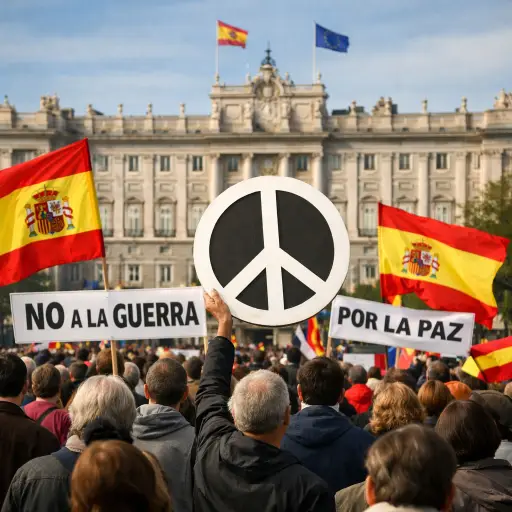
This approach has resonated strongly within Spain’s domestic political sphere. Public opinion, shaped by decades of skepticism toward foreign military interventions, has largely supported the government’s stance. Memories of past conflicts and their social and economic consequences continue to influence voters, reinforcing a preference for policies that avoid direct involvement in war. As a result, the administration has seen a measurable boost in political support, particularly among younger voters and urban populations who prioritize international cooperation, humanitarian concerns, and multilateral diplomacy.
Political analysts note that Spain’s leadership is leveraging this moment to consolidate its identity as a peace-oriented nation within Europe. By articulating a consistent message that emphasizes negotiation, conflict prevention, and international law, Madrid is not only responding to domestic expectations but also attempting to shape the broader European agenda. This has positioned Spain as a key voice in ongoing debates within European institutions, where divisions over defense spending, strategic autonomy, and transatlantic relations remain pronounced.
The implications of Spain’s stance extend beyond its borders. Several European countries, while not adopting identical policies, have begun to echo elements of Madrid’s rhetoric. There is a growing recognition that prolonged conflicts and military entanglements carry significant economic and political costs, particularly at a time when many governments are grappling with inflation, energy transitions, and social welfare demands. In this context, Spain’s emphasis on diplomacy-first strategies offers an alternative framework that prioritizes stability and long-term conflict resolution over immediate military responses.
Critics, however, argue that Spain’s position risks undermining collective security efforts. Some policymakers contend that a unified and robust military posture is necessary to deter aggression and maintain geopolitical balance. They warn that reluctance to deepen cooperation with key allies could create vulnerabilities or signal a lack of commitment to shared defense responsibilities. These concerns have sparked ongoing debates within European councils and defense forums, highlighting the tension between differing visions of security.
Spain’s government has responded by framing its policy not as a retreat from responsibility, but as a recalibration of priorities. Officials stress that diplomacy and defense are not mutually exclusive, and that reducing reliance on military solutions can enhance, rather than weaken, long-term security. By investing in diplomatic channels, conflict mediation, and international partnerships focused on development and humanitarian aid, Spain aims to address the root causes of instability rather than its symptoms.
This perspective aligns with a broader shift in public discourse across Europe, where citizens are increasingly questioning the effectiveness of traditional security paradigms. The economic strain of sustained military engagement, coupled with the humanitarian toll of ongoing conflicts, has fueled calls for alternative approaches. Spain’s leadership has tapped into this sentiment, presenting its policies as both pragmatic and forward-looking.
The economic dimension of Spain’s strategy is also significant. By limiting additional military expenditures tied to external conflicts, the government has been able to redirect resources toward domestic priorities, including social programs, infrastructure, and green energy initiatives. This reallocation has further strengthened public support, as voters see tangible benefits from a policy that reduces foreign military commitments.
At the same time, Spain is actively engaging in diplomatic efforts on multiple fronts. Through participation in international forums and bilateral dialogues, Madrid is advocating for ceasefires, negotiations, and multilateral solutions. This proactive engagement underscores the country’s commitment to playing a constructive role on the global stage, even as it distances itself from more aggressive military strategies.
The ripple effects of Spain’s approach are becoming increasingly evident within European institutions. Discussions around strategic autonomy, a long-standing objective for many EU members, are being reframed to include not only defense capabilities but also diplomatic leadership. Spain’s example suggests that influence within the international system can be achieved through negotiation and coalition-building, rather than solely through military strength.
As Europe continues to navigate a complex and uncertain geopolitical environment, the question of how best to ensure security remains open. Spain’s emergence as a leading anti-war voice introduces a compelling alternative to conventional approaches, one that prioritizes dialogue, restraint, and the pursuit of lasting peace. Whether this model will gain broader traction across the continent is still unfolding, but its impact on current debates is undeniable.
In the evolving landscape of international relations, Spain has made a deliberate choice to redefine its role. By rejecting deeper military cooperation with the United States and championing a diplomacy-first agenda, Madrid is not only shaping its own future but also contributing to a wider reexamination of Europe’s place in the world. The coming months will reveal how this vision resonates with other nations and whether it can translate into a sustained shift in policy across the region.