War-driven oil shocks ripple through economies as policymakers weigh intervention

Across the European Union, a sharp escalation in energy prices is setting off renewed fears of inflation, straining household budgets and intensifying pressure on governments to act. The latest surge, driven largely by geopolitical instability and disrupted supply chains, is reverberating far beyond fuel markets, pushing up costs across transportation, manufacturing, and food production.
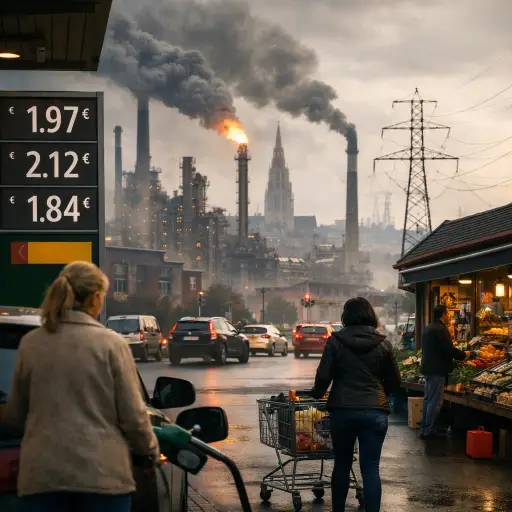
At the center of the crisis is a renewed spike in oil prices tied to ongoing conflict-related uncertainty. Traders and analysts point to supply constraints and heightened risk premiums as key drivers, with markets reacting swiftly to even minor developments. The result has been a steady climb in fuel costs that is now filtering into everyday expenses for millions of European households.
Consumers are feeling the impact almost immediately. Higher petrol and heating costs are eroding disposable income, particularly among lower- and middle-income families already coping with elevated living expenses. Retailers report a shift in spending patterns, with more households cutting back on discretionary purchases in order to absorb rising energy bills. Economists warn that this behavioral change could dampen consumer-driven growth across the bloc.
The inflationary effect is becoming increasingly visible. Energy costs, a critical input across nearly all sectors, are pushing up production and distribution expenses. Manufacturers reliant on energy-intensive processes are facing tighter margins, while logistics firms are passing on higher fuel costs to clients. Food prices, already sensitive to transportation and fertilizer costs, are showing renewed upward pressure.
Central banks are closely monitoring the situation, wary of a scenario in which energy-driven inflation becomes entrenched. Policymakers face a delicate balancing act: tightening monetary policy too aggressively could suppress economic recovery, while failing to act risks allowing inflation expectations to become unanchored. The current environment has revived debates over how best to respond to supply-driven inflation shocks that are largely beyond domestic control.
Governments across the EU are exploring a range of interventions. Among the most controversial proposals are profit caps on energy companies, aimed at limiting what policymakers describe as “excess earnings” generated during periods of crisis. Supporters argue that such measures could help redistribute gains and provide relief to consumers, while critics warn that they may deter investment in energy infrastructure and undermine long-term supply stability.
In parallel, several member states are considering targeted subsidies or tax reductions to cushion households from the immediate impact of rising prices. These measures, while politically appealing, come with fiscal trade-offs. Public finances, already stretched by previous economic support programs, may face additional strain if energy prices remain elevated for an extended period.
The industrial sector is also sounding alarms. Energy-intensive industries, including chemicals, metals, and manufacturing, are warning that sustained high prices could erode competitiveness and lead to production cuts or relocation. Business groups are urging coordinated EU-level action to ensure a level playing field and to prevent fragmentation of the single market through uneven national responses.
Energy experts emphasize that the current situation underscores the urgency of accelerating the transition to more resilient and diversified energy systems. Investments in renewable energy, storage, and grid infrastructure are increasingly seen not only as climate priorities but also as economic safeguards against external shocks. However, such transitions take time, and immediate relief remains the dominant concern for policymakers and citizens alike.
The social dimension of the crisis is becoming more pronounced. Advocacy groups warn of a growing risk of energy poverty, as vulnerable households struggle to keep up with rising costs. Calls for stronger social protections are intensifying, with some policymakers advocating for expanded assistance programs and stricter regulation of energy markets.
Market volatility shows little sign of easing. Analysts caution that as long as geopolitical tensions persist, energy prices are likely to remain sensitive to sudden shifts in sentiment. This uncertainty complicates planning for businesses and governments, both of which must navigate an environment where cost projections can change rapidly.
The broader economic outlook is increasingly tied to developments in energy markets. If high prices persist, the risk of a prolonged inflationary period could weigh on growth prospects across the EU. Conversely, any stabilization in energy costs could provide much-needed relief and help restore confidence among consumers and investors.
For now, the European Union faces a familiar but intensified challenge: managing the immediate fallout of an energy shock while laying the groundwork for longer-term resilience. The coming weeks are expected to test the effectiveness of policy responses and the cohesion of the bloc as it confronts a crisis that touches nearly every aspect of economic life.