European leaders question Washington’s long-term commitment as calls for greater defense spending expose fractures within the alliance

Trump’s Renewed Criticism to NATO
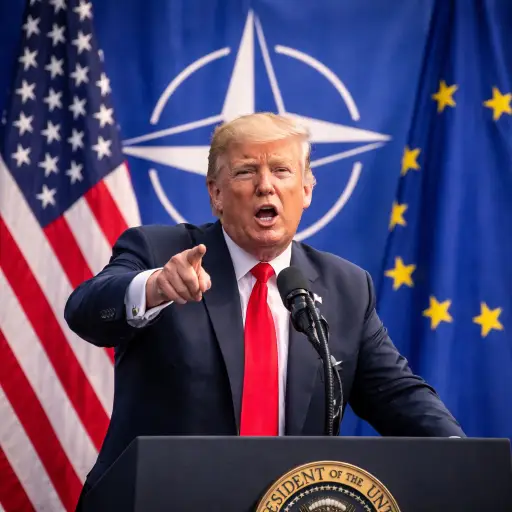
As tensions simmer across the Atlantic, recent remarks by Donald Trump targeting NATO have reignited long-standing concerns among European allies about the reliability of the United States as a security partner. The comments, delivered in a forceful and unapologetic tone, have sent shockwaves through diplomatic circles, prompting urgent discussions in European capitals about defense autonomy and strategic independence.
Trump’s criticism centers on what he describes as an unequal burden-sharing arrangement within NATO. Echoing arguments he has made in the past, he accused several European member states of failing to meet defense spending commitments, suggesting that the United States should reconsider the extent of its military support. The remarks have unsettled leaders across the alliance, many of whom see NATO as the cornerstone of Western security.
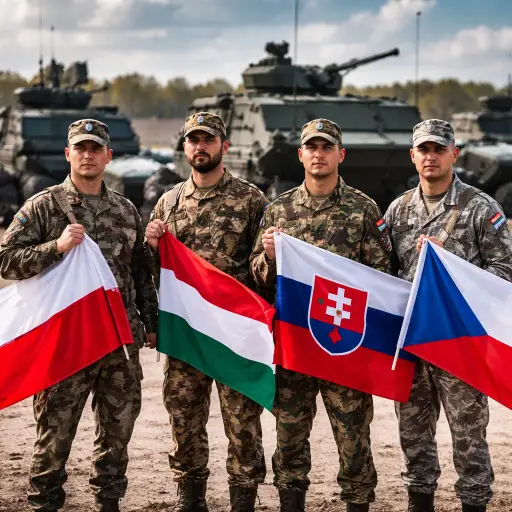
European officials reacted swiftly, with a mix of public reassurance and private alarm. Diplomats emphasized the enduring importance of transatlantic cooperation but acknowledged that the rhetoric has complicated efforts to present a unified front at a time of heightened global uncertainty. For countries bordering Russia, the stakes are particularly high, as NATO’s collective defense principle remains a critical deterrent.
Behind closed doors, however, the tone is more candid. Officials in several European governments have expressed concern that the United States may be entering a phase of strategic retrenchment, driven by domestic political pressures and shifting priorities. This perception has fueled renewed debate over whether Europe should accelerate efforts to build its own defense capabilities, independent of Washington.
The issue of defense spending has once again become a flashpoint within the alliance. While some countries have increased their military budgets in recent years, others continue to fall short of agreed targets. Trump’s remarks have amplified divisions, with some governments bristling at what they perceive as heavy-handed pressure, while others quietly acknowledge the need for greater investment in defense.
At the same time, the controversy has exposed deeper questions about the nature of NATO itself. Is it primarily a military alliance anchored by U.S. leadership, or should it evolve into a more balanced partnership among equals? This debate, long simmering beneath the surface, has gained new urgency in light of recent developments.
Analysts note that the uncertainty surrounding U.S. commitments could have far-reaching consequences. A perceived weakening of NATO’s cohesion may embolden adversaries and complicate efforts to manage crises on Europe’s periphery. It could also reshape the strategic calculations of countries beyond the alliance, altering the broader geopolitical landscape.
Despite the tensions, there are signs of resilience within NATO. Senior officials have reiterated their commitment to collective defense and emphasized the alliance’s adaptability in the face of new challenges. Military cooperation continues, and joint exercises remain a visible demonstration of unity.
Yet the political dimension of the alliance appears increasingly fragile. Trust, once taken for granted, now requires constant reaffirmation. European leaders are navigating a delicate balance: maintaining strong ties with Washington while preparing for the possibility of a less predictable partner.
For many in Europe, the current moment represents a turning point. The question is no longer whether the transatlantic relationship will change, but how. Some see an opportunity to strengthen Europe’s role within NATO, while others worry that too much divergence could undermine the alliance’s effectiveness.
As the debate unfolds, one thing is clear: Trump’s latest intervention has reopened fundamental questions about the future of NATO. Whether the alliance emerges stronger or more divided will depend on the ability of its members to reconcile competing priorities and reaffirm their shared commitment to collective security.
In the coming weeks, attention will focus on diplomatic engagements and policy decisions that could shape the trajectory of the alliance. For now, uncertainty looms, and the transatlantic bond—long considered unshakeable—faces one of its most significant tests in decades.