A bold move into club ownership signals a new chapter for Lionel Messi — and a potential turning point for grassroots football in Catalonia

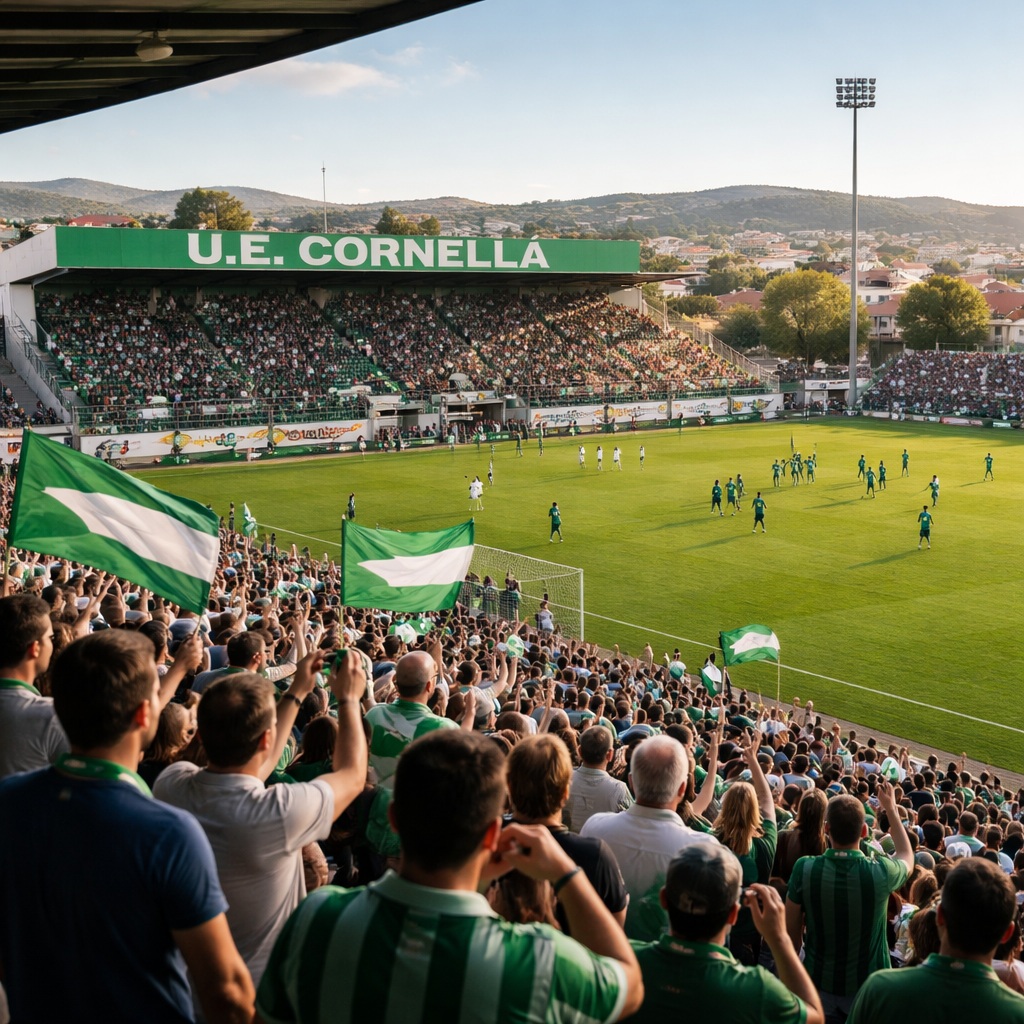
The rhythms of lower-league football in Spain are rarely interrupted by global headlines. Modest crowds, tight budgets, and a relentless calendar usually define life at this level. Yet that rhythm has been unmistakably disrupted following the announcement that Argentine superstar Lionel Messi, eight-time Ballon d’Or winner and World Cup champion, has become the new owner of UE Cornellà, a Catalan club competing in Spain’s fifth tier.
The news, confirmed through official club communication, immediately elevated Cornellà from relative obscurity to international relevance. For decades, the club has existed as a resilient but largely overlooked presence within Spain’s dense football pyramid. Now, with Messi at the helm, it finds itself at the center of a narrative that stretches far beyond Catalonia.
Messi’s decision marks a significant evolution in his career. While many elite footballers have pursued investments in the sport, ownership of a lower-division club reflects a more grounded and potentially transformative ambition. Rather than attaching his name to an established giant, Messi has chosen a project that demands patience, structure, and long-term vision.
UE Cornellà has built its identity on discipline and development. Known for its emphasis on youth training and tactical cohesion, the club has consistently operated within tight financial limits. That reality is unlikely to change overnight, but the presence of one of football’s most influential figures opens new avenues for growth, both on and off the pitch.
Early indications suggest that the project will focus on infrastructure, academy development, and sustainability. Rather than pursuing rapid promotion through heavy spending, the strategy appears designed to strengthen the club’s foundations. Such an approach aligns with broader trends in modern football, where long-term planning increasingly defines successful projects outside the elite tier.
For Catalonia, the development carries emotional resonance. Messi’s deep connection to the region, forged during his years at FC Barcelona, adds symbolic weight to his return in a leadership capacity. While this is not a comeback in the traditional sense, it represents a renewed commitment to the football culture that shaped much of his career.
The commercial impact has been immediate. Global interest in Cornellà has surged, with increased media coverage and a noticeable rise in attention from sponsors and supporters. Matches that once attracted local audiences are now drawing international curiosity, transforming the club’s visibility in a matter of days.
However, the challenges remain considerable. Spain’s lower divisions are highly competitive and often unforgiving environments. Financial disparities, logistical constraints, and the sheer difficulty of climbing the league system present obstacles that cannot be overcome through reputation alone. Success will depend on careful management, coherent planning, and the ability to maintain stability over time.
Messi’s role will also be closely scrutinized. Ownership brings responsibilities that differ sharply from those of a player. Strategic decisions, financial oversight, and long-term planning require a different set of skills, and the transition will be watched by analysts across the sport.
Yet the potential upside is significant. If Cornellà can leverage its new profile effectively, it may become a model for how smaller clubs can evolve without abandoning their identity. The combination of global influence and local roots could prove to be a powerful formula in a football landscape increasingly defined by contrasts between wealth and tradition.
Beyond the immediate implications, the move reflects a broader shift within the sport. As more players approach the later stages of their careers, ownership and investment in football institutions are becoming more common. Messi’s entry into this space, particularly at a grassroots level, may encourage others to follow a similar path.
For now, Cornellà stands at the beginning of an unexpected journey. What was once a quiet, community-focused club has become the focal point of a global story. Whether this chapter leads to sustained success or remains a compelling experiment will depend on decisions made far from the spotlight, in offices rather than on the pitch.
What is certain is that the landscape has changed. With Lionel Messi now shaping its future, UE Cornellà is no longer just another name in Spain’s lower divisions. It is a project under the gaze of the football world, carrying both the weight of expectation and the promise of something entirely new.