The Inditex-owned label leans into cultural storytelling and elevated design as it unveils a multi-sensory showcase in the French capital

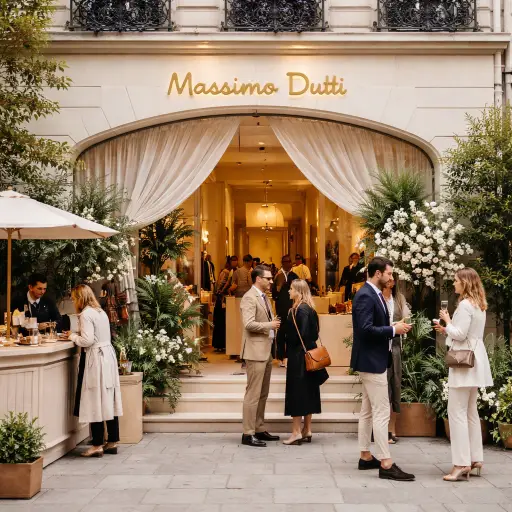
In the evolving landscape of premium high-street fashion, Massimo Dutti is sharpening its identity. This weekend, the brand opens a refined pop-up experience in Paris, signaling a deliberate step further into the upmarket segment and a growing emphasis on lifestyle-driven retail.
Owned by Inditex, the label has long occupied a quieter corner of the group’s portfolio, positioned above mass-market offerings yet below luxury. The Paris activation, however, suggests a recalibration. Rather than simply presenting a seasonal collection, the brand is staging an immersive environment built around its “Limited Edition” line—one that blends fashion with design, gastronomy and cultural dialogue.
Set within a carefully restored Haussmann-style space, the pop-up trades traditional retail cues for something closer to a curated salon. Soft lighting, natural textures and architectural restraint frame the collection, which itself leans heavily on elevated materials and artisanal finishes. Linen tailoring, fluid silhouettes and understated palettes dominate, reflecting a design language increasingly aligned with contemporary luxury.
But the garments are only one layer of the experience. Throughout the activation, the brand hosts a rotating program of collaborations with creatives spanning multiple disciplines. Designers, chefs and cultural figures are invited to reinterpret the ethos of the collection through their own mediums, transforming the space into a living platform rather than a static showroom.
This approach reflects a broader shift within fashion retail, where storytelling and emotional engagement are becoming as critical as the product itself. For Massimo Dutti, the strategy also addresses a key challenge: differentiation within a crowded premium segment where consumers are seeking both quality and meaning.
Food plays a central role in this narrative. A curated culinary offering, developed in partnership with emerging gastronomic talents, complements the collection’s Mediterranean sensibility. Seasonal ingredients, minimalist presentation and a focus on craftsmanship echo the brand’s design principles, reinforcing a cohesive identity across categories.
Equally significant is the emphasis on cultural programming. Talks, small-scale performances and intimate gatherings are woven into the schedule, creating moments of exchange between guests and collaborators. In doing so, the brand positions itself not just as a retailer, but as a facilitator of contemporary culture—an ambition increasingly common among labels seeking to elevate their perception.
Industry observers note that such initiatives are becoming essential for brands operating in the “accessible luxury” space. As price points inch upward, so too must the perceived value. Experiential retail, particularly in cities like Paris, offers a way to justify that shift while building deeper connections with a discerning audience.
For Inditex, the move also underscores a diversification strategy within its portfolio. While flagship chains continue to drive volume, there is growing recognition of the need for brands that can capture higher-margin segments and respond to consumers trading up. Massimo Dutti, with its established aesthetic and relatively understated profile, is well positioned to play that role.
The Paris pop-up can therefore be read as both a brand statement and a market test. By concentrating its efforts in a single, high-impact activation, the label is able to gauge consumer response to a more refined proposition without committing to a permanent retail overhaul. Early indications suggest that the approach resonates, particularly among an audience attuned to subtle luxury and experiential depth.
There is also a symbolic dimension to the choice of location. Paris remains a global benchmark for taste and cultural authority, and staging such an initiative here signals confidence. It places Massimo Dutti in direct dialogue with both heritage houses and a new wave of independent designers redefining the city’s creative landscape.
What emerges from this activation is a clearer articulation of the brand’s ambitions. It is no longer content to sit quietly within the premium high street. Instead, it is edging closer to the territory traditionally occupied by contemporary luxury labels—while maintaining the accessibility that has defined its appeal.
Whether this strategy will translate into sustained growth remains to be seen. Yet the direction is unmistakable. Through a blend of elevated product, curated experiences and cross-disciplinary collaboration, Massimo Dutti is crafting a narrative that extends beyond clothing.
In a market where differentiation is increasingly elusive, that narrative may prove to be its most valuable asset.