U.S. president calls the attack “horrible” amid renewed scrutiny of Moscow’s tactics and Western response

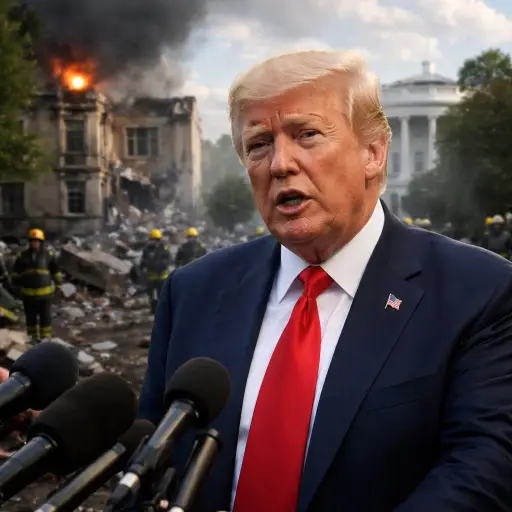
In a rare moment of stark language, Donald Trump has publicly condemned a deadly Russian assault on Ukraine that left at least 19 people dead across multiple locations overnight, underscoring the continued human cost of a war that shows little sign of easing. Speaking in response to a question from Radio Free Europe/Radio Liberty, Trump described the coordinated attack as “horrible,” offering one of his clearest verbal rebukes of Moscow’s actions since returning to the global diplomatic stage. The strike, described by Ukrainian officials as a combined aerial offensive involving drones and missiles, hit both civilian infrastructure and residential areas, once again placing non-combatants at the center of the conflict.
The assault unfolded in the early hours, catching many residents off guard as air raid sirens echoed across several regions. Emergency crews worked through the night, pulling survivors from the rubble of damaged buildings and battling fires ignited by the blasts. Images from the affected areas showed shattered homes, scorched facades, and dazed civilians navigating debris-strewn streets.Authorities in Ukraine reported that the victims included civilians in residential zones far from active frontlines, reinforcing long-standing concerns about the indiscriminate nature of certain attacks attributed to Russian forces. While military targets were also reportedly struck, the widespread destruction in populated areas has drawn renewed criticism from Western governments and humanitarian organizations.
Trump’s remarks, though brief, come at a sensitive moment in international diplomacy surrounding the war. His characterization of the attack as “horrible” aligns with broader Western condemnation but stops short of outlining specific policy responses or shifts in U.S. strategy. Still, the statement signals a recognition of the gravity of the situation, particularly as civilian casualties continue to mount.
The Kremlin has not immediately responded to Trump’s comments, but Russia has consistently maintained that its military operations are directed at strategic targets. Ukrainian officials, however, argue that such claims are increasingly difficult to reconcile with the scale of destruction observed in civilian areas. Analysts note that combined attacks of this nature—utilizing both drones and missile systems—have become a hallmark of recent Russian tactics, designed to overwhelm air defense systems and maximize impact. The approach has raised alarms among Ukraine’s allies, who are under growing pressure to enhance defensive support, including advanced air defense capabilities.
For residents on the ground, the geopolitical calculations offer little comfort. Survivors described scenes of chaos and fear as explosions ripped through neighborhoods in the dead of night. “We heard multiple blasts, one after another,” said one resident in a heavily affected area. “There was no time to react. Everything just collapsed.” Humanitarian agencies have reiterated calls for greater protection of civilians, warning that continued strikes on populated areas risk deepening an already severe humanitarian crisis. Displacement, infrastructure damage, and psychological trauma are compounding the challenges faced by communities across Ukraine.
Trump’s response also highlights the ongoing role of international media in shaping political reactions. The question posed by Radio Free Europe/Radio Liberty brought immediate attention to the attack, illustrating how real-time reporting continues to influence global discourse and prompt responses from world leaders. Despite periodic diplomatic efforts, the conflict remains entrenched, with both sides showing limited willingness to de-escalate. The latest attack serves as a grim reminder of the war’s persistence and the fragile security environment in which millions of Ukrainians continue to live.
As recovery efforts continue in the affected regions, attention is once again turning to the broader implications of the strike. For Ukraine and its allies, the challenge remains not only to respond to immediate crises but also to address the longer-term trajectory of a conflict that continues to reshape the geopolitical landscape. Trump’s words, while succinct, echo a sentiment shared across much of the international community: the human toll of the war remains unacceptable, and the path toward resolution remains uncertain.