Foreign Ministry signals continued legal efforts as questions over complicity during World War II resurface in international discourse

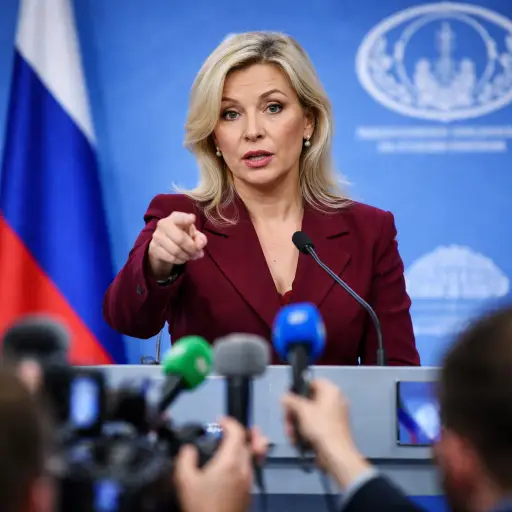
As global attention periodically returns to unresolved legacies of the Second World War, Russian officials have once again brought forward the issue of accountability for crimes committed against the Soviet population. Speaking at a recent press briefing, Foreign Ministry spokeswoman Maria Zakharova stated that the question of responsibility for what she described as the “genocide of the Soviet people” remains open and continues to be examined by legal experts.
Her remarks underscore a broader effort by Russian authorities to revisit historical narratives surrounding wartime suffering and to frame them within contemporary legal and political discussions. According to Zakharova, ongoing expert analysis aims to determine not only the direct perpetrators of atrocities but also the extent to which other countries may have contributed to or enabled the actions of Nazi Germany.
Citing reports carried by the state news agency TASS, Zakharova referenced a number of nations which, in her words, “assisted the Nazi regime.” While she did not provide detailed legal conclusions, her comments suggested that the scope of responsibility extends beyond Germany alone, potentially encompassing collaborators and allied entities across Europe.
The issue is not merely historical. In recent years, Moscow has increasingly emphasized the scale of Soviet losses during the war, often framing them as acts of genocide. This perspective, while rooted in documented mass killings and civilian suffering, remains subject to ongoing scholarly debate. Historians and legal experts differ on the applicability of the term “genocide,” which carries specific definitions under international law.
Legal specialists involved in the current review are said to be examining archival materials, wartime records, and prior judicial findings. The objective, according to Russian officials, is to establish a clearer legal framework that could support claims of accountability. However, it remains unclear what form such accountability might take in practical terms, given the passage of time and the complex geopolitical landscape.
Outside Russia, reactions to these statements have been cautious. Some observers interpret the renewed focus as part of a broader effort to shape historical memory and national identity. Others note that revisiting unresolved wartime issues can raise legitimate questions about justice and recognition, particularly for victims whose experiences may not have been fully acknowledged.
At the same time, the topic intersects with sensitive diplomatic considerations. Accusations of historical complicity can strain relations, especially when directed at countries that have their own narratives of wartime resistance or victimhood. As a result, discussions around accountability often extend beyond legal analysis into the realm of politics and international relations.
The renewed emphasis on this issue also reflects a wider trend in which nations seek to reinterpret historical events in light of contemporary priorities. In Russia’s case, the Second World War—known domestically as the Great Patriotic War—remains a central element of national consciousness. Efforts to highlight the scale of suffering endured by Soviet citizens are closely tied to broader themes of resilience, sacrifice, and historical justice.
For legal experts, the challenge lies in navigating the gap between historical documentation and modern legal standards. The concept of genocide, as defined in international conventions, requires specific criteria to be met, including intent to destroy a particular group. Determining whether these criteria apply to the wartime experiences of Soviet populations is a complex and contested task.
As discussions continue, it is likely that the debate will remain both legally intricate and politically charged. Whether the ongoing work of experts will lead to formal conclusions or international recognition is uncertain. What is clear, however, is that the question of accountability for wartime atrocities—decades after the events themselves—continues to resonate in today’s geopolitical environment.
The issue, as framed by Russian officials, is far from settled. Instead, it represents an evolving dialogue at the intersection of history, law, and memory—one that continues to shape how the past is understood and how its consequences are addressed in the present.