Sudden policy reversal underscores Washington’s effort to stabilize global markets as geopolitical tensions drive price volatility

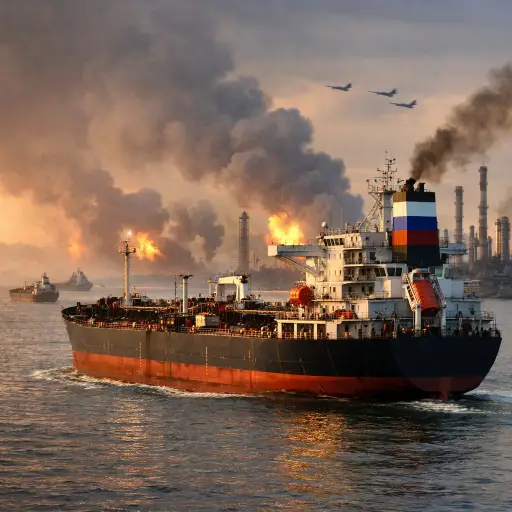
The administration of Donald Trump has quietly extended a temporary waiver allowing countries to continue purchasing sanctioned Russian oil and petroleum products loaded onto tankers, a move that highlights the increasingly delicate balance between geopolitical strategy and economic stability.
The decision, confirmed through reporting by Reuters, comes shortly after officials had indicated no such extension was planned. The abrupt reversal reflects mounting concern within Washington over surging global energy prices, which have climbed sharply in the wake of escalating conflict involving Israel, the United States, and Iran.
The waiver, now prolonged for a limited period, permits transactions involving Russian oil already in transit aboard tankers. While framed as a technical adjustment, the policy effectively provides a narrow channel for continued flows of Russian energy into global markets, softening the immediate impact of sanctions that were designed to curtail Moscow’s revenue streams.
Officials familiar with the decision describe it as a pragmatic step aimed at preventing further disruption in already strained supply chains. Energy markets have reacted nervously to the intensifying military situation in the Middle East, where fears of supply interruptions and broader regional instability have pushed prices upward.
Analysts note that the administration is attempting to walk a tightrope. On one hand, Washington remains committed to maintaining pressure on Russia through sanctions tied to its ongoing geopolitical actions. On the other, sharply rising fuel costs pose domestic political risks and threaten to slow economic activity both in the United States and globally.
“This is about managing shockwaves,” said one energy policy expert. “Cutting off supply too abruptly in the current environment could trigger a price spiral that no major economy is prepared to absorb.”
The conflict involving Iran has amplified these concerns. As a major oil producer situated near critical shipping routes, Iran’s involvement introduces significant uncertainty into global supply calculations. Even limited disruptions or the threat of escalation can ripple quickly through markets, affecting everything from crude benchmarks to refined products.
The waiver extension suggests that the administration is prioritizing short-term market stability over strict enforcement of sanctions in this specific context. By allowing already-loaded shipments to reach buyers, policymakers are buying time to assess the evolving geopolitical landscape and its economic implications.
Critics, however, argue that such measures risk undermining the credibility of sanctions. They contend that even temporary exceptions can send mixed signals to markets and to Moscow, potentially weakening the intended pressure campaign.
Supporters counter that flexibility is essential in a highly volatile environment. “Sanctions are not a blunt instrument,” said a former government advisor. “They require constant calibration, especially when multiple global crises intersect.”
The move also underscores the interconnected nature of modern energy systems. Despite efforts in recent years to diversify supply and reduce dependence on Russian oil, many countries remain indirectly exposed to its flows through global pricing mechanisms and supply chains.
For import-dependent economies, particularly in parts of Asia and Europe, the waiver provides a brief reprieve. It allows refiners and traders to complete transactions that might otherwise have been stranded, avoiding additional logistical and financial complications.
Market participants are now watching closely for further signals from Washington. The limited duration of the waiver suggests that additional decisions may be forthcoming, depending on how both the geopolitical situation and energy prices evolve.
In the background, the broader strategic dilemma remains unresolved. Efforts to isolate Russia economically continue to collide with the realities of a tightly balanced global oil market, where even small disruptions can have outsized effects.
As tensions persist and uncertainty lingers, the latest decision illustrates a recurring theme in international energy policy: the need to adapt quickly, often in ways that blur the lines between principle and pragmatism.
For now, the extension offers temporary relief to markets rattled by conflict. Whether it will be enough to stabilize prices—or merely delay further volatility—remains an open question.