The death of Yuri Gritsenko exposes the blurred lines between crime, punishment, and war

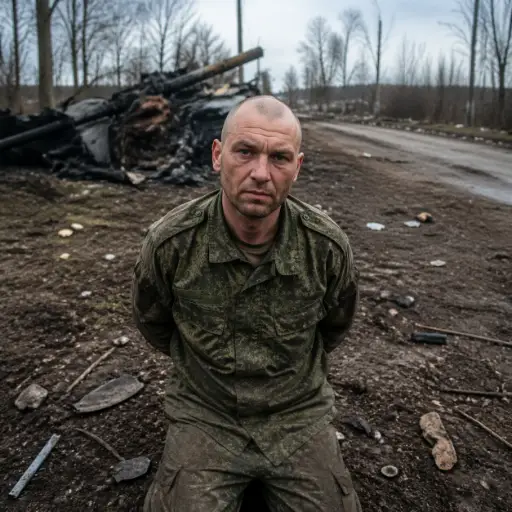
As the war in Ukraine grinds on, the conflict continues to draw in not only professional soldiers and conscripts, but also individuals from the fringes of society. Among them was Yuri Gritsenko, a convicted serial killer whose life of violence ended not in a prison cell, but on the battlefield.
According to reports circulating on Russian-language Telegram channels, Gritsenko was killed during combat operations after having joined the Russian military. His death, while unconfirmed by official sources, has reignited attention around a controversial practice: allowing convicted criminals to enlist in exchange for reduced sentences or freedom.
Gritsenko’s criminal record was both brutal and extensive. Before his recruitment, he had been convicted of murdering at least five women in Russia. Investigators also linked him to a series of violent assaults that left numerous others seriously injured. His pattern of attacks, marked by extreme brutality, led to comparisons with some of Russia’s most infamous serial offenders. He was reportedly given the grim nickname “the Zelenograd Chikatilo,” referencing the notorious Soviet-era killer Andrei Chikatilo.
Faced with the prospect of prolonged imprisonment, Gritsenko chose a different path: enlistment. His decision reflects a broader trend that has emerged during the war, where individuals serving time for serious crimes have been offered a chance to fight in exchange for clemency. Supporters of the policy argue it provides manpower during a protracted conflict. Critics, however, warn of the ethical and security risks of placing violent offenders into armed roles.
Little is known about Gritsenko’s exact role or conduct during his time in uniform. Reports suggest he was deployed to active combat zones relatively quickly, with minimal integration compared to regular troops. For some observers, his death underscores the high-risk nature of such deployments, particularly for those with limited training or questionable discipline.
Human rights advocates have repeatedly raised concerns about the implications of this recruitment strategy. They point to the potential for further violence, both within military units and in civilian areas where such individuals may operate. The lack of transparency surrounding these programs has only fueled unease.
At the same time, the story highlights a deeper tension within the Russian justice and military systems. The use of prisoners as soldiers blurs the line between punishment and redemption, raising difficult questions about accountability. For victims and their families, the idea that a convicted murderer could secure freedom through military service may feel like a distortion of justice.
Gritsenko’s death does not bring closure to the crimes he committed. Instead, it adds another layer to an already complex narrative shaped by war, desperation, and controversial state policies. His life trajectory—from violent offender to combatant—illustrates how the boundaries between crime and conflict can become dangerously intertwined.
As the war continues, cases like Gritsenko’s are likely to remain part of a broader and troubling pattern. They serve as a stark reminder that in times of prolonged conflict, the rules governing justice, accountability, and human life can shift in ways that leave lasting consequences long after the fighting ends.