Brussels pushes emergency coordination measures while accelerating the shift toward electrification and clean energy

The renewed conflict in the Middle East, which erupted at the end of February, has once again exposed Europe’s fragile energy balance and its continuing dependence on imported fossil fuels. According to estimates discussed within European institutions, the crisis has increased the European Union’s fossil fuel import costs by roughly 24 billion euros, reviving concerns over energy security, inflation, and the economic vulnerability of member states still heavily reliant on oil and gas imports.
The surge in costs comes as instability in strategic transit routes and fears of supply disruptions have driven up global energy prices. Although Europe entered the year with relatively comfortable gas reserves compared to previous winters, market volatility has intensified in recent weeks, pushing governments and industries to prepare for a prolonged period of uncertainty.
European Commission officials have responded by proposing a series of coordinated measures aimed at containing the economic impact of the crisis. Among the most urgent priorities is the joint management of gas storage replenishment across member states. Brussels wants countries to avoid bidding against one another on international markets, a phenomenon that previously contributed to sharp price spikes during earlier energy emergencies.
The Commission is also considering mechanisms for coordinated releases of strategic oil reserves if market conditions deteriorate further. Officials argue that collective action is essential to prevent fragmentation inside the bloc and to reassure markets that Europe is capable of responding in a unified manner.
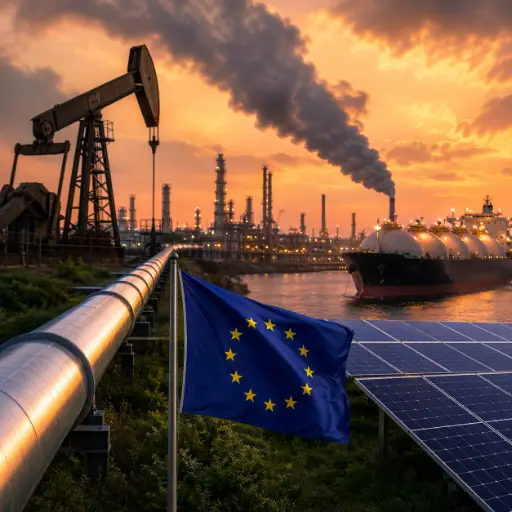
Beyond short-term crisis management, the latest geopolitical shock is strengthening calls for a faster structural transformation of the European energy system. European policymakers increasingly see electrification and clean energy investments not only as climate policies, but also as strategic security measures.
The Commission has therefore renewed pressure on member states to accelerate the deployment of renewable energy infrastructure, including wind and solar projects, electricity grids, battery storage systems, and heat pumps. Faster permitting procedures for green energy projects are once again becoming a central topic in Brussels, where officials believe bureaucratic delays are slowing Europe’s ability to reduce dependence on imported fuels.
Several EU governments are also expected to increase investments in industrial electrification and public transport networks in an effort to limit exposure to future oil price shocks. Analysts say the latest conflict demonstrates how geopolitical instability continues to directly affect household energy bills, industrial competitiveness, and inflation across Europe.
Energy-intensive industries are among the sectors most exposed to the new wave of price pressure. Chemical producers, steel manufacturers, and transport companies are already warning about rising operational costs and the risk of declining competitiveness compared to regions with cheaper domestic energy supplies.
At the same time, European consumers remain sensitive to energy inflation after years of economic turbulence linked to previous supply crises and the war in Ukraine. Although current conditions are not yet considered comparable to the most severe phases of the earlier gas emergency, policymakers are increasingly concerned that prolonged instability could weaken economic growth across the euro area.
Financial markets have reacted cautiously but attentively to developments in the Middle East. Traders continue to monitor potential risks to shipping routes and production facilities, while European governments are intensifying diplomatic contacts with key energy suppliers in North Africa, the Gulf region, and the United States.
Despite the immediate concerns, many European officials argue that the current crisis reinforces the strategic logic behind the EU’s long-term climate and energy agenda. Reducing fossil fuel consumption is now being framed not only as an environmental necessity, but also as a matter of geopolitical resilience and economic sovereignty.
Critics, however, warn that the transition cannot happen fast enough to shield Europe from short-term shocks. Some industry representatives and opposition politicians have called for a more pragmatic approach that includes temporary support for conventional energy production while renewable capacity continues to expand.
The debate reflects a broader challenge facing Europe: balancing climate ambitions with industrial stability and energy affordability during a period of global geopolitical tension. As uncertainty surrounding the Middle East conflict continues, the European Union is attempting to present itself as both economically resilient and strategically united.
For Brussels, the message is increasingly clear. Every new geopolitical crisis linked to fossil fuels strengthens the argument that Europe’s future security may depend less on imported oil and gas — and far more on electricity generated within its own borders.