Brussels signals long-term commitment to Kyiv with a major financial package aimed at weapons procurement and energy resilience while introducing a new round of pressure on Moscow.

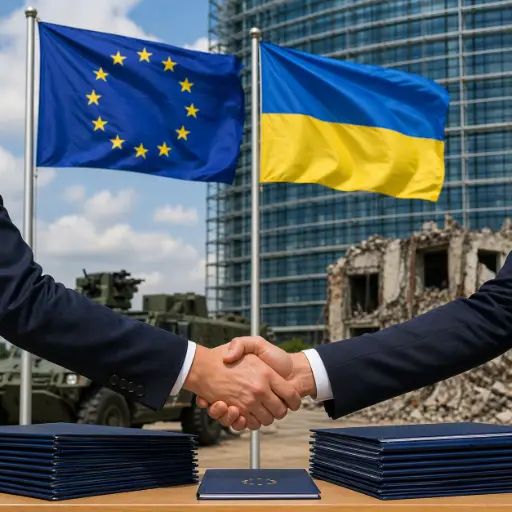
Europe has taken another decisive step in its support for Ukraine, as member states of the European Union formally approved a major financial assistance package worth 90 billion euros and agreed on a twentieth round of sanctions against Russia over its continued aggression against Kyiv.
The decision, finalized after lengthy negotiations among EU ambassadors and finance ministers, marks one of the largest collective commitments made by the bloc since the beginning of the war. Officials described the agreement as a demonstration of unity at a time when Ukraine continues to face intense military pressure on the battlefield and sustained attacks on critical infrastructure.
The loan package is expected to provide Kyiv with long-term financial stability while strengthening its military capabilities and energy network, both of which remain under severe strain after years of conflict. According to European officials familiar with the negotiations, the funding mechanism was designed to ensure rapid access to resources while maintaining guarantees from participating member states.
Ukrainian President Volodymyr Zelenskyj welcomed the decision shortly after the announcement, calling it a “strategic signal of European solidarity.” He emphasized that a significant portion of the funds would be directed toward the purchase of weapons, air-defense systems, ammunition, and the restoration of energy infrastructure repeatedly targeted by Russian strikes.
Ukraine’s energy sector has become one of the central fronts of the conflict. Repeated attacks on power stations, substations, and transmission facilities have caused recurring blackouts across several regions, forcing authorities to ration electricity during periods of peak demand. European leaders have increasingly framed the protection of Ukraine’s electrical grid as essential not only for humanitarian reasons but also for maintaining industrial production and military logistics.
Diplomats in Brussels described the approval of the loan as politically significant because it demonstrates that the European Union remains committed to supporting Ukraine despite economic pressures inside several member states. Rising defense expenditures, inflation concerns, and political divisions have complicated previous discussions over long-term aid packages. However, the latest agreement suggests that the majority of governments continue to view support for Kyiv as a strategic necessity tied directly to European security.
Alongside the financial package, EU governments also endorsed a new sanctions regime targeting Russian financial institutions, military supply chains, technology imports, and individuals linked to the Kremlin’s war effort. The latest measures are intended to further limit Russia’s access to dual-use technologies and reduce its ability to bypass previous restrictions through intermediary markets.
European Commission officials argued that sanctions remain one of the bloc’s primary non-military tools for weakening Moscow’s capacity to sustain prolonged military operations. While critics have questioned the long-term effectiveness of sanctions, European policymakers insist that cumulative restrictions have significantly complicated Russian industrial production and access to advanced components.
Several governments pushed for even tougher measures during the negotiations, including stricter oversight of energy exports and additional controls on companies suspected of helping Russia circumvent sanctions through third countries. Although some proposals were softened during final talks, diplomats indicated that additional measures remain under discussion should the conflict continue to escalate.
The agreement comes during a period of heightened uncertainty over the broader international response to the war. European capitals have increasingly sought to demonstrate leadership amid concerns about fluctuations in foreign military aid and growing geopolitical tensions beyond the continent. Analysts say Brussels is attempting to position itself as the central pillar of long-term support for Ukraine, especially in areas related to reconstruction, defense financing, and institutional integration.
Military analysts believe the new funding could help Ukraine stabilize parts of its defensive operations at a critical stage in the conflict. Continued access to artillery systems, missile defense technology, and drone capabilities is considered essential as Russian forces intensify pressure in several strategic areas. At the same time, repairing damaged energy facilities ahead of future seasonal demands remains an urgent priority for Kyiv.
In financial markets, the announcement was interpreted as a sign that Europe intends to maintain predictable economic backing for Ukraine over the coming years. Investors and international lenders have repeatedly warned that uncertainty surrounding external support could weaken Ukraine’s already fragile economy and slow reconstruction efforts.
Public opinion across Europe remains broadly supportive of Ukraine, although signs of fatigue have emerged in some countries where governments face mounting domestic economic challenges. Nevertheless, recent polling in several major EU member states indicates that a majority of citizens still support continued assistance to Kyiv, particularly in areas linked to defense and humanitarian aid.
For Brussels, the approval of both the financial package and the new sanctions carries symbolic weight beyond immediate military and economic consequences. European leaders are increasingly portraying the conflict as a defining moment for the future of the continent’s security architecture and political cohesion.
As the war continues with no immediate diplomatic breakthrough in sight, the European Union appears determined to reinforce the message that its support for Ukraine will remain both financial and strategic. The latest decisions underline a broader shift within Europe toward deeper defense coordination, stronger geopolitical positioning, and a more assertive response to ongoing instability on its eastern border.