A historic decision could finally expose the hidden network of informers and collaborators who operated under Hungary’s communist regime, reopening unresolved questions about memory, accountability and national identity.

A long-buried chapter of Hungarian history is returning to the center of national debate as the country’s new government prepares to publish, for the first time, a comprehensive list of agents and collaborators tied to the communist security apparatus established after the Second World War. The decision marks one of the most sensitive political and historical moments in modern Hungary, reopening questions of accountability, memory and national identity that have remained unresolved for decades.
For years, historians, victims’ groups and civil society organizations argued that Hungary lagged behind many of its Central European neighbors in confronting the legacy of state surveillance under communist rule. While countries such as Germany, the Czech Republic and Poland gradually opened secret police archives or introduced forms of lustration, Hungary chose a more cautious and fragmented approach. Partial disclosures occurred over time, but no government ever released a full public register of individuals who collaborated with the state security services.
That is now expected to change.
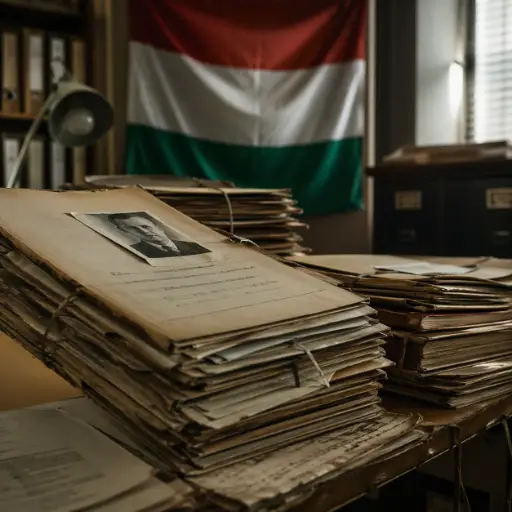
Officials close to the new administration say the planned publication will include thousands of names connected to the intelligence and surveillance networks that operated during the communist decades. The archives reportedly contain records of informers, handlers and operatives involved in monitoring dissidents, artists, clergy members, journalists and ordinary citizens considered politically unreliable by the regime.
The move has already triggered intense political debate across the country. Supporters describe the initiative as a necessary act of historical transparency and a moral obligation toward victims who lived under decades of fear and suspicion. Critics, however, warn that the process could deepen social divisions and reopen old wounds in a society where many families still carry painful memories from the era.
“The truth cannot remain locked away forever,” said one Budapest-based historian involved in archival research. “Every post-communist society had to decide how to face its past. Hungary postponed that confrontation for too long.”
The communist system established in Hungary after the war relied heavily on extensive internal surveillance. Security services built vast networks of informers inside workplaces, universities, churches and cultural institutions. Citizens were often pressured into cooperation through intimidation, blackmail or threats against family members. In many cases, personal friendships and professional relationships were shaped by suspicion, creating a climate of mistrust that survived well beyond the fall of communism.
For survivors and descendants of victims, the upcoming disclosures represent more than a political decision. Many still do not know who reported on them, who monitored their conversations or who contributed to arrests and professional persecution during the Cold War years.
Human rights organizations welcomed the government’s announcement but urged authorities to handle the publication carefully. Several legal experts have also raised concerns over privacy issues and the possibility of incomplete or misleading archival material. Historians caution that some records may have been destroyed or manipulated during the chaotic final years of the regime.
“There is always a danger in reducing history to simple lists,” said a researcher specializing in Eastern European transitional justice. “Some people collaborated willingly, others acted under coercion. The archives reveal facts, but they do not always reveal motives.”
The issue carries particular symbolic weight because Hungary experienced a unique and often contradictory transition after the collapse of communism. Unlike in some neighboring states, many former officials and individuals connected to the previous system remained influential in political and economic life during the democratic period. Attempts to introduce stronger vetting laws repeatedly stalled amid political disputes and constitutional challenges.
As a result, debates over accountability never fully disappeared from Hungarian public life. The question resurfaced periodically through media investigations, court cases and isolated archival revelations, often involving prominent public figures. Yet no administration succeeded in implementing a broad and definitive disclosure policy.
The current government argues that the release of the files is intended not as political revenge, but as an effort to close a historical chapter through transparency. Officials insist the archives belong to the nation and should be accessible to citizens and researchers alike.
Public reaction remains divided. In Budapest and other major cities, discussions have intensified in universities, newspapers and television debates. Some younger Hungarians see the initiative as overdue and essential for understanding the country’s modern history. Others fear the process may become politicized, particularly in a deeply polarized political climate.
The emotional impact may be strongest among older generations who lived through the communist decades. For many families, the archives could reveal uncomfortable truths about relatives, neighbors or respected public figures. Similar disclosures in other former Eastern Bloc countries sometimes exposed collaborators in academia, journalism, religious institutions and the arts, leading to public scandals and personal tragedies.
International observers are watching closely. Across Central and Eastern Europe, the legacy of communist-era surveillance remains a powerful and unresolved issue more than three decades after the end of Soviet influence in the region. The Hungarian decision could renew broader debates about historical justice, democratic transparency and the limits of reconciliation in post-authoritarian societies.
Whether the publication ultimately brings closure or further division remains uncertain. What is already clear, however, is that Hungary is preparing to confront a part of its past that generations of governments preferred to leave in the shadows.
As archivists continue organizing millions of pages of documents ahead of the release, the country stands before a moment of collective reckoning. Behind every file lies a human story — of fear, compromise, resistance or survival — from an era whose consequences still echo through Hungarian society today.