A woman died in the mountains near the Slovak border after a suspected attack by a bear, renewing debate over wildlife safety, growing predator populations, and the fragile balance between nature and human activity in Central Europe.

In the remote mountain forests of southeastern Poland, a quiet morning in the wilderness turned into tragedy when a fifty-eight-year-old woman died during what authorities believe was a bear attack. The incident occurred near the small village of Plonna, only a few kilometers from the border with Slovakia, in a region known for its dense forests, rugged terrain, and growing population of large predators.
According to local officials and rescue services, the woman had entered the forest together with her twenty-seven-year-old son. The pair were reportedly searching for naturally shed deer antlers, a seasonal activity practiced by hikers, collectors, and wildlife enthusiasts throughout the Carpathian region. At some point during their excursion, contact with a bear apparently occurred deep inside the woodland area.
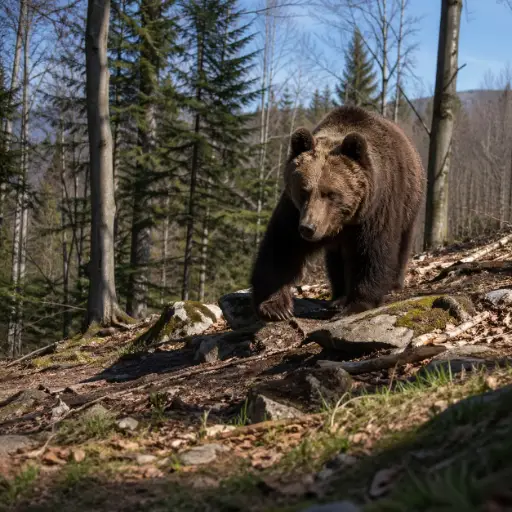
Emergency teams were alerted shortly afterward, but despite rescue efforts the woman was found dead at the scene. Her son survived the encounter and informed authorities about the events leading up to the tragedy. Investigators have not yet released all details, but early indications strongly suggest that a female bear defending her territory or cubs may have been involved.
The case has shocked local communities across the Subcarpathian region, where encounters with bears, though increasingly reported, remain relatively rare and are seldom fatal. Residents of nearby villages described the forests around Plonna as beautiful but unpredictable, especially during spring, when animals become more active after winter.
Wildlife experts note that female bears are particularly protective during this period of the year. Conservation specialists explain that accidental encounters often occur when humans unknowingly approach feeding areas or move quietly through dense terrain where visibility is limited. In many cases, the animals react defensively rather than aggressively.
Authorities temporarily warned residents and tourists to avoid some forest trails in the area while specialists examined tracks and searched for additional evidence. Forestry officials and environmental agencies are also expected to evaluate whether further monitoring measures should be introduced in the region.
The tragedy has reopened a broader discussion taking place across Central and Eastern Europe, where bear populations have gradually expanded over recent years. Countries including Poland, Slovakia, Romania, and parts of the Czech Republic have recorded a rising number of sightings near villages, hiking routes, and rural settlements. Experts attribute the trend to successful conservation efforts, reduced hunting, and changing environmental conditions.
At the same time, local residents increasingly express concern about safety. Farmers, hikers, and forest workers in mountainous regions say encounters with bears are becoming more frequent, especially in isolated valleys and heavily wooded areas. Some communities have called for stronger wildlife management policies, while environmental groups continue to emphasize the importance of coexistence and habitat protection.
In Poland, brown bears remain a protected species and are primarily concentrated in the Carpathian Mountains. Scientists estimate that the national population is still relatively limited compared with neighboring countries, but movement across borders allows animals to roam widely through connected forest corridors stretching across the region.
The death near Plonna is therefore being viewed not only as a local tragedy but also as a reminder of the increasingly delicate relationship between humans and wildlife in Europe’s last major wilderness areas.
As investigations continue, many residents are mourning a life lost during what should have been an ordinary day in nature. The forests of southeastern Poland attract visitors seeking silence, beauty, and connection with the natural world. Yet the incident has once again demonstrated that these landscapes remain shared territory — unpredictable, untamed, and deserving of both admiration and caution.