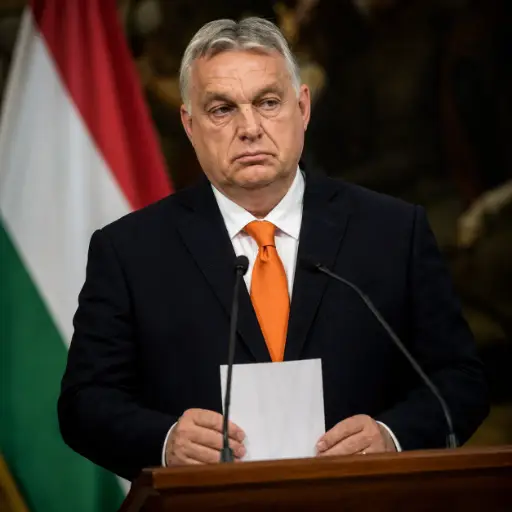
After a historic electoral defeat, Viktor Orbán says he will surrender his parliamentary seat while remaining leader of the ruling nationalist movement that reshaped Hungary and challenged the European mainstream.

Viktor Orbán, the dominant figure of Hungarian politics for more than a decade and a half, announced on Saturday that he will return the parliamentary mandate he secured in the country’s recent elections, formally stepping away from legislative politics after a stunning defeat that ended his long tenure as prime minister. Yet even as he withdraws from parliament, Orbán made clear that he is not leaving public life. He intends to remain chairman of the conservative-nationalist Fidesz party, preserving influence over the movement he transformed into one of Europe’s most durable political machines.
The announcement marks the beginning of a new and uncertain political chapter for Hungary and for Central Europe more broadly. Orbán’s departure from frontline government leadership closes an era that profoundly shaped debates across the European Union on sovereignty, migration, nationalism, judicial independence and relations with Brussels. For supporters, he was a defender of national identity and traditional values against what they viewed as excessive liberal pressure from Western Europe. For critics, he became the symbol of democratic backsliding inside the European bloc.
Speaking to supporters in Budapest, Orbán described his decision as an act of political responsibility following the election result, while insisting that Fidesz would continue to play a central role in Hungarian public life. He struck a tone that mixed defiance with reflection, arguing that political movements outlast governments and that the ideological battles defining Europe are far from over.
His resignation from parliament is largely symbolic in practical terms, but politically powerful. By refusing to take a seat in the legislature after losing power, Orbán appears to be positioning himself above day-to-day parliamentary conflict while preserving authority over the broader conservative camp. Analysts in Budapest say the move allows him to avoid the image of a diminished former prime minister sitting on opposition benches while still maintaining strategic control over party structures, messaging and candidate selection.
The election defeat that forced the transition followed months of growing economic pressure and rising voter fatigue. Inflation, concerns over public services and increasing frustration among younger urban voters weakened Fidesz’s grip on power. Opposition parties, long divided and often ineffective, managed to capitalize on a broader desire for political renewal. The campaign exposed a country increasingly split between loyal conservative strongholds in smaller towns and a more internationally oriented electorate concentrated in major cities.
Orbán nevertheless remains one of the most recognizable political figures in Europe. Since returning to power in the early 2010s, he built a system centered on strong executive authority, state-backed economic nationalism and cultural conservatism. Under his leadership, Hungary repeatedly clashed with European institutions over media freedom, judicial reforms and migration policy. Those confrontations elevated him into a hero for many nationalist and populist movements across the continent.
Even in defeat, Orbán’s influence extends beyond Hungary’s borders. Political leaders on the European right continue to see Fidesz as an ideological reference point in debates over national sovereignty and the future direction of the European Union. His speeches on “illiberal democracy” reshaped conservative political discourse in several countries, while his government’s hard line on migration anticipated positions later adopted elsewhere in Europe.
The question now confronting Hungary is whether Fidesz can reinvent itself without Orbán serving as prime minister. While he remains party chairman, internal tensions are likely to emerge as younger figures compete for visibility and authority. Some within the movement favor a softer tone toward Brussels and foreign investors, while others argue the party should preserve the confrontational style that defined Orbán’s rule.
The incoming government, meanwhile, faces immediate challenges. It inherits an economy still under strain, complicated relations with European institutions and a deeply polarized political landscape. Expectations among voters are high, particularly among those who backed change after years of political continuity. Any early missteps could quickly strengthen the opposition and allow Fidesz to regroup under Orbán’s continued leadership.
International reaction to Orbán’s announcement was cautious but significant. European officials described the transition as an important democratic moment for Hungary, while emphasizing the need for institutional stability and constructive cooperation with Budapest. Financial markets reacted calmly, reflecting a sense that political continuity inside the state administration remains largely intact despite the electoral upset.
For many Hungarians, however, the moment carries emotional and historical weight. Orbán dominated public life for so long that imagining Hungary without him at the center of government remains difficult. Admirers credit him with defending national interests during years of geopolitical uncertainty, while opponents argue his departure offers the country a chance to restore political balance and strengthen democratic institutions.
Yet Orbán himself gave little indication that he sees this period as an ending. By keeping control of Fidesz, he preserves the possibility of shaping the next phase of conservative politics from behind the scenes. Whether as strategist, kingmaker or ideological figurehead, he is expected to remain deeply involved in Hungary’s political future.
As Hungary enters this transition, Europe will watch closely. Orbán’s rise influenced political movements far beyond his country’s borders, and the manner of his exit may prove equally consequential. The battle over Hungary’s identity, its relationship with Europe and the future of nationalist politics on the continent is unlikely to disappear with his resignation from parliament. In many ways, it may only be entering a new phase.