Conflict near the Strait of Hormuz and soaring global demand for pistachio-filled sweets are disrupting supplies, pushing prices higher and exposing the fragility of one of the world’s fastest-growing food trends.

The growing instability in the Middle East is beginning to ripple far beyond oil markets and shipping insurance. One of the latest industries feeling the pressure is the global pistachio trade, where supply concerns linked to Iran and maritime tensions around the Strait of Hormuz are colliding with an unexpected driver of demand: the worldwide obsession with so-called “Dubai chocolate.”
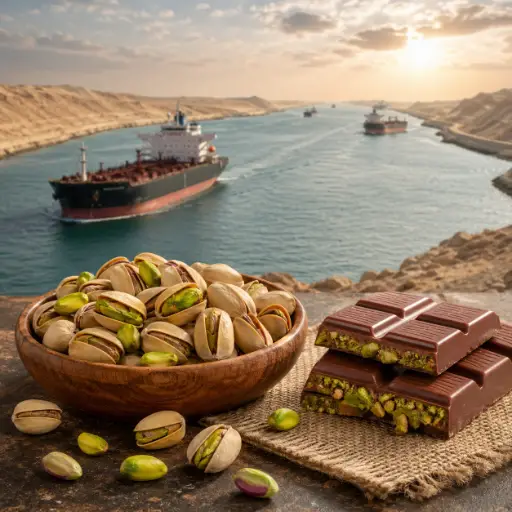
Over recent seasons, pistachio-filled chocolate bars inspired by luxury confectionery trends from the Gulf have exploded across social media platforms, luxury food stores and supermarket shelves. Characterized by creamy pistachio fillings, crunchy pastry layers and glossy chocolate coatings, the products have become a global phenomenon from Europe to North America and East Asia. But as consumer appetite grows, the supply chain behind the key ingredient is facing unprecedented strain.
Iran, one of the world’s dominant pistachio producers alongside the United States, occupies a central role in the market. Large volumes of Iranian pistachios normally move through shipping routes connected to the Strait of Hormuz, one of the world’s most strategically sensitive maritime chokepoints. Any disruption there quickly affects freight costs, insurance premiums and delivery schedules.
Traders and food manufacturers are increasingly worried that prolonged instability in the region could tighten global supplies even further. Shipping companies operating near the Gulf have already faced heightened risks, while importers in Europe and Asia are reporting delays and rising transportation costs. The result is a market that has become unusually volatile for what was once considered a relatively stable agricultural commodity.
Industry analysts say the pistachio market is now experiencing a rare convergence of geopolitical pressure and consumer-driven demand. On one side, exporters are navigating uncertainty linked to regional tensions and maritime security. On the other, confectionery companies are scrambling to secure enough pistachios to meet booming international demand for premium chocolate products.
The “Dubai chocolate” phenomenon has transformed pistachios from a niche luxury ingredient into a mainstream indulgence. Originally associated with upscale boutiques in the Gulf region, the trend spread rapidly through viral videos showing thick chocolate bars oozing with green pistachio cream and shredded pastry fillings. Major food brands soon began launching their own versions, while cafés and bakeries introduced pistachio-heavy desserts aimed at younger consumers eager to replicate the online craze.
This sudden surge in popularity has dramatically increased pressure on suppliers. Food distributors across Europe say pistachio prices have climbed sharply as buyers compete for limited inventories. Some manufacturers have reportedly reduced the size of pistachio fillings or reformulated products in an attempt to manage costs without alienating consumers.
For Iran, the situation carries both opportunity and risk. Pistachios remain one of the country’s most internationally recognized agricultural exports, valued for their flavor and quality. In periods when energy exports face restrictions or uncertainty, agricultural goods such as pistachios become even more economically important. Yet the same geopolitical environment that elevates their strategic value is also threatening their smooth export to world markets.
The impact is being felt well beyond the Middle East. European chocolatiers, American snack producers and Asian dessert chains are all competing for supplies in an increasingly nervous market. Importers are also watching harvest forecasts closely after several seasons of climate-related stress in some growing regions, adding another layer of uncertainty to future availability.
Economists note that the situation highlights how deeply interconnected modern food markets have become. A luxury dessert trend born on social media can suddenly influence agricultural trade flows across continents, while geopolitical tensions around a maritime corridor better known for oil exports can end up affecting supermarket confectionery aisles thousands of kilometers away.
Consumers may soon notice the consequences directly. Retail prices for pistachio chocolates and related products are expected to rise further if supply disruptions persist. Some specialty retailers have already warned of shortages ahead of key holiday and gifting periods, traditionally important moments for premium confectionery sales.
Despite the turbulence, demand shows little sign of slowing. Luxury dessert trends continue to dominate online culture, and pistachios have gained an almost symbolic status within the premium chocolate sector. For many brands, abandoning the ingredient is not considered an option, even as costs climb.
What began as a fashionable confectionery craze has therefore evolved into a striking example of how geopolitics, global trade and digital consumer culture increasingly overlap. As tensions in the Middle East continue to unsettle shipping routes near the Strait of Hormuz, the humble pistachio has unexpectedly become a barometer of a far wider global economic story.