As Tehran mocks Washington’s pressure campaign and deepens ties with Moscow, competing narratives from Iran and the United States reveal a volatile geopolitical contest stretching from the Kremlin to the Strait of Hormuz.

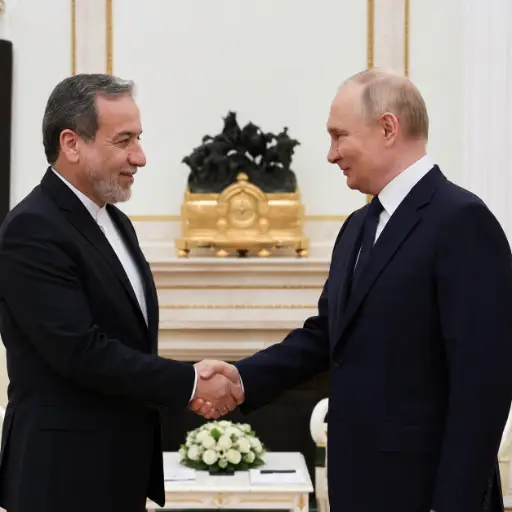
The diplomatic theater surrounding Iran’s latest outreach to Russia has exposed the widening gap between Tehran’s rhetoric and Washington’s interpretation of the crisis unfolding in the Persian Gulf. During a high-profile visit to Saint Petersburg, Iranian Foreign Minister Abbas Araghchi publicly ridiculed the United States, claiming Washington had failed to achieve any of its strategic objectives against the Islamic Republic. Standing alongside senior Russian officials after talks with President Vladimir Putin, Araghchi suggested that Iran now held the upper hand and was merely “considering” whether renewed negotiations with the United States were even worth pursuing.
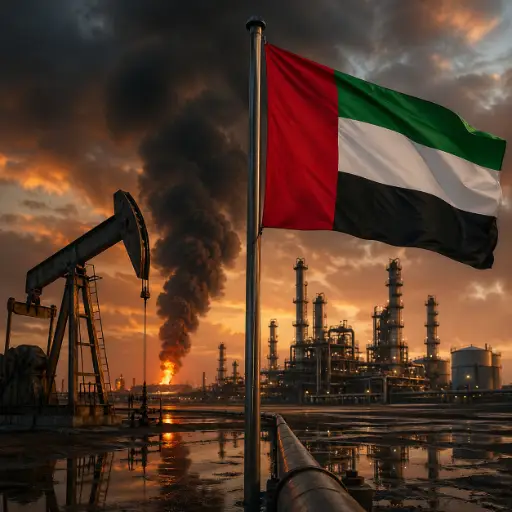
His remarks immediately intensified tensions already inflamed by months of confrontation over maritime security, sanctions, and military posturing around the Strait of Hormuz — the narrow waterway through which a significant portion of the world’s oil exports continues to pass. Tehran’s increasingly confident tone reflects what Iranian officials describe as the collapse of the American pressure strategy, which they argue has failed to weaken the country politically or economically despite years of sanctions and diplomatic isolation.
Yet in Washington, the narrative could hardly be more different.
President Donald Trump declared that Iran had effectively admitted it was in a “state of collapse,” insisting Tehran was now quietly seeking American assistance to ease the mounting pressure surrounding the Gulf blockade and the instability threatening commercial shipping routes. According to Trump, Iranian officials understand that continued disruption around Hormuz risks devastating consequences not only for global energy markets but also for Iran’s own fragile economy.
The contradiction between the two versions of reality illustrates the increasingly psychological nature of the confrontation. Both sides are attempting to project strength while signaling, indirectly, that channels for negotiation may still exist beneath the aggressive rhetoric. Analysts across Europe and the Middle East note that such public contradictions are often characteristic of moments preceding indirect diplomacy, where neither side wishes to appear weak before domestic audiences or international partners.
Araghchi’s visit to Russia also underscored the strategic realignment taking shape across Eurasia. Moscow and Tehran have expanded political and military cooperation in recent years, driven largely by their shared hostility toward Western sanctions and NATO influence. Putin’s decision to receive the Iranian foreign minister personally carried symbolic weight, reinforcing the Kremlin’s willingness to position itself as Tehran’s key geopolitical partner at a moment of escalating uncertainty.
Russian officials have avoided openly endorsing Iranian threats related to Hormuz, but Moscow continues to criticize what it calls the destabilizing role of American sanctions in the region. The Kremlin has repeatedly argued that economic pressure and military intimidation from Washington increase the likelihood of miscalculation and broader conflict. Behind closed doors, however, Russian strategists are also believed to be carefully balancing their interests, aware that any major disruption to Gulf shipping could trigger severe economic consequences far beyond the Middle East.
The Strait of Hormuz remains the central pressure point in the crisis. Iranian commanders have repeatedly warned that if Tehran is pushed into economic suffocation, it could respond by restricting maritime traffic through the corridor. Western naval forces stationed in the Gulf have increased patrols, while insurance costs for commercial shipping have surged amid fears of sabotage, drone attacks, or accidental escalation.
Despite the heated language, several diplomatic observers believe both Iran and the United States are trying to avoid a direct military confrontation. Tehran’s leadership understands that open conflict with American forces would carry enormous risks, particularly at a time when the Iranian economy remains burdened by inflation, currency instability, and social discontent. Washington, meanwhile, faces pressure from allies concerned that any military escalation could destabilize energy markets already strained by geopolitical uncertainty elsewhere.
European governments are increasingly alarmed by the collapse of diplomatic momentum surrounding Iran’s nuclear program. Attempts to revive meaningful negotiations have repeatedly stalled, while regional actors including Israel and Gulf monarchies continue to warn that Iran’s growing military capabilities represent a long-term strategic threat. The absence of sustained dialogue has left the region vulnerable to rapid escalation driven by political miscalculation or symbolic retaliation.
Within Iran itself, officials have sought to frame Araghchi’s statements as proof that Tehran remains resilient despite Western pressure. State-aligned media outlets portrayed the foreign minister’s meeting with Putin as evidence that Iran is no longer diplomatically isolated and can rely on powerful allies to resist American influence. Critics inside the country, however, continue to question whether closer dependence on Moscow truly serves Iran’s long-term national interests.
For the United States, the dispute has also become part of a broader political narrative about power projection and deterrence. Trump’s comments appear aimed at reinforcing the perception that Washington retains leverage despite Tehran’s public defiance. American officials insist that sanctions and military pressure have severely constrained Iran’s strategic options, even if Tehran refuses to acknowledge the impact publicly.
As global attention remains fixed on the Gulf, the possibility of renewed diplomacy cannot be entirely dismissed. History has repeatedly shown that periods of extreme rhetoric between Tehran and Washington are sometimes followed by discreet backchannel contacts designed to prevent escalation. Whether such efforts are already underway remains uncertain, but both sides appear aware that a complete collapse of communication would significantly increase the risk of confrontation.
For now, the crisis continues to evolve through carefully choreographed statements, symbolic diplomatic meetings, and competing claims of strength. The encounter between Abbas Araghchi and Vladimir Putin in Saint Petersburg may ultimately prove less significant for what was publicly said than for what may have been discussed behind closed doors. In the shadow of mounting regional instability, every gesture, every threat, and every diplomatic signal carries consequences extending far beyond Iran, Russia, or the United States alone.