With the 2026 tournament weeks away, unresolved TV-rights negotiations in China and India threaten to undercut FIFA’s promise of the most inclusive World Cup in history.

FIFA’s ambition to stage the most inclusive World Cup ever is facing an unexpected commercial obstacle: two of the world’s biggest audiences may still not have confirmed broadcast access.
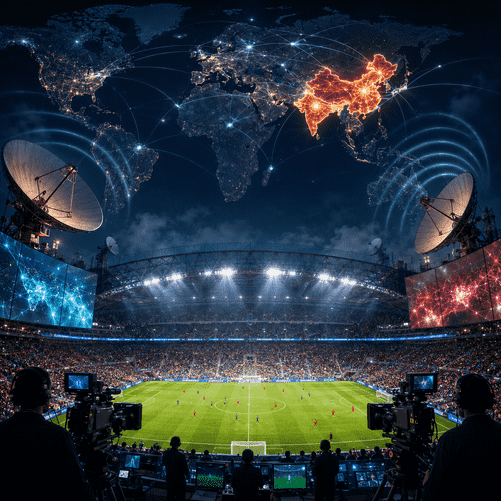
With the 2026 World Cup scheduled to begin on June 11, FIFA has yet to finalize broadcast-rights deals in China and India, according to Reuters Breakingviews. The impasse is striking because the tournament has already secured rights agreements in more than 175 territories, while China and India together represent nearly 3 billion people and two of the most important growth markets in global sport.
The dispute highlights the changing economics of international football. FIFA expects the 2026 World Cup to generate record revenue of about $8.9 billion, including roughly $3.9 billion from broadcasting rights. But negotiations in Asia have proved more difficult than expected. Reuters reported that FIFA initially sought as much as $300 million for Chinese rights before reducing the figure, while in India it rejected a reported $20 million bid from Reliance-Disney.
Neither China nor India qualified for the tournament, which will be hosted by the United States, Canada and Mexico, but that does not make the markets less important. China accounted for a major share of global TV reach during the 2022 World Cup, while India remains a rapidly expanding sports-media market with a young digital audience and growing advertiser interest.
The issue is not only about viewers. Global sponsors rely on the World Cup’s reach to justify vast marketing budgets. Brands such as Adidas, Coca-Cola, Hisense and Mengniu depend on mass exposure across continents, and any gap in China or India could weaken the commercial value of the event.
The timing is also sensitive. FIFA is expanding the 2026 World Cup to a larger format and staging separate opening ceremonies in each of the three host countries, a move designed to turn the tournament into a continent-wide spectacle. But the absence of settled broadcast deals in major Asian markets would complicate that global narrative.
The standoff reflects a broader challenge for sports organizations. For years, global federations assumed that emerging markets would deliver ever-higher media-rights fees. But streaming disruption, consolidation among broadcasters and changing consumer habits have made buyers more cautious. In India, for example, the media landscape has shifted after major consolidation in the entertainment sector, reducing competition for some premium sports rights.
For FIFA, the risk is reputational as well as financial. A World Cup marketed as bigger, more open and more global cannot afford uncertainty in two of the world’s largest countries. For broadcasters, however, the calculation is equally clear: even football’s biggest tournament must be priced against realistic advertising returns and audience behavior.
The final weeks before kickoff will therefore test FIFA’s negotiating power. The organization still has time to reach agreements, but the longer the talks drag on, the more the dispute becomes a symbol of a changing sports economy — one where even the World Cup can no longer assume unlimited demand at any price.