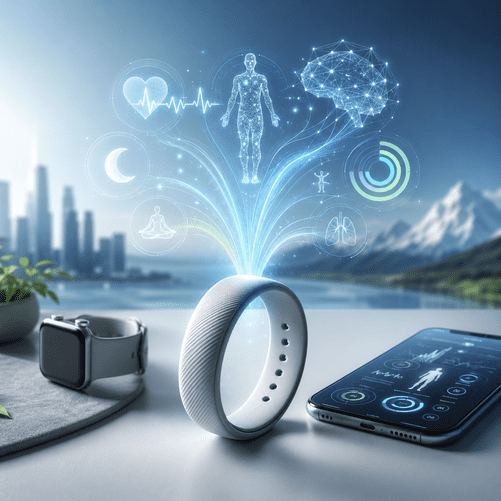
The new Google Health app and screenless Fitbit Air signal a shift from simple fitness tracking toward subscription-based, AI-guided personal health coaching.

Google is turning one of the best-known names in fitness tracking into a broader artificial intelligence health platform, marking a major strategic shift in the global wearables market.
The company has announced that the Fitbit app will become the Google Health app, with the redesigned service scheduled to roll out from May 19, 2026. The new app is designed as a centralized hub for health and wellness data, combining Fitbit’s activity-tracking heritage with Google’s AI capabilities and a more integrated health-data ecosystem.
The move is more than a branding change. It reflects a wider transformation in wearable technology: devices are no longer being marketed only as step counters, smartwatches or sleep trackers. They are increasingly becoming gateways to personalized health analysis, AI coaching and long-term wellness subscriptions.
At the center of Google’s strategy is the Google Health Coach, an AI-powered feature built with Gemini. According to Google’s support documentation, the coach will be available to Google Health Premium subscribers in supported countries and is designed to provide proactive, personal and adaptive guidance based on a user’s health and activity data.
Google says the new app will organize health information across four main tabs: Today, Fitness, Sleep and Health. The company also says users will be able to connect apps, sync medical records and manage what data they save or delete. Google states that Fitbit user health and wellness data will not be used for Google Ads, a privacy commitment that remains central to the transition.
The software shift is being paired with new hardware. Google has also introduced the Fitbit Air, a lightweight, screenless wearable designed to make activity tracking less intrusive. The device can automatically detect common activities, provide workout summaries and work with the Google Health app’s coaching features.
The screenless design is significant. For years, wearable companies competed by adding brighter displays, richer notifications and smartwatch-style functions. But the Fitbit Air suggests a different direction: wearables that disappear into daily life while collecting continuous health data in the background. That puts Google closer to competitors such as Whoop, Oura and Garmin, which have built strong followings around recovery, sleep, strain and health-readiness metrics.
This also changes the business model. Instead of relying only on hardware sales, Google is moving deeper into recurring revenue through Google Health Premium. The former Fitbit Premium service is being renamed as part of the transition, and premium subscribers are expected to receive access to the AI coaching experience.
For consumers, the promise is convenience: one app that can interpret workouts, sleep, recovery trends and health signals with more personalized recommendations. For Google, the opportunity is larger. Health data is one of the most valuable frontiers in consumer technology, especially as AI systems become capable of turning raw sensor readings into daily advice.
But the strategy also raises important questions. AI health coaching sits in a sensitive space between wellness guidance and medical interpretation. Google’s ability to sync health records and analyze personal trends may make the app more useful, but it also increases the need for clear privacy controls, transparent limitations and strong safeguards against overconfident health advice.
The announcement comes as the wearables industry is searching for its next growth phase. Smartwatches are now mainstream, but many consumers are looking for devices with longer battery life, fewer distractions and more meaningful health insights. AI gives companies a way to turn passive tracking into active coaching, but it also raises the standard for accuracy and trust.
Google’s move suggests that the next battle in wearables will not be fought only on the wrist. It will be fought inside the health app, where companies compete to explain what the body’s data means — and persuade users to pay for that interpretation.
For Fitbit, the transition marks the end of one era and the beginning of another. The brand helped popularize consumer fitness tracking. Under Google Health, it is now being repositioned as part of a much larger AI-driven health ecosystem, where the wearable is only the sensor and the real product is the advice built on top of it.