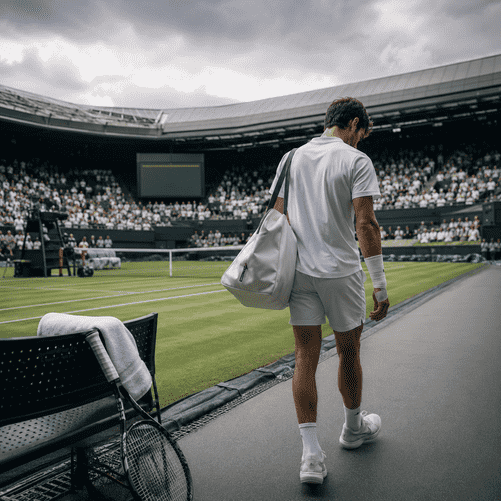
The former champion’s absence opens the door for Jannik Sinner and changes the competitive balance of the French Open and grass-court swing.

LONDON — Carlos Alcaraz will miss Wimbledon as he continues to recover from a right wrist injury, removing one of tennis’s biggest stars from the sport’s most prestigious tournament and dramatically altering the shape of the summer season.
The world No. 2 and seven-time Grand Slam champion has been sidelined since withdrawing from the Barcelona Open, where the injury first forced him out of competition. He has also been ruled out of the French Open and the Queen’s Club tournament, meaning he will miss both the clay-court finale and the start of the grass-court campaign.
The decision is a major blow to Wimbledon, where Alcaraz has built some of the defining moments of his career. His explosive movement, creative shot-making and ability to shift from defence to attack made him one of the most dangerous players on grass. His absence also deprives fans of another chapter in his rivalry with Jannik Sinner, which has become the central storyline of men’s tennis.
For Alcaraz, however, the withdrawal reflects a long-term calculation. Wrist injuries are especially dangerous in tennis because they affect serve mechanics, topspin generation and defensive control. Returning too early could risk turning a temporary problem into a recurring weakness.
The competitive consequences are immediate. Sinner, already the world No. 1 and in exceptional form, now enters both Roland Garros and Wimbledon with a clearer path. The Italian recently ended a 50-year wait for a home champion at the Italian Open, further strengthening his position as the dominant player of the moment.
The wider tour will also feel the shift. Without Alcaraz, the Grand Slam field becomes more open for established contenders and rising challengers who may see this as a rare opportunity to reach the final stages of Wimbledon.
Still, the story is not simply about one tournament. Alcaraz’s withdrawal underlines the physical cost of the modern tennis calendar, where elite players are expected to compete across hard courts, clay and grass with little recovery time. The same athleticism that has made Alcaraz one of the sport’s most thrilling figures also places enormous pressure on his body.
For Wimbledon, the loss is significant. For Alcaraz, it may be necessary. His season now becomes a test of patience: whether one of tennis’s brightest stars can resist the pressure to return quickly and instead protect the career that still promises many more Grand Slam battles ahead.