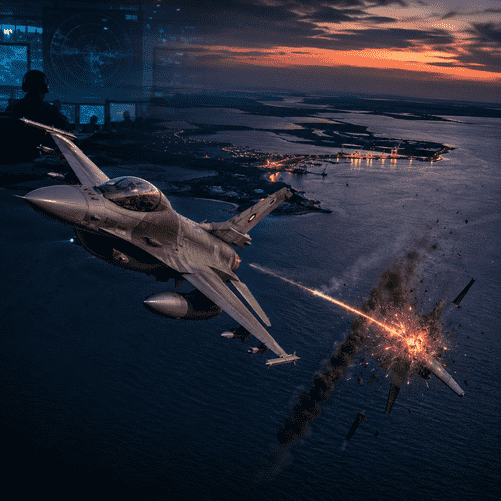
The attack on Kuwait International Airport marks a dangerous widening of the Gulf confrontation, threatening fragile diplomacy and regional stability.

The confrontation between the United States and Iran escalated sharply after Washington and Tehran launched new strikes across the Gulf, while Kuwait said Iranian drones had hit its main international airport, causing damage, injuries and major flight disruption.
Kuwaiti authorities said Kuwait International Airport was struck during a wave of Iranian missile and drone attacks targeting the Gulf state and nearby regional sites. Reuters reported that one person was killed and several others were injured, with significant damage to Terminal 1 and flights temporarily diverted or suspended. Kuwait Airways later resumed some operations from Terminal 4 after safety checks.
The airport strike represents one of the most serious spillovers of the U.S.-Iran confrontation into a Gulf Arab state. Kuwait hosts U.S. forces and has long been a strategic partner of Washington, but direct attacks on civilian infrastructure risk transforming what had been a military confrontation into a broader regional crisis.
The latest exchange followed U.S. strikes on Iranian military positions on Qeshm Island, near the Strait of Hormuz, a critical chokepoint for global energy shipments. U.S. Central Command said American forces acted in self-defence, intercepting Iranian missiles and drones and striking military assets connected to attacks on U.S. forces, civilian vessels and regional allies.
Iran’s Islamic Revolutionary Guard Corps said its attacks were retaliatory, claiming it had targeted U.S.-linked military positions in the Gulf. Iranian projectiles were reportedly fired toward Kuwait and Bahrain, while U.S. and Bahraini forces intercepted some of the missiles and drones.
Kuwait’s claim that its airport was hit by Iranian drones has intensified concern among Gulf states, many of which host Western military assets while also trying to avoid becoming direct battlegrounds in the conflict. The damage to a major civilian airport underscores the vulnerability of regional transport and energy infrastructure in any prolonged escalation.
The aviation impact was immediate. Flights were suspended or diverted as authorities inspected damage and assessed whether airspace remained safe. The disruption is likely to raise further alarm among airlines, insurers and governments already concerned about operating in and around the Gulf during a period of heightened military activity.
The strikes also threaten already fragile diplomatic efforts. Negotiations aimed at reducing tensions between Washington and Tehran have repeatedly stalled as military clashes continue. AP reported that the exchange of strikes is putting pressure on a fragile ceasefire framework, while Iran has linked diplomacy to broader regional developments, including the conflict in Lebanon.
The Strait of Hormuz remains central to the crisis. Any sustained fighting around Qeshm Island or nearby waters could threaten shipping routes used to transport a major share of the world’s oil and liquefied natural gas. Even limited attacks on ships, ports or airports could push up energy prices and increase pressure on global supply chains.
For Washington, the challenge is to deter Iranian attacks without triggering a wider war. For Tehran, the latest strikes appear designed to signal that U.S. military pressure will carry costs across the Gulf. But the reported hit on Kuwait International Airport could backfire diplomatically by hardening regional opinion against Iran.
Kuwait and other Gulf states are now likely to press for stronger air-defence coordination, emergency aviation planning and a clearer U.S. security commitment. At the same time, they may push Washington and Tehran to return to negotiations before the confrontation spreads further.
The latest attacks show how quickly the conflict can move beyond military targets. A strike on an airport does not only damage infrastructure; it creates fear among civilians, disrupts international travel and raises the possibility of miscalculation. With U.S. forces, Iranian missiles, Gulf air defences and commercial aviation all operating in the same tense environment, the risk of a wider regional war is rising by the hour.