The Italian menswear house is turning to experience-led retail, relaxed elegance and high-value U.S. clients as the global luxury market adapts to a slower, more selective era.

In a luxury market no longer defined by easy growth, Zegna is making a clear strategic choice: America is not just another destination for high-end fashion, but one of the most important battlegrounds for the industry’s next phase.
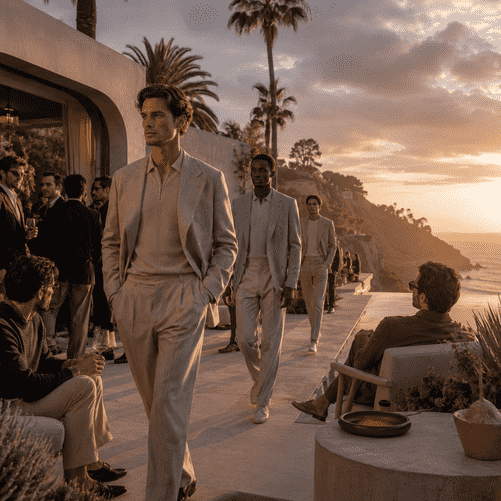
The Italian menswear group has intensified its focus on the United States, investing in major brand experiences, client relationships and a softer, more casual interpretation of luxury. Its recent transformation of Los Angeles’s Chateau Marmont into “Villa Zegna” and its Malibu fashion showcase underline a broader shift taking place across the luxury sector: the most successful brands are no longer selling only clothes, watches or leather goods. They are selling access, atmosphere and identity.
Zegna’s American push comes at a moment when luxury fashion is under pressure. After years of price increases and post-pandemic spending booms, many consumers have become more selective. China’s recovery has been uneven, aspirational shoppers are more cautious, and even wealthy clients are scrutinising value more closely. For heritage brands, the challenge is no longer simply to appear exclusive. It is to make exclusivity feel meaningful again.
That is why the U.S. matters. American luxury consumers remain powerful, mobile and culturally influential. They buy at home, spend abroad and shape global taste through entertainment, sport, technology and social media. California, in particular, has become a key luxury laboratory: a place where tailoring meets wellness, red-carpet visibility, wealth migration and casual lifestyle codes.
Zegna’s advantage lies in how well its brand fits that moment. The company has moved beyond the narrow image of formal menswear and embraced what might be called “quiet performance luxury”: refined clothing designed for men who want elegance without stiffness. Soft tailoring, luxury leisurewear, fine fabrics and understated silhouettes allow the brand to speak to a customer who may no longer wear a suit every day but still wants clothing that signals status, discipline and taste.
This evolution reflects a wider trend reshaping fashion. Luxury is becoming less formal, more personal and more experiential. Customers are not only asking what a product costs, but what kind of world it gives them access to. Private appointments, curated spaces, destination events and limited-edition collections are becoming as important as runway shows or seasonal campaigns.
The strategy also reveals how luxury brands are trying to protect themselves from volatility. When demand slows, the strongest houses deepen relationships with their best clients rather than relying only on broad consumer traffic. Zegna’s focus on tailor-made services and intimate brand experiences is part of that effort. It is a move from transaction to loyalty.
There is also a cultural calculation. American luxury tastes have changed. The old division between European formality and American casualness has softened. Today’s high-end client may pair a cashmere jacket with sneakers, move between a private jet, a tech office, a wellness retreat and a dinner in Malibu, and expect one wardrobe to work across all of it. Zegna’s relaxed elegance is designed for exactly that lifestyle.
The question is whether this American momentum can offset pressures elsewhere. Zegna Group also includes Thom Browne and Tom Ford Fashion, two brands with different challenges and identities. The group’s broader performance will depend not only on the strength of the Zegna label, but on how well it manages a portfolio exposed to shifting consumer moods.
Still, the message from its U.S. strategy is clear. In 2026, luxury growth will not come automatically from logos, price increases or heritage alone. It will come from brands that can create emotional relevance, cultural intimacy and a convincing reason for customers to remain loyal.
Zegna’s bet on America is therefore more than a geographic expansion. It is a sign of where luxury fashion is heading: toward softer status, deeper clienteling and immersive brand worlds built around lifestyle rather than product alone.
In a market where shoppers are increasingly selective, the future of luxury may belong to houses that understand a simple truth: the most valuable customers are not only buying what they wear. They are buying how a brand makes them feel about the life they are building.