Washington says the limited attack targeted Iranian military assets after the helicopter crew was rescued in a rare drone-assisted operation

President Donald Trump ordered U.S. strikes against Iran after blaming Tehran for the downing of an American AH-64 Apache helicopter near the Strait of Hormuz, in a sharp escalation that threatens to unravel a fragile ceasefire and widen the conflict across the Gulf.
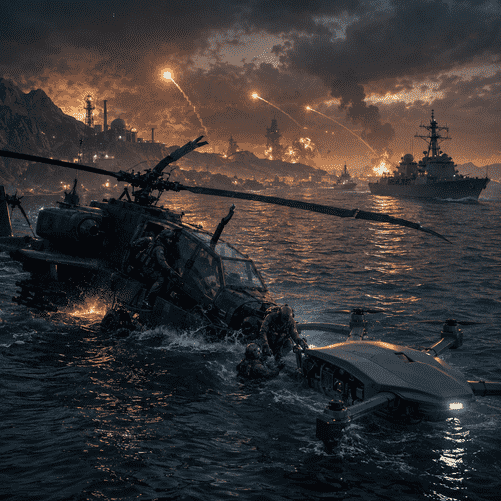
The U.S. military said the helicopter went down while operating near one of the world’s most strategically important maritime corridors. Two crew members were rescued and were reported safe and uninjured. According to U.S. Central Command, the rescue involved an unmanned surface vessel, marking a rare use of a maritime drone in the recovery of downed American personnel.
Trump said Iran was responsible for the loss of the aircraft and argued that Washington had to respond. The resulting U.S. strikes were described by American officials as limited and defensive, aimed at Iranian military targets connected to air defense and radar activity near the Hormuz area.
The operation comes at a dangerous moment for the region. The Strait of Hormuz is a vital passage for global energy shipments, and any sustained military confrontation there could unsettle oil markets, shipping routes and the broader world economy. Even a limited exchange of fire risks raising insurance costs, delaying commercial traffic and increasing pressure on energy-importing economies.
Iran has rejected U.S. claims that it was solely responsible for the escalation and warned that any further American action would be met with retaliation. Tehran has repeatedly accused Washington of using military pressure to weaken Iran while backing its regional rivals.
The downing of the Apache is especially significant because it appears to be the first confirmed loss of that type in the current phase of hostilities. The helicopter had been operating as part of an expanded U.S. military presence in and around the Gulf, where American forces have deployed aircraft, drones and naval assets amid persistent tensions with Iran.
The rescue of the crew also drew attention to the growing role of unmanned systems in modern warfare. U.S. forces used a drone boat to reach the personnel after the helicopter went down, highlighting how autonomous and remotely operated platforms are increasingly being used not only for surveillance and strike missions, but also for emergency recovery operations in contested waters.
The latest confrontation risks placing new pressure on diplomatic efforts. Trump had recently suggested that a deal with Iran remained possible, but the strikes have deepened doubts about whether talks can survive the latest round of military action.
For Washington, the message was deterrence: attacks on U.S. forces would draw a direct response. For Tehran, the American strikes may become another justification for further military action. That leaves the Gulf facing a familiar but volatile question — whether both sides can stop at limited retaliation, or whether the exchange marks the beginning of a broader conflict around the Strait of Hormuz.