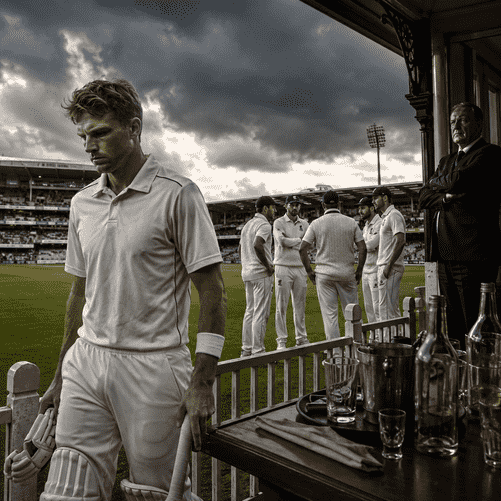
Rob Key weighs a possible alcohol ban after a nightclub incident involving Ben Stokes and Gus Atkinson forces the ECB to confront questions over culture, leadership and trust

England cricket is facing a serious internal crisis after director of men’s cricket Rob Key said he is considering a complete alcohol ban for the national team and refused to guarantee that Ben Stokes will remain Test captain.
The warning comes after Stokes and fast bowler Gus Atkinson were dropped from England’s squad for the second Test against New Zealand following a late-night incident at a London nightclub. Both players are reported to have breached a team curfew after England’s victory in the first Test at Lord’s, prompting an investigation by the England and Wales Cricket Board.
The incident has raised uncomfortable questions about discipline inside a team that, under Stokes and head coach Brendon McCullum, has been celebrated for its freedom, confidence and aggressive style of cricket. That same culture is now under scrutiny, with Key suggesting that the balance between trust and responsibility may have tilted too far.
According to reports, the players were present during a confrontation involving a rugby player at a Chelsea nightclub. They were not described as active participants in the fight, but the breach of team protocols has been serious enough for the ECB to act quickly. Stokes and Atkinson have been ruled out of the next Test, while Joe Root is expected to step in as interim captain.
Key’s refusal to publicly back Stokes as captain is the most striking element of the fallout. Since taking over the Test side in 2022, Stokes has transformed England’s red-ball identity, helping create the bold “Bazball” era alongside McCullum. But the latest controversy has forced the ECB to ask whether inspirational leadership on the field is enough if off-field discipline becomes a recurring problem.
An alcohol ban would represent a significant cultural shift. Cricket has long had a relaxed relationship with post-match drinking, especially after victories and series milestones. But modern professional sport is increasingly intolerant of behaviour that risks reputational damage, player welfare or team focus. For England, the question is whether informal rules and curfews are enough, or whether stricter restrictions are now unavoidable.
The situation is particularly sensitive because it is not the first time England’s off-field conduct has attracted criticism. Previous incidents involving players have already led to internal concern, and Key has acknowledged that the ECB may need to reassess whether its current standards are strong enough. The possibility of a full alcohol ban suggests the governing body believes this is no longer an isolated issue.
For Stokes, the stakes are personal and professional. He remains one of England’s most important cricketers, admired for his competitive courage and his central role in reshaping the Test team. Yet his leadership now faces its most serious test since he became captain. If the ECB concludes that the latest breach reflects a deeper cultural problem, Stokes could find his position under threat.
The timing could hardly be worse. England are in the middle of a Test series, and the absence of both their captain and a key fast bowler disrupts planning on the field. It also shifts attention away from cricket itself and toward questions of behaviour, responsibility and accountability.
Root’s return to the captaincy, even temporarily, underlines the uncertainty. The former Test captain brings experience and stability, but his appointment also exposes the lack of an obvious succession plan. Vice-captain Harry Brook has not been handed the role, in part because the ECB appears cautious about rushing him into leadership amid a disciplinary storm.
The wider issue for England is whether the culture that powered their revival can survive tighter control. Stokes and McCullum built a team that played without fear, trusted players to express themselves and rejected the anxiety that had previously surrounded English Test cricket. But freedom depends on judgment. If players are seen to misuse that freedom, the ECB may decide that trust has to be replaced by rules.
Key now faces a delicate decision. Move too harshly, and he risks damaging the spirit that made England exciting again. Move too softly, and he risks sending a message that standards are negotiable when star players are involved.
The coming days may determine not only whether England introduces an alcohol ban, but whether Stokes continues as the figurehead of the Test side. What began as a night out after a victory has become a test of leadership for the ECB, a test of discipline for the dressing room, and perhaps the defining crisis of the Stokes-McCullum era.