As the wider fashion market struggles with cautious consumers and price fatigue, rare gemstones, craftsmanship and private client experiences are helping high jewellery outperform the luxury sector.

The luxury industry is entering a more selective era, and one category is proving more resilient than the rest: high jewellery.
While fashion houses continue to navigate slower demand, especially after years of aggressive price increases, the most exclusive jewellery collections are gaining strength among wealthy clients seeking rarity, heritage and long-term value. Recent reporting from the Financial Times shows that high jewellery is outperforming much of the wider luxury market, supported by strong financial markets, particularly in the United States, and by the appeal of one-of-a-kind pieces that are less vulnerable to short-term fashion cycles.
The trend marks a shift in how luxury consumers define desirability. For years, handbags, ready-to-wear and logo-driven accessories powered growth across the sector. But as some shoppers question whether prices have risen faster than quality, ultra-wealthy clients are moving toward pieces that feel personal, scarce and materially valuable. Jewellery houses such as Cartier and Van Cleef & Arpels, both owned by Richemont, have benefited from that move. Richemont reported €16.5 billion in jewellery sales in 2026, according to the Financial Times, underlining the strength of the category at a time when other parts of luxury remain under pressure.
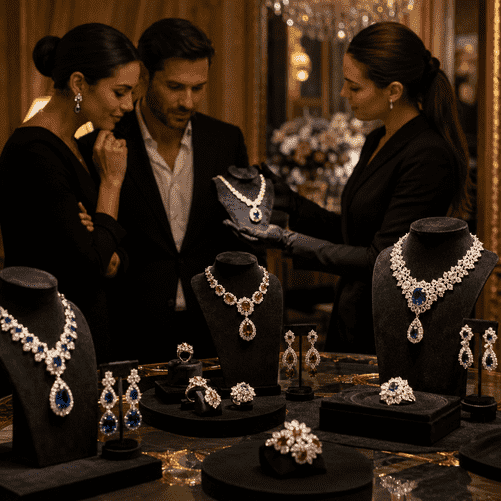
The appeal is not only financial. High jewellery is increasingly being sold through immersive, highly private experiences designed for a small circle of elite clients. Brands are staging elaborate presentations, private appointments and destination events where collectors can meet designers, examine rare stones and commission bespoke pieces. In a crowded luxury market, access itself has become part of the product.
This strategy reflects a wider reset across the luxury industry. Bain & Company warned late last year that years of price increases had left some shoppers feeling alienated, even as the sector was expected to return to moderate growth in 2026. Bain projected global luxury goods sales would rise by 3 percent to 5 percent in 2026 after stagnating in 2025, but cautioned that brands needed to rebuild trust with consumers who had become more sensitive to value.
China remains a central part of that challenge. Bain forecast that China’s personal luxury market would return to modest growth in 2026 after contracting by 3 percent to 5 percent in 2025 and falling much more sharply in 2024. But the recovery is expected to be fragile and uneven, with brands facing more selective consumers and rising competition from local Chinese labels.
In that environment, high jewellery offers luxury groups something rare: pricing power with a stronger emotional justification. A handbag price increase can trigger backlash if customers feel the product has not changed. A unique necklace built around rare stones, complex craftsmanship and brand heritage can be presented as an object of art, investment and legacy.
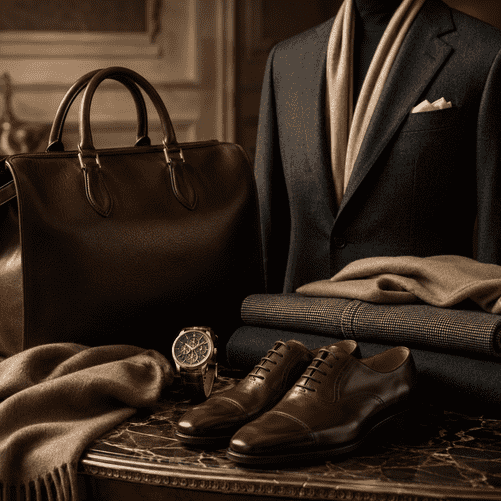
The current fashion mood also supports the category. After the dominance of “quiet luxury,” consumers are still drawn to understatement, but the most affluent clients are looking for distinction that is not mass-visible. High jewellery answers that demand. It is discreet enough to avoid the fatigue surrounding loud logos, but exclusive enough to signal status to those who understand its codes.
The trend is also visible in the way luxury houses are investing in storytelling. New high jewellery collections increasingly rely on cultural references, historical themes and complex craft techniques to separate themselves from ordinary jewellery lines. Van Cleef & Arpels, for example, has emphasized intricate craftsmanship and themed collections, while brands including Dior, Louis Vuitton, Tiffany & Co., Piaget and Chaumet are also using high jewellery to deepen desirability and reinforce their most prestigious identities.
For the broader luxury market, the lesson is clear. Growth in 2026 is not simply about selling more products at higher prices. It is about convincing clients that what they are buying has meaning, scarcity and lasting value. High jewellery is succeeding because it sits at the intersection of fashion, art, investment and personal legacy.
The rest of the industry is watching closely. As aspirational consumers become more cautious and traditional luxury categories face pressure, the strongest brands may be those that can make exclusivity feel authentic again. In that sense, high jewellery is not just a bright spot in the luxury market. It is a signal of where the future of luxury may be heading: fewer products, deeper relationships and a renewed emphasis on rarity.