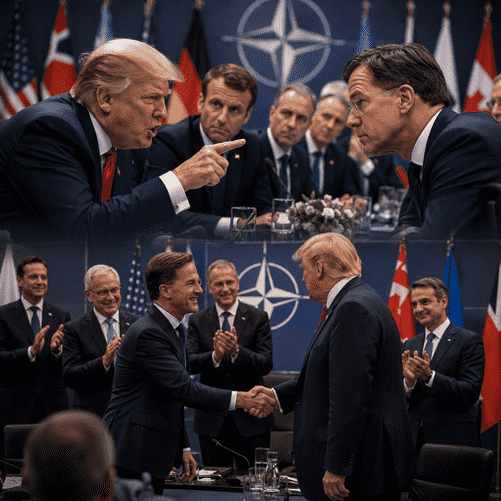
After opening the Ankara summit with sharp criticism of U.S. allies, the president left Turkey praising alliance unity — but concerns over America’s role in European security remain unresolved.

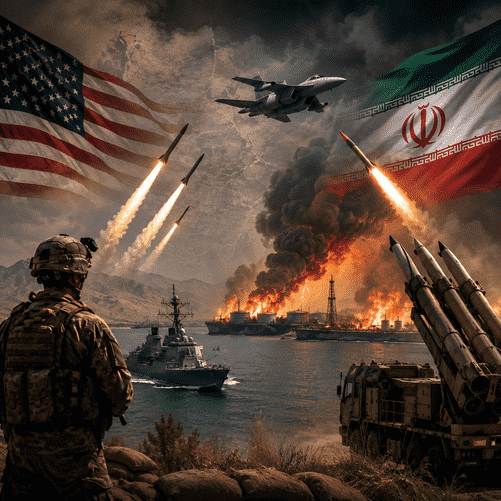
President Donald Trump arrived at the NATO summit in Ankara with a familiar warning for America’s allies: Washington was dissatisfied, Europe was not doing enough, and the alliance had failed to support U.S. priorities in the Middle East.
By the time he left, the tone had changed.
After a turbulent start marked by public criticism of NATO leaders, Trump emerged from private meetings describing the atmosphere inside the alliance as one of warmth and unity. “There was a lot of love in that room. A lot of unity,” he told reporters, calling the summit “a great success.” NATO leaders also reaffirmed their commitment to Article 5, the alliance’s collective-defense clause, stating that an attack on one member remains an attack on all.
The shift underscored the central tension of this year’s summit: NATO leaders were managing not only the alliance’s formal agenda, but also the unpredictable politics of its most powerful member. Trump had arrived in Turkey angry over what he viewed as insufficient allied support during the Iran crisis and openly unhappy with NATO’s performance. Axios reported that he made clear, shortly after arriving, that he was “not happy with NATO,” while also alarming allies with talk of removing U.S. soldiers from Europe.
Behind closed doors, however, the summit appeared to move toward controlled diplomacy. NATO Secretary-General Mark Rutte praised Trump’s leadership and presented the meeting as proof that the alliance could still deliver. The final declaration preserved the core language of collective defense, giving European governments a measure of reassurance after days of uncertainty.
For Trump, the summit also produced concrete political wins. He announced that the United States would allow Ukraine to manufacture U.S.-designed Patriot air-defense systems, a significant development for Kyiv as it continues to face Russian missile attacks. He also said Washington was prepared to lift sanctions on Turkey, potentially reopening the path to F-35 fighter jet sales to Ankara.
Still, the apparent harmony did not erase the deeper unease. The Wall Street Journal reported that some allies considered it a success simply that Trump did not threaten to abandon NATO altogether. That lower bar reflected the degree to which European leaders have adapted to a new diplomatic reality: keeping Washington engaged has become a strategic objective in itself.
The summit also highlighted NATO’s changing balance of power. European countries have increased defense spending under sustained U.S. pressure, and Rutte framed those commitments as evidence that Trump’s demands had strengthened the alliance. But the continuing debate over U.S. troop levels in Europe has raised questions about whether America is gradually reducing its traditional security role on the continent.
The result was a summit that ended better than it began, but without fully resolving the doubts it exposed. Publicly, Trump scolded allies. Privately, he accepted reassurance, praise and concessions. NATO left Ankara with its unity statement intact — but also with a reminder that the alliance’s cohesion increasingly depends on managing the moods and priorities of the American president.
For Europe, the message was clear: the transatlantic alliance still stands, but its stability is now shaped as much by personal diplomacy as by treaty language.