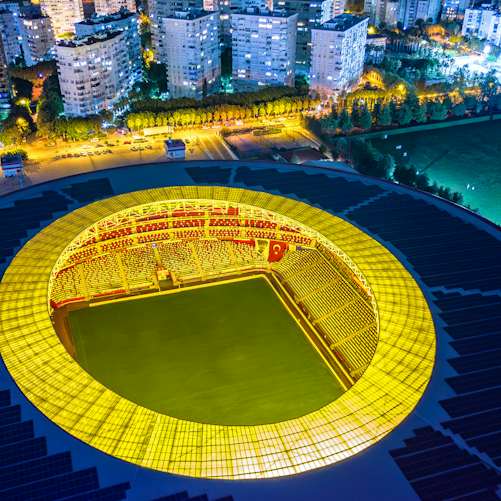
BRUSSELS / BURSA — Two matches, two very different kinds of statement. France found a way to win without its captain, without continuity in the starting XI and without control of the contest for long stretches, then struck in the 88th minute through Michael Olise to beat Belgium 1-0 in Brussels. Several hundred kilometres to the southeast, Italy produced the opposite kind of victory: fast, loud and structurally convincing, racing three goals clear inside 27 minutes before finishing a 4-1 win over Türkiye in torrential rain. Taken together, the results did more than rearrange UEFA Nations League Group A1. They offered the clearest early picture yet of how two of Europe’s traditional powers intend to navigate the first competitive window after the 2026 World Cup: France by trusting extraordinary depth under Zinedine Zidane, Italy by using Roberto Mancini’s return to accelerate a generational reset that can no longer be postponed.

A group that already feels larger than the Nations League
Group A1 was always likely to become the most politically and tactically revealing section of this Nations League. France, Italy, Belgium and Türkiye are not simply four strong national teams placed together by a draw. Each arrives in September with a different answer to the same question: what comes next after a World Cup cycle changes the hierarchy, the leadership or the mood around a national side? UEFA’s official competition schedule places the four teams in a six-match league phase that runs through November, with the top two advancing to the March 2027 quarter-finals. That structure makes every point significant, but the compressed opening window raises the stakes further. UEFA has grouped four Nations League games into the period from 24 September to 6 October, forcing coaches to rotate, improvise and evaluate while still competing for qualification.
That matters because France and Italy are rebuilding from almost opposite positions. France changed coach after another deep World Cup run and handed the national team to Zidane, a figure whose symbolic authority is almost impossible to separate from his tactical work. Italy entered the autumn from a much harsher place. The Azzurri failed to qualify for the 2026 World Cup and then reopened the Mancini chapter, bringing back the coach who had led them to the European title earlier in the decade. Belgium, meanwhile, began life under Mark van Bommel and opened the group with an emphatic 2-0 win in Italy. Türkiye arrived with a gifted attacking generation but little margin for a slow start after losing 1-0 at home to France on Matchday 1.
By late Monday night, the table told a surprisingly sharp story. France had six points from six. Belgium and Italy had three each. Türkiye remained on zero. The raw numbers are simple, but the route to them has already demonstrated why this group can become one of the defining early laboratories of the European cycle. France have won twice by a single goal. Belgium have looked capable of beating anyone but have already experienced how a game can be taken away in one late transition. Italy have moved from a home defeat that reopened familiar doubts to an away performance full of energy and youth. Türkiye have shown enough talent to be dangerous, but have been punished by two opponents with superior control of decisive moments.
Olise gives Zidane the one thing a rotated team needed: an ending
France’s 1-0 victory in Brussels was not built on sustained superiority. It was built on survival, adjustment and the capacity to introduce elite quality after an hour of uncertainty. According to Reuters’ match report, Zidane made nine changes from the side that had beaten Türkiye 1-0 three days earlier. The most important absence was Kylian Mbappé, who had scored the winner in that opening match before leaving with a knee problem. Real Madrid subsequently described the issue, via Reuters, as a hyperextension of the posterior capsule of his left knee. The consequence for France was immediate: the new coach had to learn about the squad without the player around whom the attack is normally organised.
The temptation in that situation is to see rotation as a downgrade. France’s evening demonstrated why that is too simplistic. The starting XI lacked continuity, but it did not lack high-level footballers. New combinations made the performance uneven, especially against a Belgium side encouraged by its opening win in Rome, yet the bench gave Zidane a sequence of tactical resets unavailable to almost any other national coach. Ousmane Dembélé, Rayan Cherki and Olise were all introduced as the contest moved toward its final phase. Each offered a slightly different way to destabilise a Belgian block that had largely coped with the original French structure.
Olise delivered the decisive action. In the 88th minute he accelerated from inside the Belgian half, drove at a retreating defence and finished the move himself. It was the kind of goal that appears individual in the replay but is also a product of context. Belgium had spent much of the match resisting France’s waves without collapsing. The later the score remained 0-0, the more the hosts could imagine a point that would leave them level with France at the top. That psychological equilibrium encouraged slightly more ambition. Olise attacked precisely the space that appeared when the game stopped being only about protection.
For Zidane, the significance was greater than a second consecutive victory. His first competitive window is not only about points. It is also an audit of which players can solve problems when the obvious solution is unavailable. Mbappé’s injury removed the central reference. Nine changes removed habitual partnerships. A demanding away game removed comfort. France still won. In tournament football, that ability is often more predictive than an elegant September performance against an overmatched opponent.
The match also strengthened Olise’s claim to a more central role. The Bayern Munich attacker has spent the last two seasons moving from exciting option to one of Europe’s most complete creators. The French federation’s player profile credits him with a standout domestic campaign in Germany and a major creative contribution in the Champions League. In the national team, though, the challenge is different. France’s attacking pool contains players accustomed to being primary creators for their clubs. International football asks them to share the ball, accept rotational minutes and still produce decisive actions with little rhythm. Olise’s late goal in Brussels was a perfect expression of that demand.
France’s depth is becoming a tactical identity, not merely a luxury
There is a familiar way to describe France: deep squad, elite athletes, world-class substitutes. That language is accurate but incomplete. Under Zidane, depth may become a tactical identity in its own right. The nine changes in Brussels were not a pre-season experiment. They were made in a competitive group where two teams reach the quarter-finals and where a poor four-match opening block can create a long November recovery mission. Rotation therefore becomes part of match strategy rather than merely load management.
The extended September-October international window makes that distinction essential. National-team coaches rarely have enough training time to install complex automatisms. This window gives them more matches but not proportionally more preparation. Fatigue increases. Club schedules remain in the background. Players arrive with different physical loads. In that environment, a team capable of changing eight or nine starters without abandoning its competitive level has a structural advantage. France may not always look coherent, but they can create fresh problems repeatedly because the profile of their substitutes changes the geometry of a match.
Brussels was a useful example. Cherki brings close control and the instinct to operate between midfield and defence. Dembélé stretches the pitch and threatens one against one from wider areas. Olise can begin wide, drift inside and become a second playmaker without giving up the ability to attack the goal himself. Those are not interchangeable players. They are different tactical tools. The importance of France’s squad is not only that Zidane can replace quality with quality. It is that he can replace one kind of quality with another without needing to change the overall ambition of the team.
That flexibility also softens the impact of injuries. France’s captain is still central to any serious plan for the next major tournament, but the opening week of the Nations League has already forced the team to confront a scenario it would rather not face later: Mbappé unavailable, a strong opponent confident, and a game drifting toward frustration. Winning that match does not prove France can thrive indefinitely without him. It proves something narrower and useful: there is a functional route to victory when the attack must be redistributed.
The next question is whether this depth can produce more than late rescue acts. France beat Türkiye 1-0 through Mbappé and Belgium 1-0 through Olise. Six points is an ideal return, but two one-goal matches leave room for improvement. The strongest version of Zidane’s France will need to combine the resilience seen in Brussels with longer spells of positional control, especially against opponents who refuse transition opportunities. Friday’s home match against Italy should reveal more. Mancini’s side will arrive with confidence restored, a midfield capable of pressing and a front line willing to run. France will have to do more than wait for the last elite attacker on the bench to decide the game.
Italy’s response in Bursa was immediate, aggressive and necessary
If France’s victory was a demonstration of depth, Italy’s 4-1 win in Bursa was a demonstration of response. Three days earlier, Belgium had beaten the Azzurri 2-0 in Rome, turning Mancini’s return into an awkward false start. That defeat carried extra weight because Italy’s recent history has trained supporters to treat every setback as evidence of a larger structural crisis. Missing the World Cup made patience even thinner. The second match, away to a talented Türkiye side in difficult weather, therefore contained more emotional pressure than a normal September Nations League fixture.
Italy answered by playing with the urgency of a team that understood exactly what was at stake. The Italian Football Federation’s official match report records a 4-3-3 built around Gianluigi Donnarumma in goal, Michael Kayode, Giorgio Scalvini, Alessandro Bastoni and Matteo Ruggeri across the defence, Davide Frattesi, Nicolò Fagioli and Sandro Tonali in midfield, and a front three of Giacomo Raspadori with brothers Pio and Sebastiano Esposito. Mancini changed eight players from the Belgium defeat and handed debuts to multiple young players. The message was unmistakable: the coach was not going to protect established status after a bad opening night.
The tactical response was just as clear. Tonali dropped deeper during possession to help the centre-backs build. Raspadori moved away from the front line to create another passing option in midfield. The full-backs attacked aggressively. Italy tried to move the ball through Türkiye rather than around them, and the first half quickly became a display of how dangerous that structure can be when the press is coordinated and the passing tempo is high.
Bastoni opened the scoring in the ninth minute after a low corner was not cleared. Frattesi added the second in the 22nd minute, reacting fastest after Kayode’s shot was saved. Five minutes later Kayode scored himself, finishing a move that again exposed Türkiye’s difficulty defending Italy’s speed of circulation. The score was 3-0 after 27 minutes. By halftime, Reuters reported that Italy had produced ten attempts. This was not a match won by waiting for errors. It was a match pushed toward collapse by a visiting side that played as though the previous defeat had removed its right to be cautious.
Türkiye made three changes at the interval and briefly threatened to reopen the contest when Barış Alper Yılmaz scored in the first minute of the second half. The response mattered. Italy did not retreat into panic. Four minutes later Pio Esposito restored the three-goal advantage with a diving header after Tonali had struck the post. The timing of that fourth goal prevented the stadium from becoming a factor again. It also confirmed one of the most encouraging details of the evening: Italy’s youngest attackers were not merely present in the team; they were influencing decisive moments.
Kayode, the Esposito brothers and a different idea of renewal
The most important image of Italy’s win may not be the scoreboard. It may be the number of players for whom the evening represented a beginning rather than a recovery. Kayode scored on his senior international debut. Ruggeri was also making his first appearance. Sebastiano and Pio Esposito started together, becoming, according to the FIGC, the fourth pair of brothers to play together for Italy and the first in 26 years, since Filippo and Simone Inzaghi. Those details would be charming trivia in a stable team. In the current Italy, they are evidence of strategy.
For too long, renewal around the Azzurri has been discussed as though youth itself were the solution. It is not. National teams do not improve because a coach lowers the average age. They improve when younger players are given roles that match their club development, when those roles are connected to a coherent tactical plan, and when senior figures such as Donnarumma, Bastoni and Tonali provide enough structural security for risk to be tolerated. Bursa looked promising because the young players were not decorative. Kayode was asked to attack, defend and combine at speed. Pio Esposito led the line and scored. Sebastiano’s movement contributed to the spacing of the front three. Their presence changed how Italy played.
That is particularly important for Mancini because his second spell cannot simply recreate the emotional formula of Euro 2020. The context has changed. Several members of the old core are older or gone. Opponents have adapted. Italy’s failure to reach the World Cup created pressure for systemic reform rather than nostalgic restoration. Mancini’s advantage is that he already knows how quickly a national team can build confidence when a tactical idea feels bigger than the individual names. His task now is to prove that the next version can emerge without becoming a copy of the previous one.
His post-match assessment was deliberately restrained. Reuters quoted him praising the team’s high press, possession and ability to play through pressure while also emphasising the difficulty of the match. The FIGC recorded a similarly measured reaction: the coach congratulated the players, said they had been excellent for around an hour, and immediately turned attention to recovering for Paris. That tone is significant. Italy needed enthusiasm after Rome, but they do not need self-congratulation. A 4-1 win over Türkiye is a platform, not proof that the deeper problems of the past cycle have disappeared.
Tonali and Bastoni give the rebuild an experienced spine
Youth can dominate the headlines, but Italy’s ability to sustain this direction will depend heavily on the players now entering their prime. Tonali and Bastoni are central to that bridge. Both are experienced enough to understand the demands of elite international football and young enough to remain core figures through the next European Championship cycle. In Bursa, their influence was visible in different phases.
Bastoni’s early goal changed the match, but his larger value is his comfort initiating attacks from centre-back. When Italy build with Tonali dropping between or close to the central defenders, Bastoni can step forward, find angled passes and force opponents to decide whether to press the defender or protect midfield. That ability becomes even more important when the full-backs are aggressive. Italy do not want possession for its own sake. They want to create the first free player, then accelerate.
Tonali’s role is equally important because he gives the team a midfielder who can change height during the same possession. He can receive deep during buildup, appear as a conventional central midfielder in the next phase and still arrive near the edge of the area when the attack develops. The fourth goal illustrated that range. His shot hit the post, and Pio Esposito converted the rebound with a header. The play was transitional, but Tonali’s presence so high up the pitch came from the freedom created by Italy’s earlier control.
This is the balance Mancini needs. A rebuilding team cannot be made entirely of players learning the international game in real time. It also cannot be controlled by veterans whose best collective version belongs to a previous cycle. Bastoni, Tonali, Donnarumma and Frattesi provide a middle generation that can carry responsibility while Kayode, Ruggeri and the Esposito brothers absorb it gradually. If that spine holds, experimentation becomes less dangerous.
Türkiye exposed by tempo, but not short of a future
The scoreline was severe for Türkiye, and the defensive problems were real. Vincenzo Montella’s side could not control Italy’s first-half passing sequences, reacted too slowly to second balls and found itself three goals down before the match had developed into the contest the home crowd expected. The absence of Hakan Çalhanoğlu and Kenan Yıldız removed two important technical references, while Arda Güler was asked to carry much of the creative burden behind Yılmaz and Can Uzun.
Yet the Turkish response after halftime also explains why this group is unlikely to remain simple. Three substitutions increased the intensity, Yılmaz scored almost immediately and another Turkish effort later found the net before being ruled out. Güler continued to create moments between the lines. Italy’s defensive concentration dropped during the second half, and Mancini responded by introducing more experienced control late in the game. Those sequences will matter when the teams meet again in Bologna on 5 October.
For Türkiye, the problem is now the table. Zero points from two matches means the coming trip to Belgium cannot be treated as a developmental exercise. UEFA’s format is unforgiving in a four-team group: the top two go to the quarter-finals, while the lower places create relegation or playoff risks depending on comparative records across League A. A young, attacking side can recover quickly, but it needs points before performance becomes an excuse rather than a foundation.
Belgium’s defeat shows how narrow the margin remains
Belgium leave Monday in a more ambiguous position. Van Bommel’s first match, the 2-0 win in Italy, suggested a team immediately comfortable with his demand for intensity. Against France, the performance was again competitive. Belgium created opportunities, limited France for long stretches and appeared capable of taking at least a draw. Reuters quoted defender Brandon Mechele saying a draw would have felt fair. That is understandable. It is also the kind of statement strong national teams eventually have to stop needing.
At the highest level, fairness is often irrelevant. France possessed the decisive action; Belgium did not. The difference was an 88th-minute run by Olise, but the larger lesson is about how international matches are managed. If a team controls phases without scoring, it eventually has to decide whether to accept the point or continue opening the game. Belgium never became reckless, yet the late increase in space was enough for France’s substitutes to exploit.
Van Bommel’s work is further complicated by transition inside the squad. Goalkeeper Thibaut Courtois is sitting out the Nations League campaign, according to Reuters, while remaining available for future international competition. That removes one of Belgium’s most experienced leaders during the exact period when a new coach is establishing standards. The strong performance in Rome and the narrow defeat in Brussels suggest the foundation is competitive. The next step is converting that competitiveness into repeatable results before the group starts to separate.
France versus Italy now becomes the early summit
The next major match arrives quickly. France host Italy at the Stade de France on Friday, 2 October, a fixture that would have been important even without Monday’s results. Now it becomes the first real summit of Group A1. France can create significant separation with another victory. Italy can move level on points and transform the emotional tone of the group within one week. Belgium will watch closely while preparing to face Türkiye.
Tactically, the Paris match should ask different questions of both teams. Italy will not be able to rely on the same early domination they achieved in Bursa. France’s midfield has more power to resist the press, and Zidane can change the attacking profile repeatedly from the bench. Italy’s young full-backs will face one-on-one situations of a different level. At the same time, France will meet an opponent more willing than Belgium to press high and force the first pass under pressure. If Mancini keeps Tonali dropping deep and asks Raspadori or another forward to connect midfield, France will have to decide whether to press man-to-man or protect central space.
The Mbappé question will remain central even if he is unavailable. France’s attack in Brussels demonstrated that there are alternative solutions, but Italy will prepare differently depending on whether there is a fixed central threat or a more fluid front line. For Zidane, that may be an opportunity. Coaches often speak about wanting unpredictability, yet national teams naturally gravitate toward their best player. A forced period without Mbappé can reveal combinations that later make France less predictable when he returns.
For Mancini, the selection decision may be even harder. Do the players who transformed the performance in Türkiye keep their places against France, or does the coach restore some experience for the most difficult away game in the section? The answer will show whether Bursa was treated as a corrective experiment or the beginning of a new hierarchy. Kayode’s debut goal, the Esposito brothers’ start and Ruggeri’s introduction to international football all created momentum. Removing too much of that energy would risk sending the wrong message. Keeping all of it would raise the competitive standard dramatically.
The larger European lesson: post-World Cup teams are being rebuilt in public
The Nations League is often described as a competition designed to replace low-stakes friendlies with meaningful matches. That description is true but undersells its value in a season like this one. After a World Cup, European national teams do not have the luxury of rebuilding privately. New coaches, new captains, injured stars, emerging players and tactical experiments are exposed immediately to opponents of similar quality. UEFA’s 2026-27 format makes that process even more intense by concentrating four matches into the opening window.
For coaches, the opportunity and the danger are the same. A team can accelerate its evolution in ten days because problems appear repeatedly. It can also become trapped by the results of experiments that would once have been conducted in friendlies. Zidane has already learned that France can win with nine changes and without Mbappé. Mancini has learned that drastic rotation after defeat can sharpen rather than destabilise Italy. Van Bommel has learned that a strong first performance does not protect Belgium from the brutal efficiency of France’s bench. Montella has learned how quickly a technically gifted Turkish side can lose control when the opponent’s passing tempo breaks the first line.
Those lessons matter beyond the Nations League table because the next European Championship cycle has already started. UEFA says performance in this edition is expected to be linked to Euro 2028 qualification, giving some teams another route toward the playoffs. Even before those mechanisms become relevant, the psychological effect is obvious. Teams are building their identity in matches that carry consequences. Young players are not being introduced in empty stadium friendlies with unlimited substitutions. They are playing away in Brussels and Bursa, against opponents trying to win the same group.
What Monday changed
France began the night as the group leader and ended it looking more secure, but not necessarily more complete. Italy began the night in crisis language and ended it with a performance that makes Friday in Paris genuinely intriguing. Belgium moved from early momentum to the frustration of a late defeat without showing signs of collapse. Türkiye fell further behind but still displayed enough attacking quality to threaten anyone if the defensive structure improves.
The most revealing contrast remains the way France and Italy won. France required patience, depth and a single decisive action from a substitute. Italy required aggression, collective timing and the courage to entrust key minutes to less established players. One victory was minimalist, the other expansive. Both were valuable because they matched what each team needed from the evening.
For France, the question at the start of the Zidane era is not whether enough talent exists. It is whether that talent can be organised into a team that survives the inevitable moments when its superstar is missing or contained. Brussels provided the first persuasive answer. For Italy, the question is whether a nation still carrying the weight of World Cup absence can turn renewal into performance rather than promise. Bursa provided evidence, not resolution.
The next few days will decide whether those answers hold. France and Italy meet in Paris. Belgium and Türkiye try to reassert themselves. The table can still change quickly. But Monday night has already established the central theme of Group A1: Europe’s old powers are not simply beginning another competition. They are rebuilding their authority in public, under pressure, with no friendly matches left to hide behind.
Verified sources and competition context
Match facts, scorers and post-match comments were cross-checked against Reuters and the Italian Football Federation. Group composition, fixtures, results and the league-phase format were verified against UEFA’s official fixtures and results and UEFA’s 2026-27 competition guide. Mbappé’s injury status was checked against Reuters’ report of Real Madrid’s medical update.