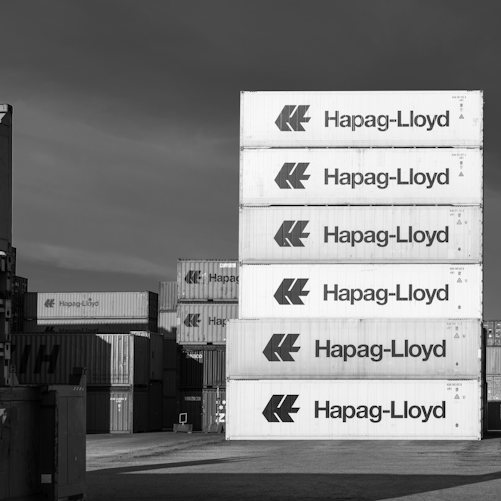
Meeting in Dublin on 23 October, EU trade ministers pressed for broader talks with Beijing over mounting import pressure, while Brussels weighed safeguards for plastics and other industries.

European governments are trying to turn a limited opening in trade negotiations with China into a wider response to pressures felt by manufacturers across the continent. At an informal gathering in Dublin on Friday, 23 October, trade ministers urged further engagement with Beijing even as the European Commission considered whether protective measures might be needed for products beyond cars. The emerging argument is not simply about the price of imported goods. It concerns the ability of European industries to compete, secure critical inputs and retain room to make economic decisions without depending on a single external supplier.
The meeting took place under Ireland’s presidency of the Council of the EU. Its published agenda covered trade negotiations, relations with major partners, market diversification, economic resilience and the multilateral trading system. Because the gathering was informal, its discussions should not be mistaken for the adoption of new EU tariffs or binding trade legislation.
From vehicle talks to the wider industrial economy
The immediate diplomatic reference point was the EU–China understanding reached after consultations in Beijing on 8–9 October. That process offered a way to manage disputes over vehicles, access to markets and restrictions affecting industrial inputs without an immediate escalation across the whole trading relationship. The European Commission’s joint statement with China established a programme for continued contact, including a ministerial video conference in January and another consultation meeting in March 2027. Such a timetable creates a negotiating channel, not a guarantee that the underlying commercial imbalance will narrow.
At the Dublin press conference, Irish minister Helen McEntee said member states wanted negotiations to reach beyond hybrid vehicles to sectors including chemicals, machinery and agriculture-related products. Trade Commissioner Maroš Šefčovič indicated that plastics might be the next area examined for possible safeguards, but he said the Commission was still assessing whether the legal conditions for launching an investigation existed. Those comments were reported by Reuters on 23 October. There is a material difference between identifying a possible investigation and imposing an import restriction; no such new plastics measure followed automatically from the Dublin discussion.
What the trade figures actually show
The scale of the issue is substantial, but the numbers require careful definition. According to Eurostat’s April 2026 release, the EU imported €559.4 billion in goods from China in 2025 while exporting €199.6 billion in the opposite direction. That produced a goods-trade deficit of €359.8 billion using Eurostat’s published figures. Imports rose 6.4% from 2024 while EU exports to China fell 6.5%. The same data showed that electrical machinery and related equipment represented the largest category of Chinese goods entering the bloc.
A bilateral goods deficit is not, by itself, proof of unfair trade. It also reflects consumer demand, the organisation of international production and the location of assembly and supply chains. Nor does it capture services: the Commission’s China trade profile records an EU services surplus with China in 2025. Nevertheless, the composition of imports matters politically. When inexpensive finished goods compete directly with European production while firms also rely on Chinese components and materials, the benefits of cheaper inputs and the costs of industrial displacement can fall on different groups.
The Commission describes its longstanding approach as reducing risk rather than severing economic ties. Its concerns include industrial subsidies, uneven market access, export controls and obstacles facing European companies in China. Beijing, for its part, has rejected the suggestion that China alone explains Europe’s economic difficulties. Policymakers therefore face a challenge that cannot be resolved by a single headline deficit or by treating every imported product as equivalent.
Why a negotiated restraint is not yet a durable settlement
The October consultations have been presented as progress on hybrid vehicles, with Šefčovič describing an arrangement that could substantially reduce projected Chinese shipments relative to an unchanged trajectory. However, public descriptions of the understanding do not amount to a complete, enforceable schedule of restrictions for every model and importer. Details of implementation, monitoring, compatibility with trade rules and treatment of companies already investing in Europe remain central to judging its effect. The 9 October reporting distinguished the political breakthrough from the negotiations still ahead.
That distinction becomes more important as attention shifts to chemicals, machinery and possibly pharmaceuticals. These are diverse markets, with different supply structures and highly varied levels of import competition. A measure that supports one manufacturer could raise costs for another European business purchasing the same material as an input. Broad restrictions also carry the risk of retaliation against European exporters, including firms seeking better access to customers in China. A sector-by-sector evidence base is therefore essential if Brussels wants measures that withstand legal scrutiny and achieve a measurable economic result.
Plastics provide an early test
Plastics are particularly revealing because they sit at the intersection of manufacturing, packaging, chemicals and consumer prices. Šefčovič’s remarks placed a possible safeguard examination near the front of the Commission’s options, with polyethylene terephthalate, or PET, among the products discussed in the trade debate. Safeguards differ from a general political demand for fewer imports: any investigation must examine the relevant legal criteria and the market evidence. The question is not whether a sector feels pressure, but whether a lawful, proportionate instrument can address that pressure without creating larger downstream costs.
The choice of mechanism also matters for Europe’s external credibility. Anti-dumping, anti-subsidy and safeguard proceedings operate under different rules, thresholds and remedies. Dialogue can secure voluntary adjustments or market-opening concessions, while unilateral tools may be necessary if talks fail. Presenting the two as mutually exclusive would obscure Brussels’ actual room for manoeuvre: the Commission can continue consultations while assessing possible legal action.
The strategic dimension of a commercial dispute
Trade policy is increasingly inseparable from security policy. Rare-earth materials, permanent magnets, advanced machinery and industrial chemicals feed into manufacturing systems that are costly to rebuild once capacity disappears. The Commission’s published account of its China relationship highlights restrictions on critical inputs as a source of European vulnerability. That does not make all trade with China unsafe; it does mean that exposure to a concentrated supply chain has to be considered alongside the immediate savings from imports.
European capitals do not necessarily start from identical positions. Some industries benefit significantly from low-cost intermediate products, while others see market share and employment threatened by strong competition. Governments also differ in their dependence on exports to China. Ministers’ preference for a coordinated negotiating position reflects the practical reality that bilateral concessions are less useful if they fragment the EU single market or allow competing national priorities to weaken the collective case.
The decisions still to come
Three developments will show whether Dublin marked a turning point rather than another round of concern. First is evidence that the Beijing understandings are translated into operational rules that businesses can verify. Second is whether the Commission opens a properly documented plastics investigation or identifies other sectors meeting the necessary legal tests. Third is progress in removing barriers facing European exporters while safeguarding access to materials that European factories cannot readily replace.
The wider test will be whether trade diplomacy can deliver a more balanced relationship without imposing avoidable costs on the European economy. Ministers left Dublin with an argument for firm but sustained engagement, not a completed settlement. The most consequential outcome will be measured later—in transparent agreements, credible enforcement, resilient supply chains and industrial investment that can compete without permanent emergency protection.