Kim Jong Un’s 24 October visit to Dandong brought China–North Korea commerce back into focus, but a new border crossing cannot remove sanctions or settle the region’s security disputes.

North Korean leader Kim Jong Un crossed into the Chinese border city of Dandong on Saturday, 24 October, turning a newly opened road bridge into the setting for a carefully choreographed diplomatic encounter. He was received by Wang Huning, a senior member of China’s Communist Party leadership and chairman of its top political advisory body. The two visited a memorial to Chinese troops who fought in the Korean War and later toured an automobile factory. China’s foreign ministry confirmed the itinerary and said Wang conveyed greetings from President Xi Jinping.
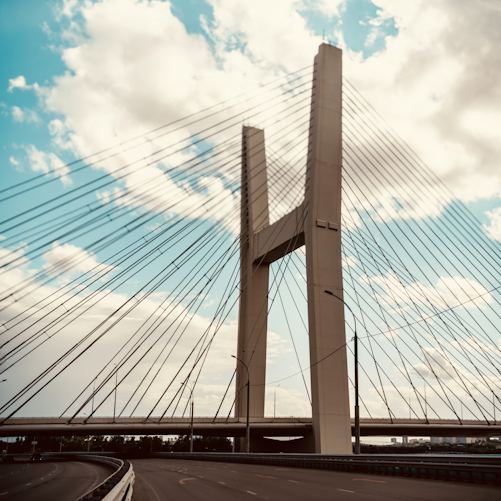
The visit was brief, but its location matters. The New Yalu River Bridge links Dandong with Sinuiju on the North Korean side and opened to traffic on 15 October after years of delay. Beijing presented Saturday’s encounter as an opportunity to expand exchanges and trade, while Kim expressed support for more practical cooperation. A cross-border road can ease a physical constraint on commerce. Whether it produces a sustained economic opening, however, will depend on decisions about freight, inspections, permitted goods and the political relationship behind them.
A long-delayed route takes centre stage
The bridge is a significant piece of transport infrastructure, not merely a ceremonial backdrop. According to Xinhua’s account of its opening, the cable-stayed crossing has four road lanes and a deck 28.5 metres wide. China and North Korea agreed in 2010 to build it downstream from their existing bridge. The older link combines rail and a one-way road that has been constrained by the weight of vehicles using it.
For a landlocked factory in northeast China or a consignee in North Korea, the potential advantage is straightforward: larger vehicles, fewer bottlenecks and a dedicated road crossing could make legitimate shipments more predictable. Yet a bridge’s theoretical capacity should not be confused with observed traffic. Public accounts of Kim’s visit do not establish a new commercial contract, a customs-throughput target or a measurable increase in shipments since the opening. Those are precisely the facts needed before the infrastructure can be described as an economic transformation.
The delays also help explain the symbolism. South Korea’s Yonhap news agency reported that the roughly three-kilometre crossing had been completed years earlier but could not be fully used while connecting arrangements remained unfinished on the North Korean side. Kim’s decision to arrive by this route gives the opening the strongest available endorsement from Pyongyang. It says more about political commitment than a ribbon-cutting alone could have said, without proving how much trade will actually follow.
War memory as a language of present-day diplomacy
The official programme connected infrastructure to history. Kim laid flowers at Dandong’s memorial to the Chinese People’s Volunteers, the forces that fought alongside North Korea during the 1950–53 Korean War. The ceremony came ahead of the 25 October anniversary that Beijing and Pyongyang associate with China’s entry into that conflict. Historical remembrance remains a central part of how both governments describe their relationship, especially when they seek to project continuity across decades of changing regional circumstances.
Wang’s message linked that shared history with present priorities: closer political consultation, more exchanges between people and greater economic cooperation. The 24 October Xinhua statement identified the bridge’s opening as an opportunity to develop those contacts. China’s foreign ministry also said Foreign Minister Wang Yi joined the activities. The statements are useful evidence of Beijing’s public intentions; they are not themselves evidence of an unpublished investment package or a change in military arrangements.
The ceremony follows a series of high-level contacts, including Kim’s visit to Beijing in September 2025 and Xi’s visit to North Korea in June 2026. Saturday’s programme did not amount to another Xi–Kim summit: Wang hosted Kim in Dandong and delivered Xi’s greetings. That distinction matters because formal leader-to-leader agreements and symbolic visits carry different diplomatic weight, even when both are prominently reported by state media.
Trade ambitions remain bounded by UN restrictions
A more capable border does not create an unrestricted trade corridor. North Korea remains subject to multiple United Nations Security Council measures related to its nuclear and missile programmes. The UN’s 1718 sanctions committee summary describes prohibitions covering arms and sensitive technologies, several major North Korean export categories, some industrial imports and specified financial activities. Petroleum supplies are also restricted by defined limits and reporting requirements. Humanitarian exemptions exist, but they do not make every commercial transaction permissible.
For that reason, it would be misleading to infer from an automobile-factory tour that a vehicle-supply agreement was signed, or from a wider road that sanctioned equipment can now move lawfully across it. Neither conclusion follows from the announced visit. If trade expands, the relevant questions will be which products are moving, under what authorisations, through which payment channels and with what customs oversight. Infrastructure increases logistical options; it does not alter the legal framework by itself.
This separation is important for businesses beyond the two countries. Border commerce can involve carriers, financiers and suppliers with exposure to international restrictions. Legitimate humanitarian activity and permitted civilian trade are not identical to prohibited transfers, and they should not be treated as though they were. The new bridge therefore brings both commercial possibilities and closer scrutiny of compliance, with the balance determined by practice rather than official rhetoric.
Beijing, Moscow and the search for room to manoeuvre
China remains North Korea’s principal established trading partner, but Pyongyang has also deepened military cooperation with Russia during the war in Ukraine. That relationship has added another dimension to Beijing’s calculations: a North Korea with alternatives to Chinese support may enjoy greater bargaining room, while China continues to have an interest in stability along its own border. Reuters’ 24 October reporting placed the bridge visit in this wider context of renewed China–North Korea engagement and growing Pyongyang–Moscow ties.
It would nevertheless be too simple to describe the visit as China reclaiming control of North Korean foreign policy. The two governments have overlapping interests in border stability and economic exchange, but they do not necessarily share every preference regarding Russia, South Korea or the United States. Nor has Beijing publicly indicated that the opening of the bridge is conditional on a new North Korean disarmament commitment. The more defensible reading is that both sides are reinforcing a relationship they regard as strategically useful.
For Beijing, the new crossing also restores value to an infrastructure project that spent years waiting to become fully operational. For Pyongyang, it offers access to a larger neighbour’s transport and commercial network. These are tangible interests even when the broader security dispute remains unresolved. Their convergence helps explain why the bridge can carry diplomatic importance before it demonstrates substantial new freight volumes.
What the visit does—and does not—signal to Washington and Seoul
The meeting occurred as renewed US–North Korea diplomacy remains uncertain. China is due to host the Asia-Pacific Economic Cooperation summit in Shenzhen in November, an event that has prompted discussion of whether another encounter between US President Donald Trump and Kim might be possible. But speculation about a leaders’ meeting is not confirmation of one. No such summit or negotiating breakthrough was announced as an outcome of the Dandong visit.
Seoul must also distinguish economic contact from security reassurance. A road bridge and a commemoration may indicate that China and North Korea wish to present a cooperative front, but they do not by themselves reduce military tensions on the peninsula, establish new crisis-communication arrangements with South Korea or produce commitments on North Korea’s weapons programmes. Those outcomes would require separate, verifiable diplomatic steps.
The test lies in what crosses next
The clearest measures of change will be practical. Officials and observers can watch for sustained road-freight traffic, published customs data, transparent operating arrangements, additional authorised civilian exchanges and any new formal agreements. They can also assess whether Beijing and Pyongyang create regular channels that extend beyond ceremonial meetings, and whether their public positions on regional security materially change.
Kim’s 24 October journey made an unmistakable political point: after years in which a major border investment stood underused, China and North Korea want their most prominent new crossing to signify closer ties. It is an opening with strategic implications, not a settlement of the questions surrounding Pyongyang. Its lasting significance will be measured by lawful trade, reliable evidence and concrete diplomacy—not by the symbolism of a single crossing.