Retail volumes rose 0.7% as supermarkets sold more long-life food and clothing shops recovered from a warm September. The three-month figures show a gentler rise.

Britain’s supermarkets sold more tinned food and long-life milk in October after the government encouraged households to prepare for disruptions to everyday services. Clothing shops recovered some of the business they had missed during an unusually warm September. Between them, the grocery aisle and the autumn wardrobe helped lift the volume of goods bought across Great Britain by 0.7% in October, the Office for National Statistics reported on Friday.
The rise broadly reversed September’s fall, which statisticians now put at 0.6%. For shops heading into Black Friday and Christmas, the reasons for the improvement matter as much as its size.
A customer stocking a cupboard and one finally buying a winter coat both count towards October’s sales. Either might have made the same purchase in a different month if the public information campaign or the weather had been different.
Look across three months and the pace is gentler. Retailers sold 0.4% more by volume between August and October than in the preceding three months. Sales were 1.7% higher than in the equivalent three months of 2025. October on its own was 2.3% above the previous October. The longer comparison smooths out a summer and autumn in which monthly sales changed direction twice, including a newly revised 0.8% increase in August.
A government message reaches the grocery aisle
The Cabinet Office launched its Be Ready campaign on 22 October. It encouraged households to consider how they would manage if severe weather temporarily disrupted power, water, phones or internet access. More than 500 organisations had signed up to help distribute the message.
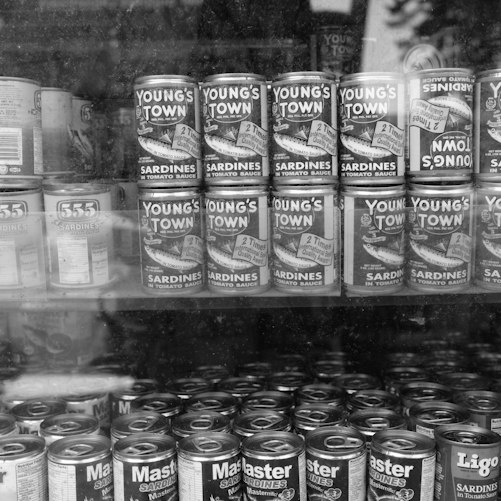
Supermarkets subsequently told statisticians that customers were buying more foods that keep for a long time, including tinned goods and milk that can be stored unopened outside the fridge.
The campaign itself recognised that people have different means to prepare. The government worked with charities representing people in insecure housing and people using food banks. Some of its advice, such as registering for priority support from a utility company, costs nothing. A supermarket receipt captures only the part of that response that involves buying something.
The timing gives the October increase a particular significance for retailers deciding how much to reorder. An extra tin sold to a household building up a reserve could represent a lasting addition to what it keeps at home. Once the cupboard is full, though, replacing that tin may take weeks or months.
The official figures give no breakdown of how much of the overall increase came from emergency purchases. They also cover shops whose fortunes had little to do with the campaign.
Food shops themselves had quite different autumns. Butchers and bakers had reported strong business in September, before the advice appeared. Supermarkets, which also sell clothes, had seen weaker clothing sales that month. All three kinds of shop contribute to the food-store figures. That mix helps explain how a good September for specialists and a better October for supermarkets could both contribute to the rise in food sales over the three-month period.
When the weather caught up with the clothes
Away from the supermarkets, non-food stores sold 1.1% more goods by volume than in September. Clothing retailers described a combination of new launches, more items bought on each visit and better availability after stock problems the month before.
Online clothing sellers offered another explanation. Their autumn and winter collections had arrived while the weather was still warm. By October, conditions were a better match for the merchandise they had been trying to sell.
Other gains came from shops selling sporting equipment, games and toys. Art galleries also reported a recovery after a quiet September.
For a retailer planning the next season, the distinction between a missed sale and a delayed one has practical consequences. A garment sold in October after sitting on a rail through September may spare the shop a later markdown. It still generates just one sale over the two months, however impressive the change between them looks.
At the petrol pump, October ran in the opposite direction. Fuel prices rose for a third consecutive month and the volume sold fell back to its August level. The three-month total nevertheless rose because the comparison period included weak sales in May and June, following a March spike. Drivers filling up more slowly in October and fuel retailers recording growth over the longer period are both consistent with that sequence.
Household budgets were also exposed to a wider increase in prices. UK consumer price inflation reached 3.6% in October, up from 3.5% in September, with transport, particularly motor fuel, contributing most to the acceleration.
The shopping and inflation reports measure different things. The 0.7% sales figure already allows for changes in prices, so it reflects an increase in the amount consumers bought. The same households could buy more retail goods and still feel the pressure of a dearer journey to work.
An early reading before Black Friday
Online tills registered a 1.5% rise in the amount spent in October. Spending across stores and the internet together increased 1.2%, lifting the online share from 29.1% to 29.2%. A larger annual gain, 9.7%, shows how much more money changed hands online than a year earlier. Those internet figures count pounds. A rise in the value of online orders can reflect prices, quantities or the mix of products shoppers put in their baskets.
A separate release on Friday offered a closer look at how consumers feel about spending. The UK’s GfK Consumer Confidence Barometer, powered by NIM, rose two points to minus 22 in November. Its measure of whether people think it is a good time to make a major purchase gained five points to minus 17. That question covers larger items such as furniture and electrical goods, where waiting for a promotion can make an appreciable difference to the price.
People were less encouraged by their own finances. In the same survey, the balance of views about household finances over the past year slipped one point to minus 11. Expectations for the year ahead fell two points to minus five. Retailers can take some encouragement from the improvement in willingness to consider a big purchase, while recognising why a customer might wait for a price cut before buying it.
The first official figures for November are due on 18 December. They will give retailers a better view of whether autumn clothing continued to sell once the weather-related catch-up had passed and whether grocery demand held up after the initial purchases of emergency supplies. October gave shops a welcome recovery in actual sales. How much of it carries into Christmas will depend in part on what shoppers still have on their lists after filling those cupboards and buying those coats.