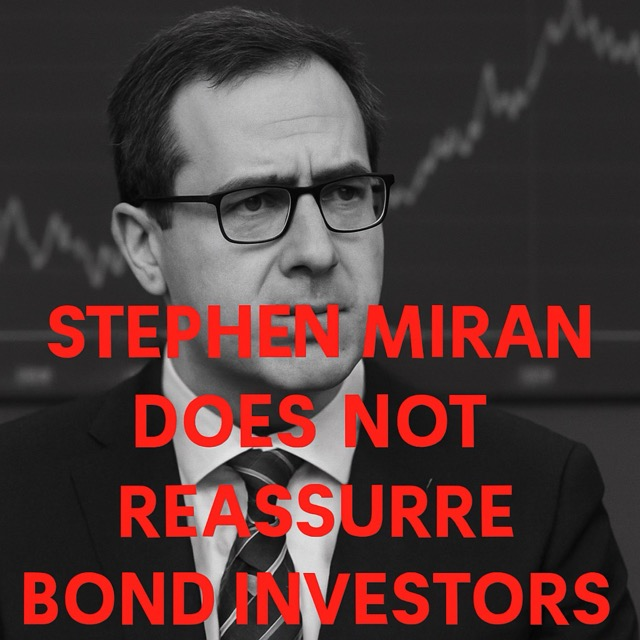
Markets remain uneasy as policy advisor’s remarks fail to calm concerns over U.S. fiscal outlook

Stephen Miran, a former Treasury official and current policy advisor, found himself in the spotlight this week as his public remarks failed to calm the nerves of bond investors already wary of the U.S. fiscal trajectory. Despite efforts to project stability and discipline, Miran’s statements did little to ease concerns over rising deficits, inflationary pressures, and the long-term sustainability of government debt.
Speaking at a financial conference in New York, Miran reiterated the administration’s commitment to controlling spending and pursuing responsible fiscal policy. However, his assurances came across to many as vague and overly optimistic, lacking the specifics that investors were hoping to hear. His comments were swiftly followed by a noticeable uptick in Treasury yields, signaling diminished investor confidence.
Miran, who has previously served as a senior advisor to the U.S. Treasury during the pandemic, was brought back into the policy conversation amid heightened debates over fiscal discipline. His track record as a fiscal hawk has earned him credibility in some circles, but that reputation may be faltering in the face of mounting economic headwinds and limited congressional appetite for austerity measures.
Bond markets are especially sensitive to signals from policymakers, and Miran’s failure to deliver a clear roadmap for deficit reduction or debt management has fueled speculation that the U.S. may struggle to maintain its AAA credit rating in the medium term. Analysts were hoping for more concrete plans around entitlement reform, tax policy, or spending caps—none of which materialized during his speech.
Critics argue that Miran, while technically competent, underestimated the urgency with which markets are demanding action. “The tone was calm, but the content was insufficient,” said one portfolio manager. “Investors need reassurance that real steps are being taken, not just vague promises about discipline.”
Meanwhile, international investors are watching closely. With global demand for U.S. Treasuries already showing signs of cooling, any further erosion of confidence could drive borrowing costs even higher. The Federal Reserve’s tightening cycle has only added to the pressure, making it imperative for fiscal policymakers to signal unity and resolve.
Supporters of Miran contend that he is being unfairly targeted and that the real issue lies in political gridlock, not in the messaging from individual advisors. Still, in times of economic uncertainty, communication is policy, and in this case, the markets clearly found the message lacking.
As the U.S. grapples with the twin challenges of inflation and deficit growth, investors are demanding more than reassurance—they want a plan. Until then, voices like Miran’s will continue to echo, but perhaps not resonate, across trading floors and bond desks worldwide.