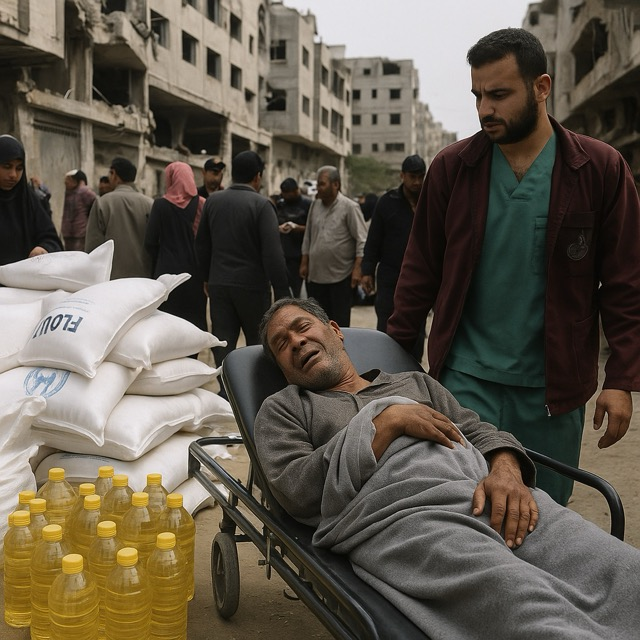
Medical Facilities on the Brink as Desperation Grows Over Food Distribution Dangers

The humanitarian crisis in Gaza has reached alarming levels as hospitals buckle under the strain of escalating conflict and medical shortages, while the population faces a deadly dilemma in accessing food aid that has turned into a trap for survival. The confluence of war, blockade, and the collapse of public infrastructure has left the enclave’s healthcare system on the brink of collapse.
Doctors at Al-Shifa, Al-Quds, and other major hospitals in Gaza report working under catastrophic conditions. Operating rooms have been converted into emergency shelters, power supplies are intermittent, and medical stockpiles are nearly depleted. Life-saving procedures are postponed or performed without anesthesia. “We are out of everything—gauze, antibiotics, surgical tools,” said one exhausted surgeon. “We are making impossible decisions about who we can save.”
Adding to the despair is the growing threat posed by food aid convoys, which have become flashpoints of violence. In several recent incidents, desperate crowds swarming aid trucks have led to chaos and even deadly stampedes. In some cases, trucks were targeted by airstrikes or caught in crossfire. Human rights organizations have condemned the situation as a “moral failure” of the international community to ensure safe and coordinated delivery of humanitarian relief.
Parents face the impossible choice of risking their lives to secure food or watching their children starve. One mother at a makeshift shelter said, “We have nothing left. When the food trucks come, it’s like stepping into death. But what choice do we have?” The psychological toll on families is mounting, with reports of severe malnutrition and trauma among children on the rise.
International agencies including the UN and Red Crescent have called for immediate ceasefires to enable secure humanitarian corridors. However, negotiations have repeatedly stalled amid disagreements over security guarantees and aid oversight. The lack of coordination between aid agencies and military operations has resulted in tragic and avoidable fatalities.
Meanwhile, the medical system’s collapse is being compounded by the spread of disease. With water systems contaminated and sanitation broken down, hospitals are overwhelmed with cases of diarrhea, respiratory infections, and skin diseases. Vaccination programs have ground to a halt, and COVID-19 remains an unchecked threat in overcrowded shelters.
Foreign governments have pledged emergency support, but many aid shipments remain stranded at border crossings or warehouses due to logistical bottlenecks and lack of safe transport. The World Health Organization warned that if fuel is not delivered soon, hospital generators will cease functioning altogether, putting thousands of patients, including premature infants, at immediate risk.
The unfolding emergency in Gaza’s hospitals and streets reflects not just a humanitarian breakdown but a crisis of political will. Calls for accountability and urgent diplomatic intervention have grown louder, but on the ground, civilians continue to pay the price of paralysis.
As the world watches, Gaza’s hospitals serve as a grim microcosm of a society on the edge—where food has become both a lifeline and a lure into danger, and where every breath of medical hope is threatened by conflict. Without swift international action, the cost in lives may become a stain history cannot erase.