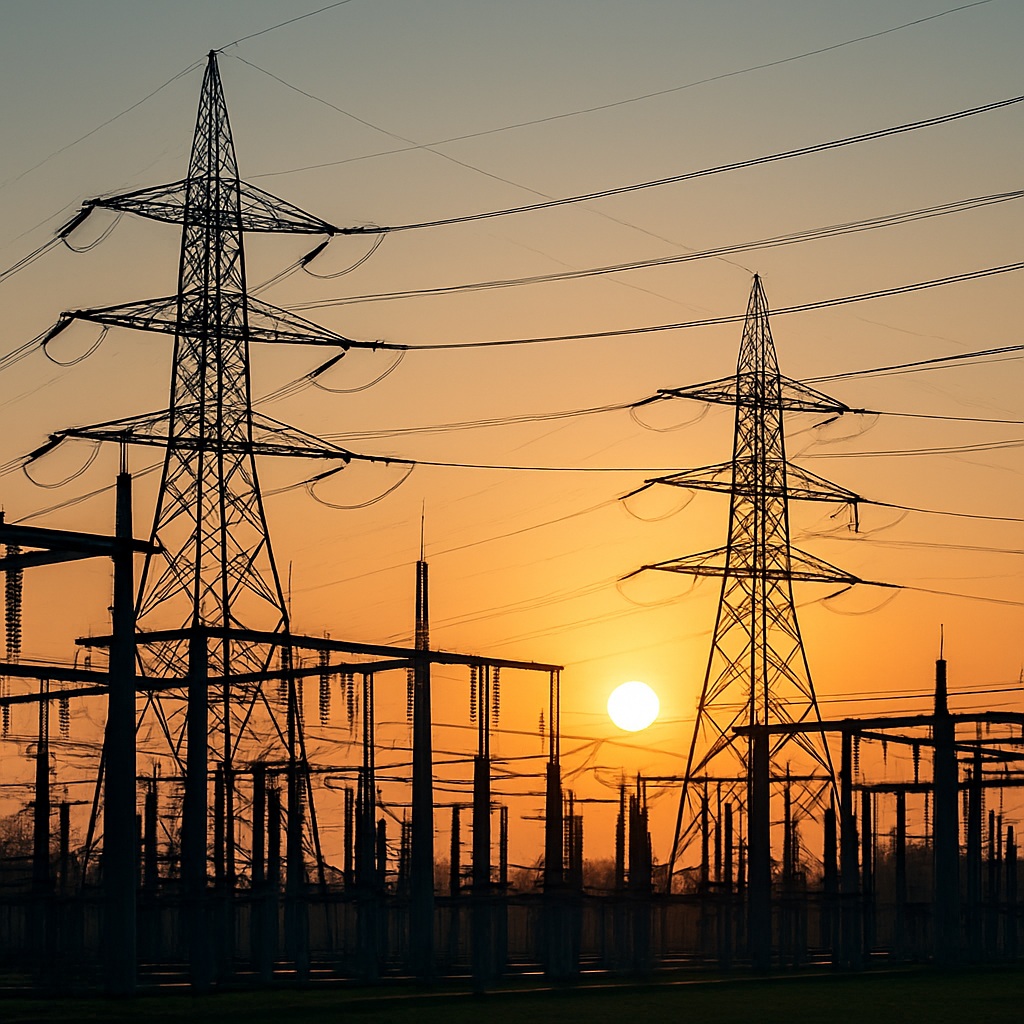
Brussels accelerates permitting and investment frameworks to shield energy‑intensive industries from escalating electricity costs

As Europe’s industrial base struggles under persistently high electricity prices, the European Commission has moved to fast‑track a suite of strategic power‑grid expansions and upgrades across the bloc. The initiative, announced in mid‑December, reflects mounting concern that elevated energy costs could weaken Europe’s competitiveness relative to the United States and Asia, particularly in sectors such as chemicals, metals, cement, paper, and advanced manufacturing.
Senior officials in Brussels say the decision signals a turning point in the EU’s approach to energy infrastructure planning. After years of fragmented national permitting systems and sluggish deployment of cross‑border projects, the Commission now aims to shorten approval timelines, coordinate investment more aggressively, and unlock grid capacity crucial for accommodating rising volumes of renewable energy.
Industry groups have repeatedly warned that the bloc’s power networks — designed decades ago for centralized fossil‑fuel generation — are ill‑suited for the rapid decentralization and electrification now underway. Renewable‑heavy supply patterns, demand from data centers, and electrified transport and heating systems all place additional stress on an already constrained grid. For manufacturers, this translates into volatility: electricity prices may drop during periods of high wind or sun only to spike abruptly when grid bottlenecks force countries to rely on costly backup sources.
The Commission’s accelerated plan introduces targeted legal changes intended to cut permitting times for new transmission lines, substations, and cross‑border interconnectors. Member states will be required to streamline administrative procedures and adopt standardized environmental‑assessment frameworks. Brussels argues that the reforms will remove long‑standing structural barriers, enabling infrastructure developers to progress projects that have been stalled for years.
At the heart of the strategy is the goal of reducing electricity prices for industry. Officials emphasize that Europe cannot deliver its green‑transition ambitions if its factories — the backbone of clean‑tech production and strategic supply chains — cannot access affordable power. The new framework prioritizes grid projects in regions where high energy prices have already pushed companies to scale back output or shift production abroad.
Energy‑intensive firms have welcomed the Commission’s announcement, calling it a pragmatic step toward restoring price stability. Executives note that several countries remain heavily dependent on imported gas to meet peak electricity demand, leaving industries exposed to market swings and geopolitical risks. A more robust, interconnected, and renewables‑ready grid, they argue, is essential to reducing these vulnerabilities.
The accelerated grid initiative also aligns with broader EU efforts to stabilize the investment environment for clean industry. The bloc aims to attract large‑scale facilities for battery production, hydrogen manufacturing, and low‑carbon materials — all of which require reliable, competitively priced electricity. The Commission’s proposal therefore positions grid expansion as both an economic and strategic priority.
Energy analysts caution, however, that accelerating grid development will require not just regulatory reform but also coordinated financing and public acceptance. Transmission projects often face local opposition, and cost‑sharing discussions among member states can be contentious. Still, Brussels insists that delays are no longer acceptable if Europe is to maintain industrial leadership and meet its climate goals.
With pressure mounting from businesses and governments alike, the EU’s shift to fast‑track grid development may mark one of the most consequential energy policy moves of the decade. Whether it succeeds will depend on how quickly regulatory changes translate into new cables, substations, and interconnections on the ground — and whether these upgrades can meaningfully ease the electricity‑price burden weighing on Europe’s industrial economy.