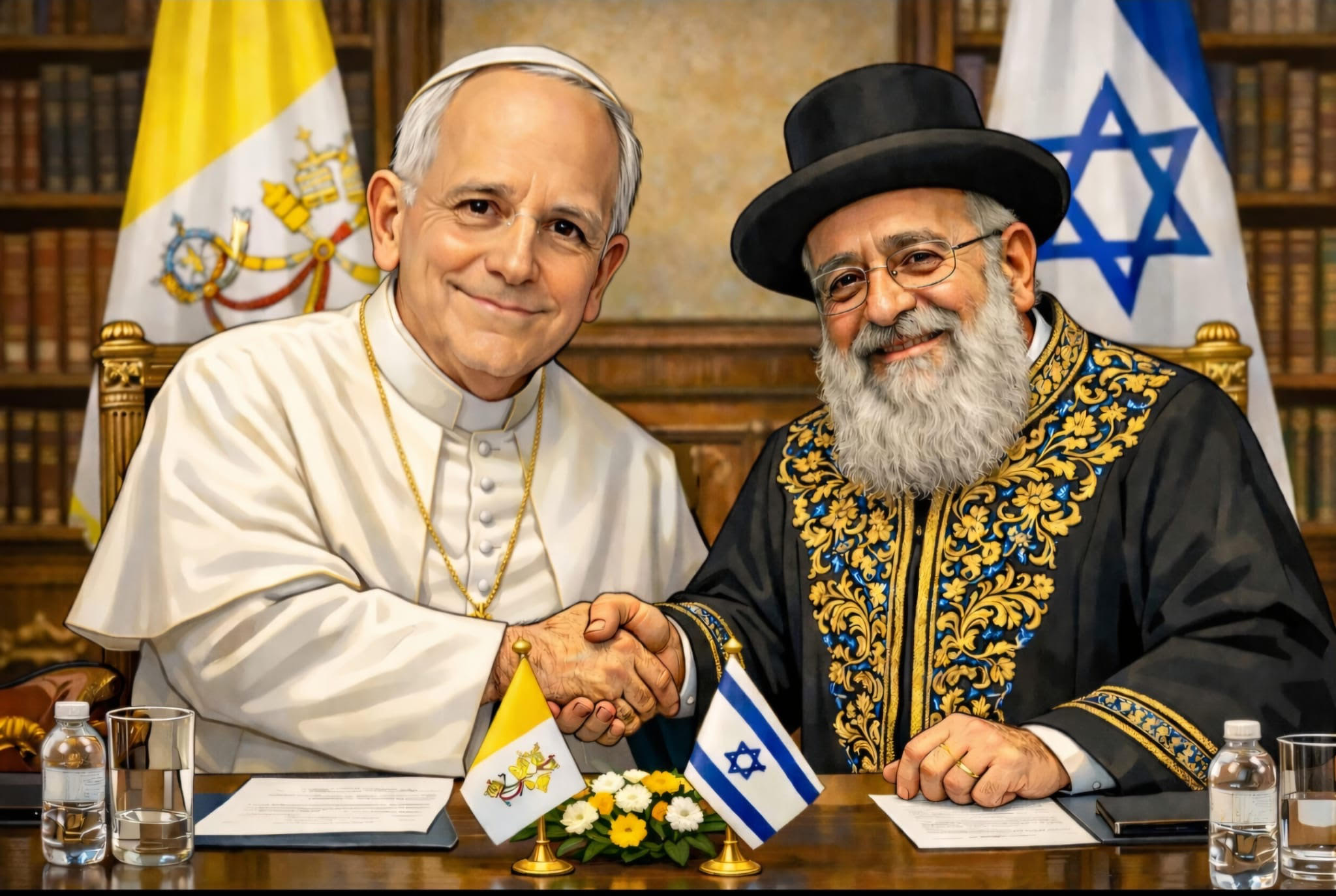
Interfaith relations face renewed tension as Church official stresses dialogue amid disagreement over moral framing of war

The Vatican has issued a measured but pointed response following criticism from a senior Israeli rabbi over recent papal remarks concerning the ongoing conflict involving Iran, signaling that while tensions have surfaced, interfaith relations are expected to endure through a period of difficulty.
According to information obtained by The Times of Israel, a senior Vatican official responsible for interreligious dialogue conveyed to a member of Israel’s Chief Rabbinate that relations between the Catholic Church and the Rabbinate would “develop among many challenges and matters.” The comment reflects a cautious acknowledgment of strain after the rabbi objected to the language used by the pope when addressing the broader regional conflict.
The dispute centers on remarks in which the pope appeared to adopt a tone emphasizing humanitarian consequences and restraint, language that some Israeli religious leaders interpreted as insufficiently attentive to Israel’s security concerns in the context of escalating tensions with Iran.
The Israeli rabbi, speaking within internal channels, criticized what he described as a “moral imbalance” in the Vatican’s framing of the situation. While not publicly confrontational, the criticism underscores a growing sensitivity among religious leaders in Israel regarding how global institutions characterize the conflict.
The Vatican, for its part, has sought to reaffirm its long-standing position advocating for peace, de-escalation, and the protection of civilian life on all sides. Officials familiar with the exchange stressed that the pope’s remarks were not intended to single out any party, but rather to call attention to the humanitarian risks of a widening regional war.
Still, the response from the Vatican official suggests an awareness that the disagreement is not merely semantic, but touches on deeper expectations within the Catholic-Jewish dialogue framework. Over recent decades, relations between the Holy See and Israel’s Chief Rabbinate have been considered a cornerstone of interfaith cooperation, built on mutual recognition and regular dialogue.
“This relationship has always included moments of disagreement,” one diplomat familiar with Vatican-Israel relations noted. “What matters is whether both sides continue to engage.”
The current tension emerges at a particularly sensitive geopolitical moment, as fears of broader confrontation in the Middle East have intensified. Religious leaders, often seen as moral voices beyond political institutions, are increasingly drawn into debates over how conflicts are framed in ethical and theological terms.
Observers say the episode highlights the delicate balance the Vatican attempts to maintain: advocating universal moral principles while navigating the expectations of specific communities directly affected by conflict.
Despite the criticism, there is no indication that formal channels between the Vatican and the Chief Rabbinate will be disrupted. Instead, both sides appear to be preparing for a period of more complex dialogue, where disagreements may be more openly expressed but still contained within an established framework of cooperation.
The Vatican official’s remark that relations will “develop among many challenges” suggests a pragmatic outlook — one that recognizes tension as part of an evolving relationship rather than a rupture.
For now, the episode serves as a reminder that even long-standing interfaith partnerships are not immune to the pressures of global conflict. Yet it also underscores a shared commitment, however tested, to keeping communication open in times of uncertainty.
As the regional situation continues to evolve, the tone and substance of such exchanges may prove increasingly significant, not only for diplomatic relations but for the broader role of religious leadership in shaping narratives of war and peace.