Improved domestic demand and easing inflation support a brighter forecast, though geopolitical risks continue to cast a long shadow

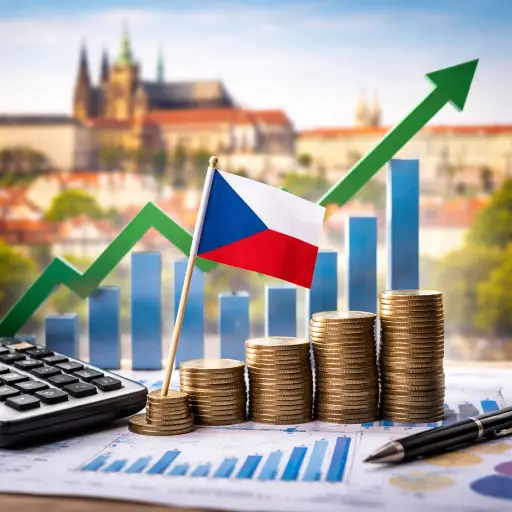
The Czech economy is expected to perform better than previously anticipated this year, according to the latest spring outlook from the International Monetary Fund, which has revised its growth forecast upward. Gross domestic product is now projected to expand by 2.2 percent, reflecting a modest but notable improvement in the country’s economic trajectory.
The updated estimate marks a slight increase from the Fund’s earlier projection issued in the autumn, when it expected growth to reach an even two percent. The new forecast also maintains a similar pace of expansion for the following year, suggesting a period of relative stability after recent economic headwinds.
The revised outlook comes as the Czech Republic gradually emerges from a period marked by high inflation, weakened consumer confidence, and sluggish industrial output. Recent months have shown signs of recovery, particularly in household consumption, which had been under pressure due to rising prices and tighter financial conditions. As inflation begins to ease and real wages stabilize, domestic demand is showing early indications of renewed strength.
Economists point to improving financial conditions and a more favorable external environment as contributing factors behind the IMF’s updated forecast. Lower energy prices compared to previous peaks have provided some relief to both businesses and households, while supply chain disruptions that plagued earlier periods have largely subsided. Export-oriented sectors, a cornerstone of the Czech economy, are also benefiting from a gradual recovery in key European markets.
Despite these positive developments, the IMF’s assessment is far from complacent. The Fund underscores that the outlook remains subject to significant downside risks, particularly stemming from ongoing geopolitical tensions. Chief among these concerns is the potential escalation or prolonged duration of conflict in the Middle East, which could have far-reaching implications for global energy markets and trade flows.
A sustained conflict in that region could trigger renewed volatility in oil and gas prices, posing challenges for energy-importing economies such as the Czech Republic. Higher energy costs would likely feed back into inflation, complicating the task of monetary authorities and potentially dampening consumer spending once again. The ripple effects could also extend to industrial production, especially in energy-intensive sectors.
In addition to geopolitical risks, the IMF notes that the broader global economic environment remains fragile. Growth in major economies continues to be uneven, and tighter financial conditions in some regions could weigh on investment and trade. For a small, open economy like the Czech Republic, external demand plays a critical role, making it particularly sensitive to shifts in global dynamics.
Domestically, policymakers face the ongoing challenge of balancing fiscal consolidation with the need to support economic recovery. Public finances have come under strain in recent years due to crisis-related spending and structural pressures. As growth returns, there is increasing emphasis on restoring fiscal buffers while ensuring that the recovery remains inclusive and sustainable.
Monetary policy will also play a key role in shaping the near-term outlook. With inflation showing signs of moderation, there is cautious optimism that interest rates may eventually ease, providing additional support to investment and consumption. However, central bankers are expected to proceed carefully, mindful of the risks posed by external shocks and the need to anchor inflation expectations.
Structural factors continue to influence the Czech economy’s longer-term prospects. Issues such as labor shortages, productivity growth, and the transition toward a more digital and green economy remain central to sustaining competitiveness. Investment in innovation, infrastructure, and workforce skills will be crucial in determining whether the current recovery can translate into stronger long-term growth.
The IMF’s updated forecast thus paints a cautiously optimistic picture. While the upward revision signals improving conditions and growing resilience, it also highlights the delicate balance facing policymakers and businesses alike. The Czech economy appears to be on firmer footing, but its path forward will depend not only on domestic developments but also on forces beyond its borders.
As the global landscape continues to evolve, the coming months will test the durability of this recovery. For now, the improved outlook offers a measure of reassurance, even as uncertainty remains an ever-present factor shaping the economic horizon.