Modest growth masks contrasting performances, with resilience outside fashion and renewed momentum in Asia

Luxury conglomerate LVMH has opened the year with a mixed but steady performance, reporting first-quarter revenue of €19.1 billion. The figure reflects modest organic growth of 1 percent, even as reported revenue declined by 6 percent, underscoring the complex economic and geopolitical environment facing the global luxury sector.
The world’s largest luxury group pointed to a backdrop marked by ongoing uncertainty, yet emphasized that trading conditions remained resilient overall. While its flagship fashion and leather goods division experienced a slight contraction, other business segments provided a meaningful counterbalance, highlighting the breadth of the group’s portfolio.
Fashion and leather goods, long the primary engine of LVMH’s growth, saw revenues decline by 2 percent during the quarter. The slowdown suggests a normalization in demand following several years of exceptional post-pandemic expansion, as well as more cautious consumer behavior in key markets. Analysts note that this segment, heavily exposed to aspirational shoppers, is often the first to reflect shifts in global sentiment.
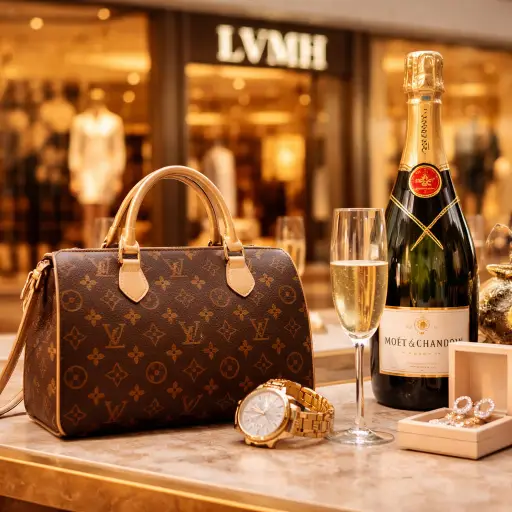
In contrast, other divisions delivered stronger performances. Wines and spirits recorded a 5 percent increase, benefiting from steady demand and improved distribution trends. Meanwhile, watches and jewellery rose by 7 percent, supported by sustained appetite for high-end pieces and continued brand strength across iconic maisons. These gains helped offset weakness elsewhere and reinforced LVMH’s diversified business model.
Geographically, the group highlighted Asia excluding Japan as a standout region. Growth there continued to build on improving trends observed since the second half of the previous year, suggesting a gradual but tangible recovery in consumer confidence. The rebound in this region is particularly significant given its central role in global luxury consumption.
However, the broader international context remains far from stable. The company acknowledged that the ongoing conflict in the Middle East had a measurable impact on performance, reducing quarterly organic growth by approximately one percentage point. This disruption reflects both direct and indirect effects, including reduced tourism flows and heightened economic caution.
Currency fluctuations also played a role in the divergence between organic and reported figures, contributing to the headline decline despite underlying stability. For multinational groups such as LVMH, exchange rate movements can significantly affect reported results, particularly when revenues are generated across multiple regions.
Despite these headwinds, the group’s leadership struck a cautiously optimistic tone. The ability of non-fashion divisions to drive growth, combined with signs of recovery in Asia, suggests that demand for luxury goods remains structurally intact, even as it becomes more uneven across categories and geographies.
The current performance points to a broader shift within the luxury industry. Rather than a uniform slowdown, the market appears to be fragmenting, with resilience in high-end segments and more volatility among entry-level consumers. This dynamic places greater emphasis on brand strength, pricing power, and geographic diversification.
Looking ahead, LVMH’s trajectory will likely depend on several external factors, including geopolitical developments, currency stability, and the pace of recovery in key markets. While the environment remains unpredictable, the group’s scale and portfolio diversity continue to provide a buffer against localized disruptions.
In a period defined by uncertainty, the latest results illustrate a company navigating change rather than retreating from it. The modest growth achieved, despite multiple pressures, reflects a luxury sector that is evolving, adapting, and, in key areas, still expanding.