A child’s death in a hotel whirlpool exposes overlooked risks and sparks calls for stricter regulation across Europe

A family holiday turned into a devastating tragedy when a twelve-year-old boy lost his life in a hotel whirlpool in Italy, drawing renewed attention to safety standards in leisure facilities and the hidden dangers of poorly maintained equipment.
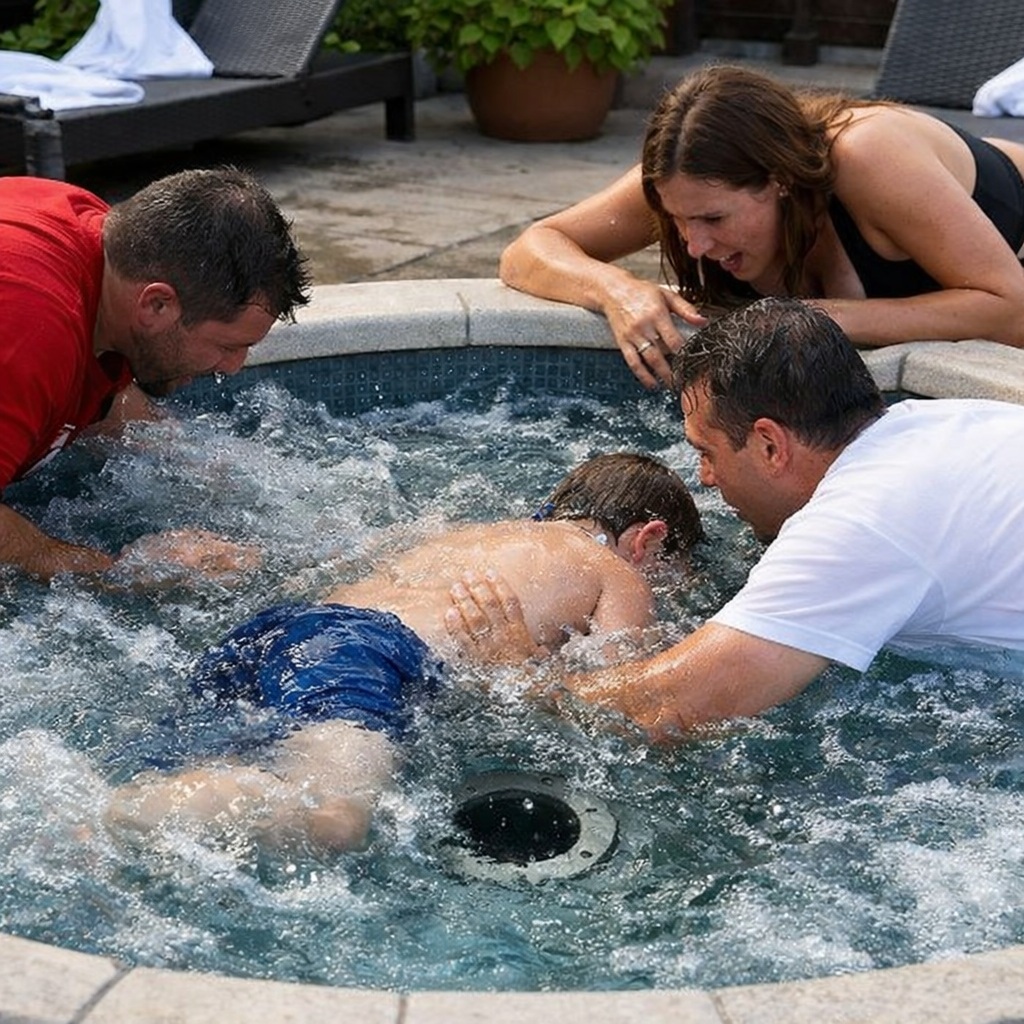
According to initial reports, the incident occurred in what should have been a place of relaxation: a hotel spa area frequented by guests seeking rest and comfort. Witnesses describe a sudden moment of confusion as the boy was pulled beneath the surface of the whirlpool by a powerful suction force. The source of the force was later identified as a filtration opening that lacked a protective grate.
Despite immediate attempts by his parents and nearby individuals to rescue him, the suction proved overwhelming. The force holding the boy underwater was so strong that he could not be freed for several minutes. By the time he was pulled out, it was too late.
Emergency services arrived swiftly, but efforts to revive the child were unsuccessful. Authorities have since opened an investigation into the circumstances surrounding the incident, focusing particularly on the technical condition of the whirlpool system and whether safety regulations were violated.
Early findings suggest that the absence of a protective cover over the suction outlet played a critical role. Such covers are designed to prevent exactly this type of accident by dispersing suction force and blocking direct contact with the intake. Without it, the system can create a powerful vacuum effect capable of trapping a person underwater.
Experts in pool safety warn that while incidents of this kind are rare, they are often severe when they do occur. “These systems are not inherently dangerous when properly maintained,” one safety specialist noted. “But when essential components are missing or damaged, the risk increases dramatically.”
The case has reignited debate over the enforcement of safety standards in hotels and recreational facilities. While regulations exist in many countries requiring protective grates and regular inspections, implementation and oversight can vary widely. In some cases, aging infrastructure or inadequate maintenance practices lead to dangerous conditions going unnoticed.
Industry professionals point out that whirlpools and spa pools present unique challenges compared to standard swimming pools. Their smaller size, combined with stronger water circulation systems, can amplify risks if safety mechanisms fail. Unlike larger pools, where multiple outlets may distribute suction, a single exposed intake in a whirlpool can create concentrated force.
For families and travelers, the incident serves as a stark reminder that even seemingly controlled environments carry risks. Consumer safety advocates emphasize the importance of vigilance, urging guests to report any visible damage or irregularities in pool equipment to hotel staff immediately.
In the aftermath of the tragedy, local authorities are conducting inspections of similar facilities in the region. Officials have indicated that any violations discovered will be met with strict penalties. The hotel involved has not publicly commented in detail but is said to be cooperating with investigators.
Beyond the immediate legal and regulatory implications, the incident has also sparked broader conversations about accountability. Questions are being raised not only about the maintenance practices of individual establishments but also about the systems in place to ensure compliance with safety standards.
For the boy’s family, however, these discussions come too late. What was meant to be a routine moment during a holiday ended in unimaginable loss. Their experience underscores the human cost behind regulatory failures and the importance of preventive measures that often go unnoticed until something goes wrong.
Safety experts stress that such tragedies are preventable. Proper installation of protective covers, regular inspection of equipment, and adherence to established guidelines can significantly reduce risks. In many jurisdictions, updated standards already exist, but enforcement remains the key challenge.
As investigations continue, authorities are expected to release further details that may clarify how the failure occurred and who may be held responsible. Meanwhile, the incident stands as a somber warning to the hospitality industry and regulators alike.
In places designed for leisure and comfort, safety must remain an uncompromising priority. The consequences of neglect, as this tragedy has shown, can be irreversible.