As Palestinians prepare for their first municipal elections in years, Europe watches closely, weighing democratic hopes against political realities

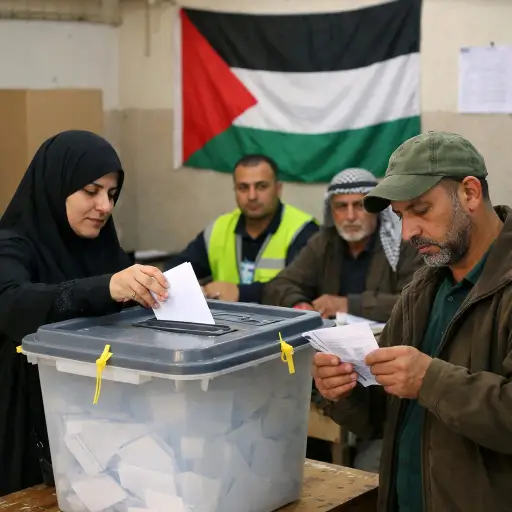
In a narrow coastal territory long defined by political paralysis and conflict, preparations are quietly underway for a vote that could carry significance far beyond local governance. Palestinians in the Gaza Strip are expected to head to the polls for municipal elections, marking what would be the first such exercise in nearly two decades if it proceeds as planned.
The announcement, communicated through the Palestinian Central Elections Commission, has drawn cautious attention from observers both within the region and across Europe. The potential vote represents more than a routine administrative process; it signals a possible reactivation of civic mechanisms that have remained dormant since the rise of Hamas to power in Gaza.
Since that political shift, governance in the enclave has operated without electoral renewal, leaving a generation of Palestinians with little direct experience of participatory politics. The forthcoming municipal elections, though limited in scope, are therefore being viewed as a test case—both for internal political dynamics and for the broader question of whether democratic processes can re-emerge in a deeply constrained environment.
Local elections, by their nature, focus on practical concerns: waste management, infrastructure, water access, and urban planning. Yet in Gaza, even these basic administrative functions are entangled in larger political and economic pressures. Years of blockade, intermittent conflict, and institutional fragmentation have strained public services and eroded trust in governance structures.
For many residents, the opportunity to vote—if realized—offers a rare channel to express dissatisfaction or demand accountability. Analysts note that municipal contests could allow for a degree of political plurality, even within a system dominated by a single governing authority. Independent candidates and technocratic lists may find space to compete, particularly in areas where local grievances outweigh ideological loyalties.
European policymakers are following developments with a mixture of guarded optimism and strategic caution. The European Union has long positioned itself as a supporter of democratic institution-building in the Palestinian territories. However, its engagement with Gaza has been complicated by its designation of Hamas as a terrorist organization and by legal and diplomatic constraints that limit direct cooperation.
Despite these challenges, European officials see potential value in even incremental democratic steps. A functioning local electoral process could provide an entry point for renewed engagement on governance, transparency, and service delivery. It may also serve as a signal—however tentative—that political stagnation is not immutable.
At the same time, skepticism remains widespread. Questions persist about whether the elections will be conducted freely and fairly, and whether their results will translate into meaningful shifts in authority or policy. There are also concerns about voter turnout, given widespread disillusionment and the daily hardships faced by Gaza’s population.
The broader regional context further complicates the picture. The political divide between Gaza and the West Bank continues to hinder unified Palestinian governance, while ongoing tensions in the Middle East shape both internal priorities and international responses. Any electoral development in Gaza is therefore inseparable from these larger dynamics.
For Europe, the stakes are not merely symbolic. Stability in the eastern Mediterranean, migration pressures, and longstanding diplomatic commitments all intersect with the Palestinian question. A credible electoral process in Gaza, even at the municipal level, could influence European policy debates on aid, reconstruction, and political engagement.
As the anticipated voting day approaches, uncertainty remains the defining feature. Whether the elections will proceed as announced, and what their consequences might be, is still unclear. Yet the very possibility of ballots being cast after years of silence has already introduced a new variable into a landscape often characterized by stagnation.
In Gaza, where political horizons have long seemed fixed, even a limited return to the ballot box carries weight. For Europe, watching from a distance but deeply entangled in the region’s future, the moment offers both an opportunity and a reminder of the complexities that continue to shape one of the world’s most enduring conflicts.