Civilians among the victims as coordinated attacks across Odesa, Kyiv, and the Dnipropetrovsk region deepen fears of a prolonged and intensifying conflict

In the early hours before dawn, the distant hum of drones once again gave way to explosions across multiple Ukrainian cities, marking one of the deadliest nights in recent weeks. Authorities reported at least fifteen fatalities and numerous injuries following a coordinated barrage of Russian drone and missile strikes that struck residential areas and critical infrastructure alike.
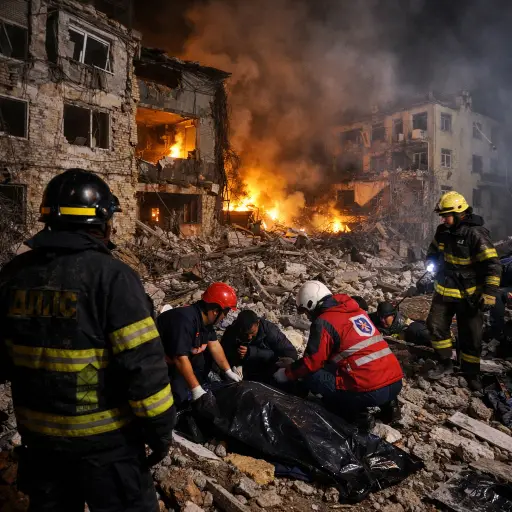
The southern port city of Odesa bore the heaviest toll, with eight people confirmed dead after several buildings were hit. Emergency crews worked through the night amid smoldering debris, pulling survivors from collapsed structures while fires continued to burn in the background. Witnesses described scenes of chaos and desperation, as residents scrambled for shelter and loved ones searched for those missing in the aftermath.
In the capital, Kyiv, four people were killed, including a twelve-year-old boy whose death has come to symbolize the growing civilian cost of the conflict. Officials said the strikes targeted multiple districts, damaging apartment blocks and triggering secondary explosions that complicated rescue efforts. Air defense systems intercepted several incoming threats, but not all could be stopped.
Further east, in the Dnipropetrovsk region, three more fatalities were reported following strikes on industrial and residential zones. Local authorities described the attacks as deliberate attempts to destabilize civilian life, noting that infrastructure damage has disrupted electricity and water supplies in affected communities.
The attacks form part of a broader pattern of intensified aerial assaults that have increasingly targeted urban centers. Analysts say the use of drones in combination with missiles reflects a strategy designed to overwhelm air defenses and maximize psychological impact. The timing, under the cover of darkness, has added to the fear experienced by civilians, many of whom have grown accustomed to seeking shelter at the sound of sirens.
Ukrainian officials condemned the strikes, calling them acts of terror against the civilian population. In a statement, government representatives emphasized that the victims were not military targets but ordinary people, families asleep in their homes, children caught in a conflict far beyond their control.
International reaction has been swift, with renewed calls for increased defensive support for Ukraine. Several governments reiterated commitments to provide air defense systems and humanitarian assistance, while also urging accountability for attacks on civilian infrastructure.
Despite the devastation, rescue operations have continued with urgency and determination. Volunteers and first responders have worked side by side, often risking their own safety to reach those trapped beneath rubble. In Odesa, survivors spoke of neighbors helping one another, forming human chains to clear debris and provide aid before official teams could arrive.
For many Ukrainians, the night’s events reinforce a grim reality: the war remains far from over, and its reach extends deeply into civilian life. Each strike not only causes immediate destruction but also leaves lasting psychological scars, particularly among children who have grown up under the constant threat of attack.
As daylight breaks over damaged neighborhoods, the full extent of the destruction becomes clearer. Broken glass, charred walls, and the silence left behind by those lost serve as stark reminders of the human cost of the ongoing conflict. Yet amid the ruins, there are also signs of resilience, communities coming together, rebuilding, and refusing to yield to fear.
The latest wave of attacks underscores a critical moment in the conflict, raising urgent questions about escalation and the protection of civilians. For those on the ground, however, the focus remains immediate and personal: rescuing the living, mourning the dead, and enduring another day in a war that shows little sign of relenting.