Ukrainian intelligence operation signals growing reach and precision behind front lines

In a carefully coordinated nighttime operation, a Ukrainian intelligence unit known as “Ghosts” struck deep into Russian-controlled Crimea, disabling two large amphibious landing ships and targeting a key radar installation. The attack, reported by Ukrainian agency Unian and echoed by multiple regional sources, underscores Kyiv’s evolving capacity to project force beyond the immediate front lines and disrupt strategic military infrastructure.
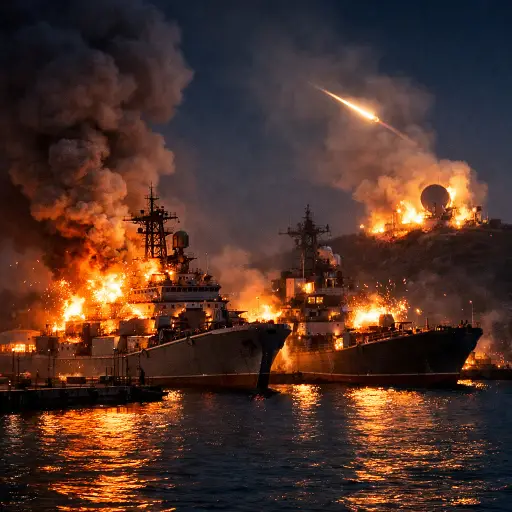
According to preliminary accounts, the strike unfolded under the cover of darkness between late evening and early morning hours. Explosions were reported near a port facility where the vessels were docked, followed by visible fires that continued to burn well into the early hours. Witness footage circulating on social media showed towering plumes of smoke rising from the waterfront, accompanied by secondary detonations consistent with onboard munitions or fuel igniting.
The two affected ships are believed to be part of Russia’s amphibious assault fleet, designed to transport troops, armored vehicles, and equipment for coastal operations. While official Russian confirmation remains limited, Ukrainian sources assert that both vessels have been rendered inoperable. If verified, the loss or disabling of such assets would mark a significant setback for Russia’s maritime capabilities in the Black Sea region.
Simultaneously, the operation targeted a radar system located on elevated terrain overlooking the coastline. Analysts suggest that disabling this installation could temporarily degrade Russia’s situational awareness and air defense coordination in the area. The combination of naval and electronic targets points to a deliberate strategy aimed at weakening both physical and informational components of military infrastructure.
The Ukrainian unit behind the strike, referred to as “Ghosts,” has been linked to a series of unconventional and high-risk operations. While details about the group remain closely guarded, its activities are often associated with intelligence-driven missions involving precision strikes, sabotage, and deep reconnaissance. The latest attack appears to fit this pattern, blending tactical surprise with strategic intent.
Military observers note that Crimea has increasingly become a focal point in the broader conflict. As a logistical hub and symbolically significant territory, it hosts key naval bases, supply routes, and defense systems. Strikes in the region carry both operational and psychological weight, signaling to Moscow that areas once considered relatively secure are now within reach.
From a strategic perspective, the disabling of amphibious vessels may have implications beyond immediate losses. Such ships play a crucial role in projecting power along coastlines, and their absence could limit future offensive options or force a redistribution of naval resources. At the same time, the hit on the radar system may create temporary vulnerabilities that could be exploited in subsequent operations.
Reactions from Russian authorities have so far been restrained, with limited public acknowledgment of the extent of the damage. This aligns with a broader pattern of cautious communication following incidents in Crimea. Meanwhile, Ukrainian officials have highlighted the operation as evidence of continued resilience and adaptability, emphasizing the importance of disrupting enemy capabilities far from active battle zones.
Independent verification of battlefield claims remains challenging, particularly in contested areas where access is restricted and information is tightly controlled. However, satellite imagery and open-source intelligence are expected to provide further clarity in the coming days. Early assessments from defense analysts suggest that the scale of the fires and reported explosions is consistent with significant material damage.
The broader context of the conflict continues to evolve, with both sides adapting tactics and technologies in response to shifting conditions. Long-range strikes, drone warfare, and intelligence-led operations have become increasingly prominent, reshaping the dynamics of engagement. The latest events in Crimea reflect this trend, highlighting a move toward precision and strategic disruption rather than solely front-line confrontation.
As the situation develops, attention will likely focus on the operational consequences of the strike and the potential for escalation. For Ukraine, the ability to carry out such missions reinforces its strategic messaging and deterrence posture. For Russia, it raises questions about the security of critical assets and the effectiveness of defensive measures in occupied territories.
The night’s events serve as a stark reminder that the conflict extends far beyond visible front lines, unfolding across multiple domains and distances. In the shadows, intelligence units and specialized forces continue to shape the battlefield in ways that may prove decisive in the longer term.