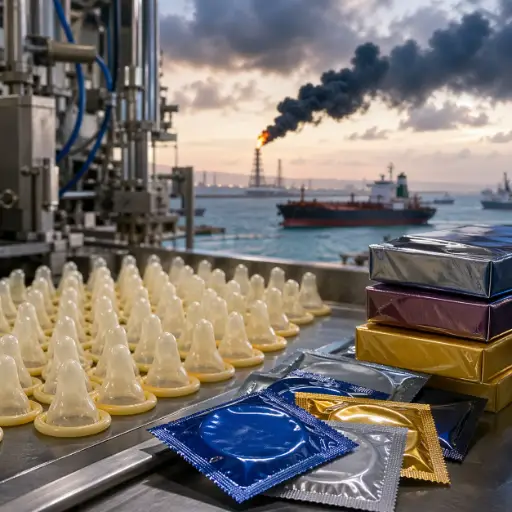
Karex, the world’s largest condom manufacturer, is preparing to raise prices by as much as 30 percent as escalating tensions in the Middle East continue to disrupt global trade routes and energy supplies.

The Malaysian company, which produces billions of condoms annually for markets across Europe, Asia, Africa and the Americas, says soaring transportation and production costs are forcing the industry into one of its most difficult periods in recent years.
The catalyst behind the increase is the growing instability surrounding the Strait of Hormuz, one of the world’s most strategically important maritime corridors. The passage, located between the Persian Gulf and the Gulf of Oman, has long served as a critical artery for international oil and gas shipments. With traffic through the region severely disrupted, energy prices have surged globally, triggering a chain reaction across manufacturing industries heavily dependent on petroleum-based materials and international shipping.
For condom producers, the impact is particularly severe. Although natural latex remains the primary raw material used in manufacturing, the sector relies extensively on petrochemical derivatives for packaging, lubrication compounds, industrial processing and transportation. The result is a rapid increase in operational costs at virtually every stage of production.
Industry analysts say the current situation exposes the vulnerability of globalized manufacturing systems that depend on stable maritime logistics and predictable energy prices. Karex, headquartered in Malaysia, has built its business model around massive export volumes and highly optimized supply chains. But as fuel prices climb and container shipping becomes more expensive, even the world’s leading producer is struggling to absorb the financial pressure without passing part of the burden onto consumers.
Executives within the sector warn that the effects are likely to be felt worldwide, particularly in developing markets where condoms are distributed through public health programs and nonprofit organizations. International aid agencies have already expressed concern that higher procurement costs could reduce accessibility in regions where contraception and disease prevention products are often subsidized.
Public health experts fear that a prolonged rise in prices may create unintended social consequences. Condoms remain one of the most widely used and affordable methods of contraception and protection against sexually transmitted infections. Any sustained increase in cost could disproportionately affect lower-income consumers, especially younger populations and communities with limited healthcare infrastructure.
Retailers in several European and Asian markets are already preparing for adjustments in wholesale prices. Some distributors anticipate a gradual increase over the coming weeks, while others expect more abrupt corrections if energy markets remain volatile. Smaller manufacturers may face even greater difficulties than multinational companies, as they often lack the scale and long-term contracts needed to cushion sudden spikes in logistics expenses.
The broader economic backdrop further complicates the situation. Inflationary pressures remain persistent across many consumer sectors, from food and transportation to healthcare and household goods. Analysts note that products once considered relatively immune to geopolitical shocks are now becoming increasingly exposed to global instability.
Financial markets have reacted nervously to developments around Middle Eastern shipping lanes, with investors closely monitoring the possibility of further disruptions to energy exports. Economists warn that if the Strait of Hormuz remains partially restricted for an extended period, industries reliant on petrochemical supply chains could face additional rounds of price increases later in the year.
For Karex, the challenge is not only financial but also strategic. The company supplies both branded products and private-label condoms for supermarkets, pharmacies and international health organizations. Maintaining stable global distribution while managing rising costs has become a delicate balancing act. Company representatives say they are attempting to avoid more drastic measures such as production cuts, but acknowledge that the market environment remains highly unpredictable.
The condom industry rarely attracts attention in discussions about geopolitical conflict or energy security. Yet the current crisis demonstrates how deeply interconnected modern supply chains have become. A disruption thousands of kilometers away in one of the world’s busiest oil corridors is now influencing the price of everyday healthcare products found in pharmacies and supermarkets worldwide.
Consumers may soon notice the effects directly on store shelves. While demand for condoms is expected to remain resilient, analysts believe purchasing patterns could shift toward lower-cost brands or bulk packaging as households attempt to adapt to rising living expenses.
Some experts also predict renewed investment in regional manufacturing hubs as companies seek to reduce dependence on vulnerable international shipping routes. Diversification of supply chains has become a recurring theme across industries since the pandemic years, but the latest energy shock may accelerate those efforts even further.
For now, however, the market remains at the mercy of geopolitical developments. As tensions continue to reshape global trade flows, even products associated with stability and everyday convenience are becoming symbols of a far more fragile international economy.